

In the days before the Lunar New Year, something happens to the streets of Hong Kong and Guangdong that is difficult to describe to someone who hasn't seen it. The city becomes saturated with flowers. The scent of water narcissus drifts from apartment windows. Vendors set up stalls across every available inch of public space. At night, the flower markets — 花市 (faa1 si5) — blaze with light, packed with families selecting the blooms that will decorate their homes for the coming year. It is one of the most beautiful traditions in Cantonese cultural life.
The History of the Guangdong Flower Fair
The tradition of flower fairs in Guangdong is centuries old. Guangzhou, the capital of Guangdong province, is believed to have held flower fairs during the Lunar New Year season for at least several hundred years, and the practice of buying fresh flowers to mark the new year is even older. The Pearl River Delta's warm subtropical climate makes Guangdong one of China's most significant flower-producing regions, and the intersection of climate, commerce, and culture produced a tradition in which flowers became the primary language of New Year celebration.
Guangzhou's Flower Fair, traditionally centred around the Beijing Road area, has been one of the city's defining Lunar New Year events. In Hong Kong, the equivalent tradition took root in the mid-20th century as the colony developed its own distinct cultural character. By the 1970s and 1980s, the Victoria Park Flower Market in Causeway Bay had become the city's most famous iteration of the tradition — an annual gathering of hundreds of thousands of people in the days immediately preceding the new year.
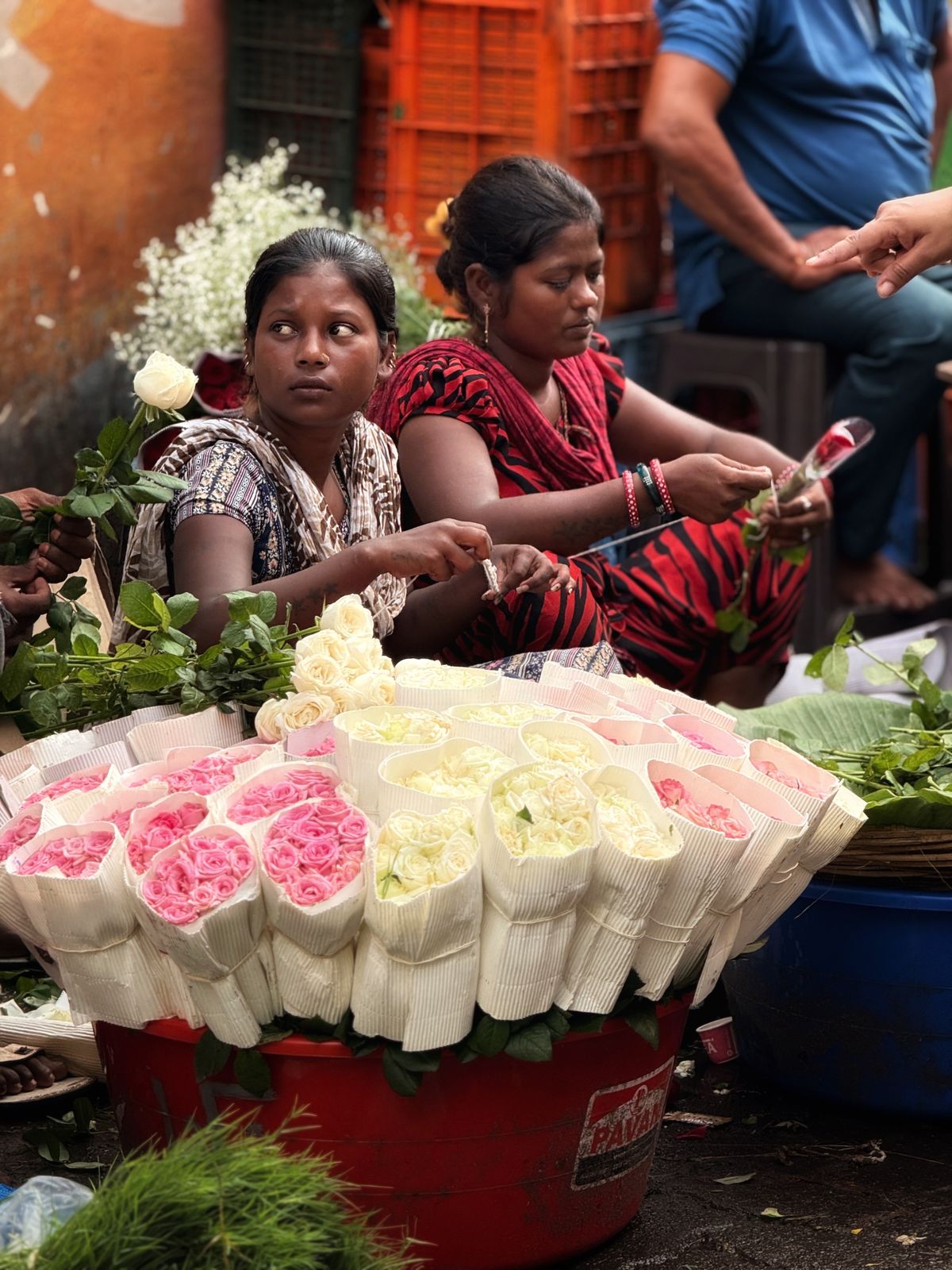
The Language of Flowers: What Each Bloom Means
In Cantonese New Year flower culture, every plant carries meaning, and choosing the right flowers for your home is an act of intentional symbolism. 水仙花 (seoi2 sin1 faa1), water narcissus, is perhaps the most iconic New Year flower — pure white with a yellow centre, intensely fragrant, it represents purity, good fortune, and the arrival of spring. Timing a narcissus bulb to bloom precisely on New Year's Day is considered an art, and experienced growers are much admired.
棵花 (桃花 tou4 faa1), peach blossoms, are the flower of romance and human connection — buying peach blossoms at the new year is said to attract love and improve relationships. Single people in Hong Kong traditionally buy them hoping for romantic luck in the coming year. 金橘 (gam1 gwat1), the kumquat tree, is practically compulsory in Cantonese homes: the golden fruit symbolises gold coins and wealth, and a heavily-laden kumquat tree is considered extremely auspicious. 菊花 (guk1 faa1), chrysanthemums, represent longevity and resilience. 幸运竹 (haang6 wan6 zuk1), lucky bamboo, signals growth and prosperity.
The Experience: What the Flower Market Feels Like
Going to the flower market in the final days before Lunar New Year is one of the most immersive experiences in Cantonese cultural life. The markets operate late into the night — many until two or three in the morning — and the crowd is dense and festive. Families navigate the stalls with trolleys and shopping bags, haggling with vendors over the price of a particularly fine kumquat tree or debating whether a narcissus is fragrant enough.
The sound is as remarkable as the sight: vendors calling prices in Cantonese, the crinkle of cellophane wrapping, the drip of water on the flowers, and underneath everything the steady murmur of a city readying itself for the most important holiday of its year. Street food stalls cluster around the markets selling snacks and drinks to the crowds. The air is cold enough in Hong Kong's mild winter to make the scents of the flowers sharper and more defined.
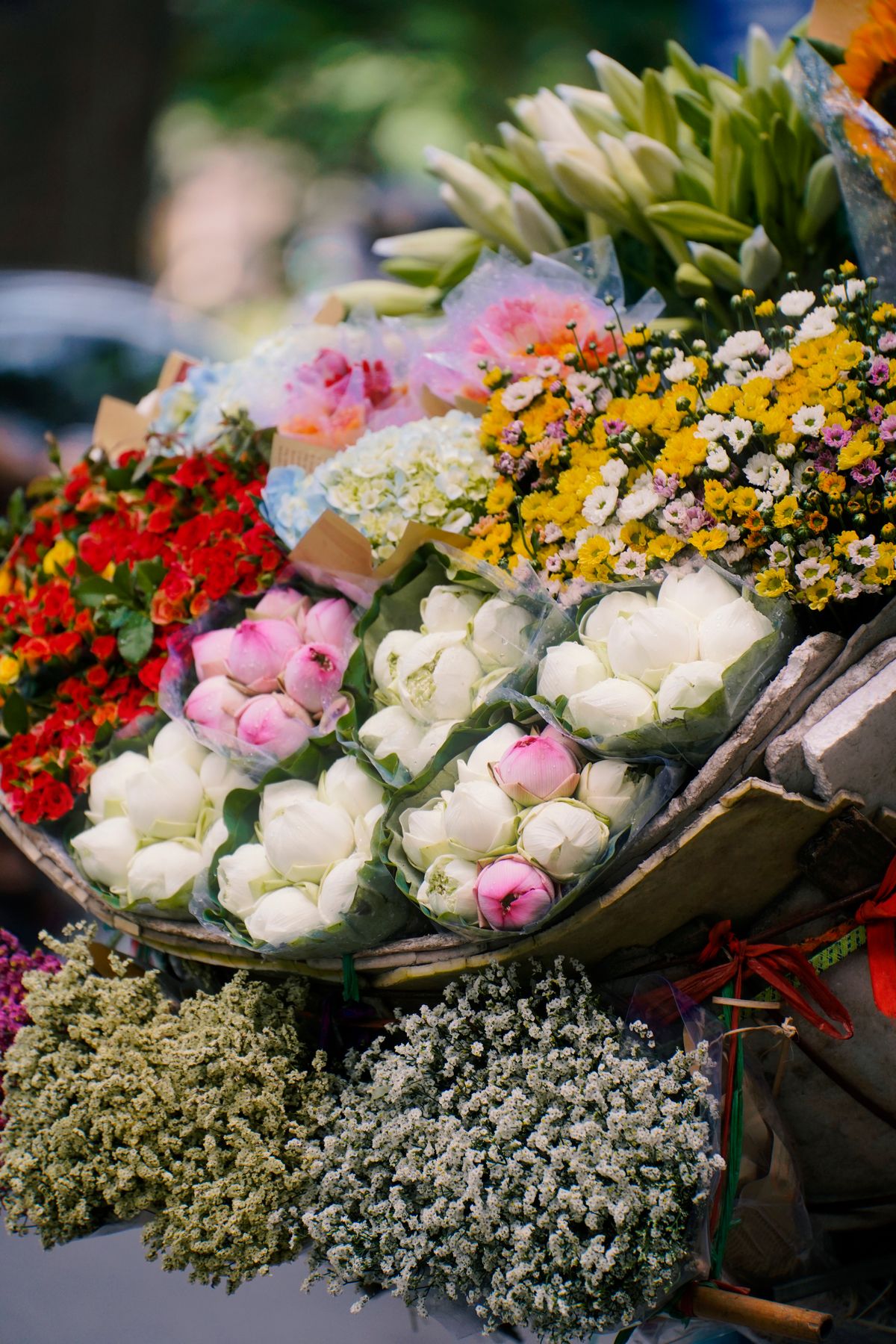
The Midnight Rush: New Year's Eve at the Market
The most dramatic moment of the flower market season is the final hours of New Year's Eve. As midnight approaches and vendors know they cannot carry unsold stock into the new year (bad luck to bring last year's flowers into the new), prices drop dramatically. Flower lovers who time this correctly can buy spectacular arrangements for almost nothing. The crowds surge, the vendors shout, and the market takes on a carnivalesque energy that is unlike anything else in the Cantonese calendar.
After midnight, when the firecrackers have sounded and the new year has begun, families return home carrying armfuls of flowers to decorate their homes. The apartment fills with the scent of narcissus. The kumquat tree sits golden in the corner. Spring has begun.
The Tradition in the Diaspora
Cantonese diaspora communities around the world have maintained versions of the flower market tradition. In Vancouver, San Francisco, London, and Sydney, Chinese New Year markets in Chinatown areas sell narcissus, kumquats, and peach blossoms shipped from Guangdong and Taiwan. The same symbolic vocabulary — gold for wealth, peach for love, narcissus for purity — travels with the community wherever it goes. For diaspora families, buying these flowers is an act of cultural memory and continuity: a way of making a home in a new country feel, for a few days, like the places their parents and grandparents left.
For more on Cantonese New Year traditions, read our guide to Kung Hei Fat Choy: Guangdong Lunar New Year Traditions and Mid-Autumn Festival in Hong Kong.
📖 Related Articles
👉 Shop Cantonese Guy — Modern Streetwear for the Global Cantonese Community