

There are few things in this world as immediately, uncomplicated-ly satisfying as a freshly baked Hong Kong egg tart. The shell is buttery and yielding, somewhere between flaky and crumbly depending on who made it. The custard filling is smooth, barely sweet, trembling gently as you lift it. It's warm if you're lucky, and the ratio of pastry to custard is, in a good one, calibrated to mathematical perfection. The 蛋撻 — dan tat in Cantonese — is a small thing, but it carries an entire culture inside it.
The Surprising Origins: A Colonial Hybrid
The story of the dan tat begins not in Hong Kong but in Guangzhou, and not in the distant past but in the early 20th century. Guangzhou, as the only Chinese port city open to Western traders for much of the Qing Dynasty, had long been a site of culinary cross-pollination. European traders, diplomats, and missionaries brought their foods with them, and Cantonese cooks — being who they are — observed, adapted, and improved.
The English custard tart was one such import. Guangzhou's Cantonese pastry chefs took the basic concept — a shortcrust or puff pastry shell filled with a cooked egg custard — and reworked it. They reduced the sugar, refined the custard texture to be silkier and less stiff, and adapted the pastry to suit Cantonese palates. By around 1927, egg tart variations were appearing on the menus of Guangzhou's Western-style department store restaurants, described as a weekly special. The 蛋撻 as a distinct Cantonese creation was born.

Hong Kong Takes Over
The dan tat arrived in Hong Kong in the 1940s, initially served in the Western-style restaurants that catered to the colony's wealthier residents. For the first two decades, it remained an occasional luxury rather than an everyday item. The transformation came in the 1960s, when Hong Kong's great cha chaan teng (茶餐廳) culture was developing. These distinctly Hong Kong hybrid cafes — serving both Chinese and Western-style food at working-class prices — adopted the dan tat enthusiastically, making it available to everyone.
The cha chaan teng dan tat became the standard: a flaky, lard-enriched shortcrust pastry shell (though some shops use a water-pastry dough) filled with a smooth, lightly sweetened egg custard. Baked until the custard is just set and the pastry is golden, it was served fresh from the oven at the counter, typically for a dollar or two. This accessibility is what made it iconic. In Hong Kong, a good dan tat has never been a luxury item — it has always been democratic.
The Great Pastry Debate: Flaky vs. Puff
Hong Kong's dan tat community is gently divided on the question of pastry. The traditional style uses a shortcrust or water-dough shell (豌面皮, gwaai min pei) — crumbly, slightly sandy, melting on the tongue. The rival school prefers a laminated puff pastry shell (酰皮, so pei) — flaky, buttery, crunchy at the edges. Most serious dan tat shops in Hong Kong offer both, and devotees of each style defend their preference with the quiet conviction of people who have thought about this carefully for decades.
The Macau egg tart is a separate species entirely. In 1989, British pharmacist Andrew Stow opened Lord Stow's Bakery in Coloane, Macau, where he began selling a version of the Portuguese pastel de nata — a burnt-top puff pastry custard tart with Lisbon origins. His Macanese creation — richer, slightly more caramelised, with a more pronounced egg flavour — became a sensation. Today it's possible to eat both Hong Kong dan tat and Macau-style Portuguese tarts at food courts and bakeries across the Pearl River Delta, each with its own ardent fan base.
Dan Tat in the Diaspora
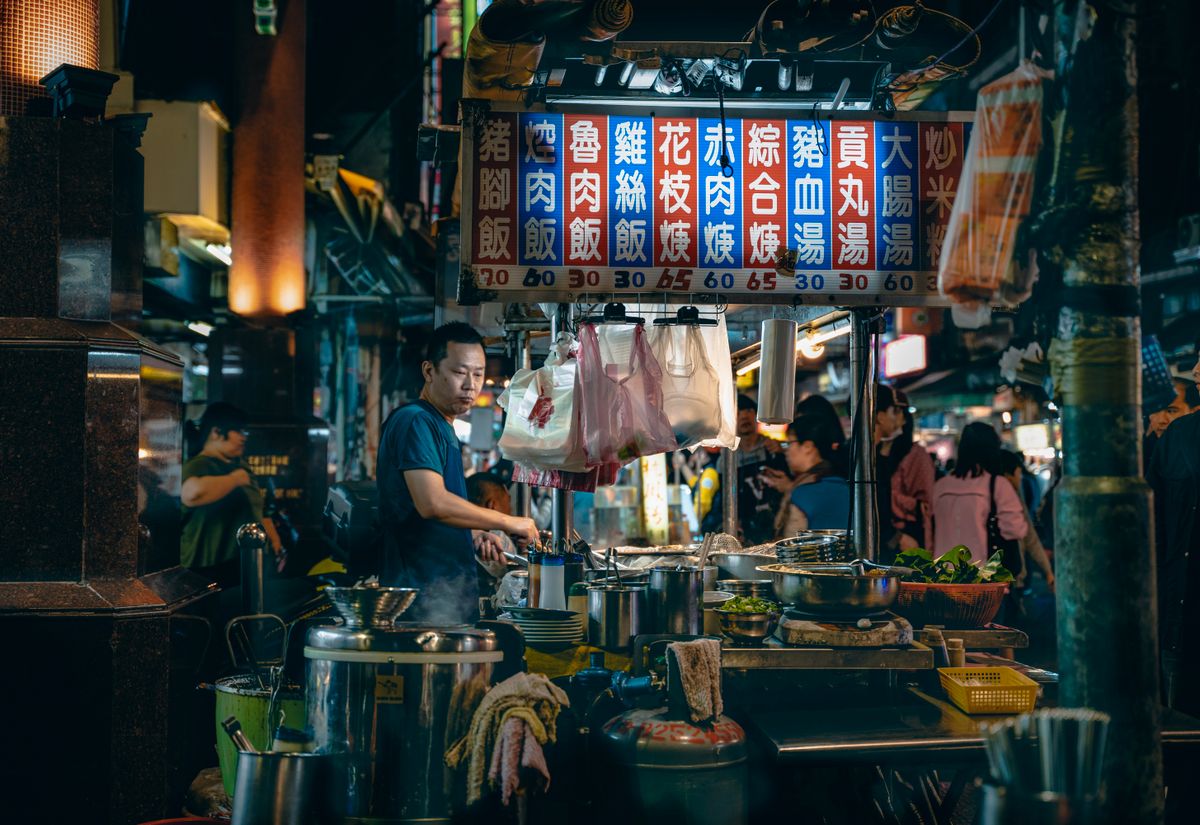
Wherever the Cantonese diaspora settled, the dan tat followed. In Vancouver's Richmond district, in Sydney's Chinatown, in London's Gerrard Street, and in San Francisco's Chinatown, Cantonese bakeries have been serving dan tat for generations — often made to family recipes carried from Hong Kong or Guangzhou. For the diaspora, eating a dan tat is not just eating a pastry. It is a small, warm act of cultural continuity.
New generations have also found new ways to love it. Contemporary Cantonese bakeries and chefs have experimented with matcha custard tarts, salted caramel dan tat, egg tart ice cream, and other variations — all of which keep the essential structure (pastry shell + smooth egg filling) while updating the flavour palette. The form endures because it's perfect. What fills it can evolve.
How to Eat a Dan Tat Properly
Fresh and warm. Never cold. Always with tea — ideally pu-erh or oolong to cut the richness. Accept a paper napkin from the bakery counter. Eat it in two or three bites, not one. If any custard escapes onto your fingers, consider it a bonus. Do not feel guilty about ordering a second.
📖 Related Articles
👉 Shop Cantonese Guy — Modern Streetwear for the Global Cantonese Community