

There's a sound in Hong Kong that hasn't changed in over 120 years. It's the small, hollow "ding ding" of a brass bell, ringing out from a narrow green double-decker as it rolls down Hennessy Road at walking pace. Cars have replaced rickshaws, MTR trains have burrowed under the harbour, skyscrapers have swallowed the skyline — but the trams still ding. Somehow, one of Hong Kong Island's oldest pieces of public transport is also one of its most beloved.
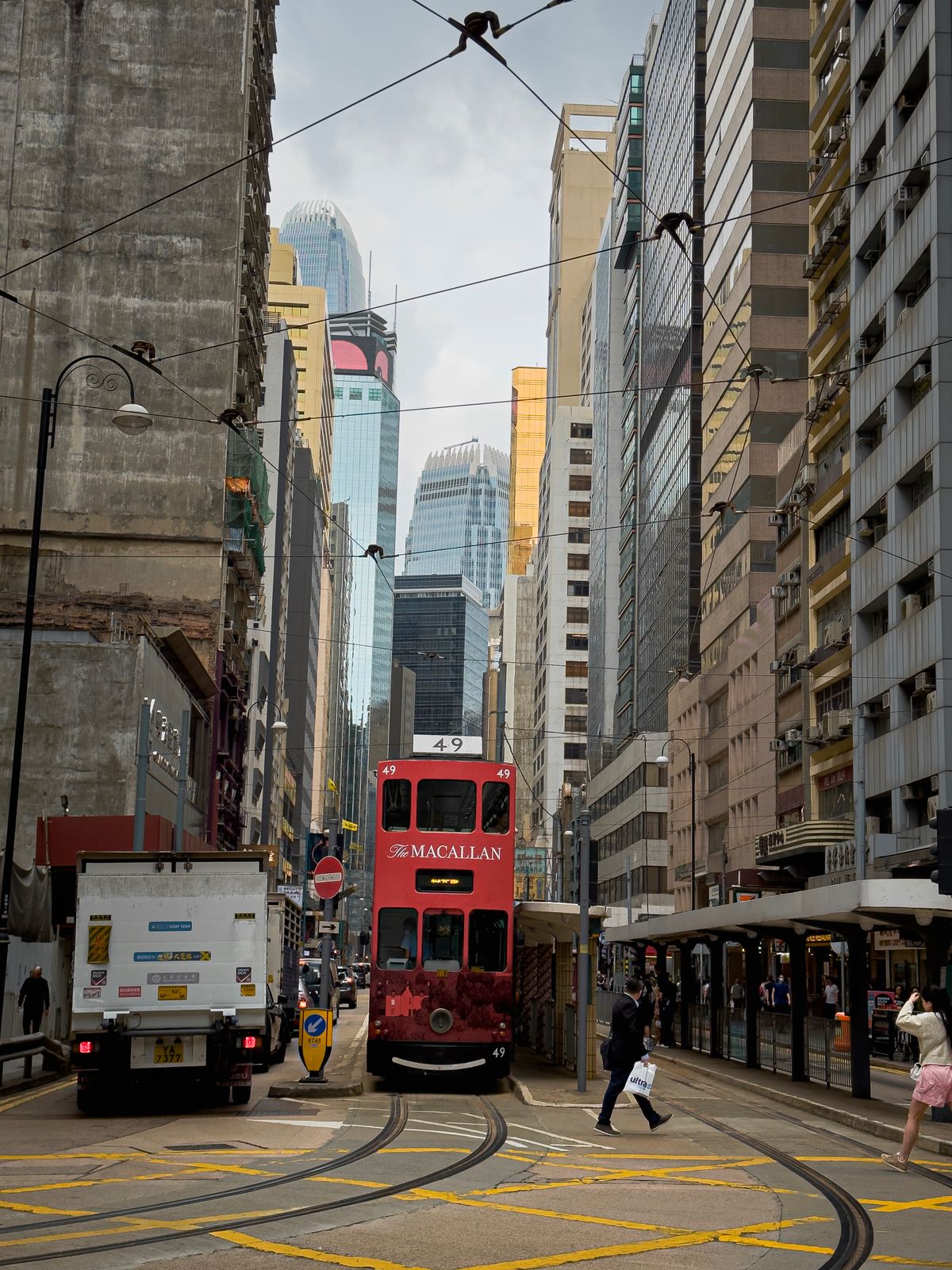
The oldest public transport still running in Hong Kong
Hong Kong Tramways began operating in 1904, back when the island was still mostly low-rise colonial buildings and Central was a modest waterfront town. The first-generation trams were single-decked and split into first and third class — 10 designated for first-class passengers, the rest for the working majority. Even then, the idea of a public tram running the length of the north shore was ambitious. Over a century later, it's still running the same route.
Today, the tram network covers around 30 kilometres from Kennedy Town in the west to Shau Kei Wan in the east, with a branch loop into Happy Valley. The fleet has grown to about 165 double-decker cars — and here's the record every Hongkonger knows: this is the largest fleet of double-decker trams still in service anywhere on earth, a Guinness World Record that quietly belongs to Hong Kong.
How the "Ding Ding" got its name
The nickname 叮叮 (ding1 ding1) comes from the small warning bell drivers ring to alert pedestrians and jaywalkers ahead. There's a second theory too — that it originally came from the sound of ticket clerks punching tickets during the manned-conductor era. Either way, the sound became the name, and the name stuck so hard that some Hong Kongers younger than 30 don't even know the formal Cantonese word 電車 (din6 ce1, "electric car"). To them the tram is, was, and always will be, the ding ding.
How the double-decker came to be
In 1912, Hong Kong Tramways introduced the world's first double-decker tram in the city — initially an open-top model with wooden garden seats on the upper deck. That version was gloriously exposed to the sky, which was thrilling in December and miserable in June. It wasn't until 1925 that fourth-generation trams arrived with a fully enclosed upper deck, giving us the silhouette we recognise today. That design has been carefully preserved through every subsequent update, which is why a modern tram, even with LED destination boards and USB ports, still looks like it belongs on a 1930s postcard.
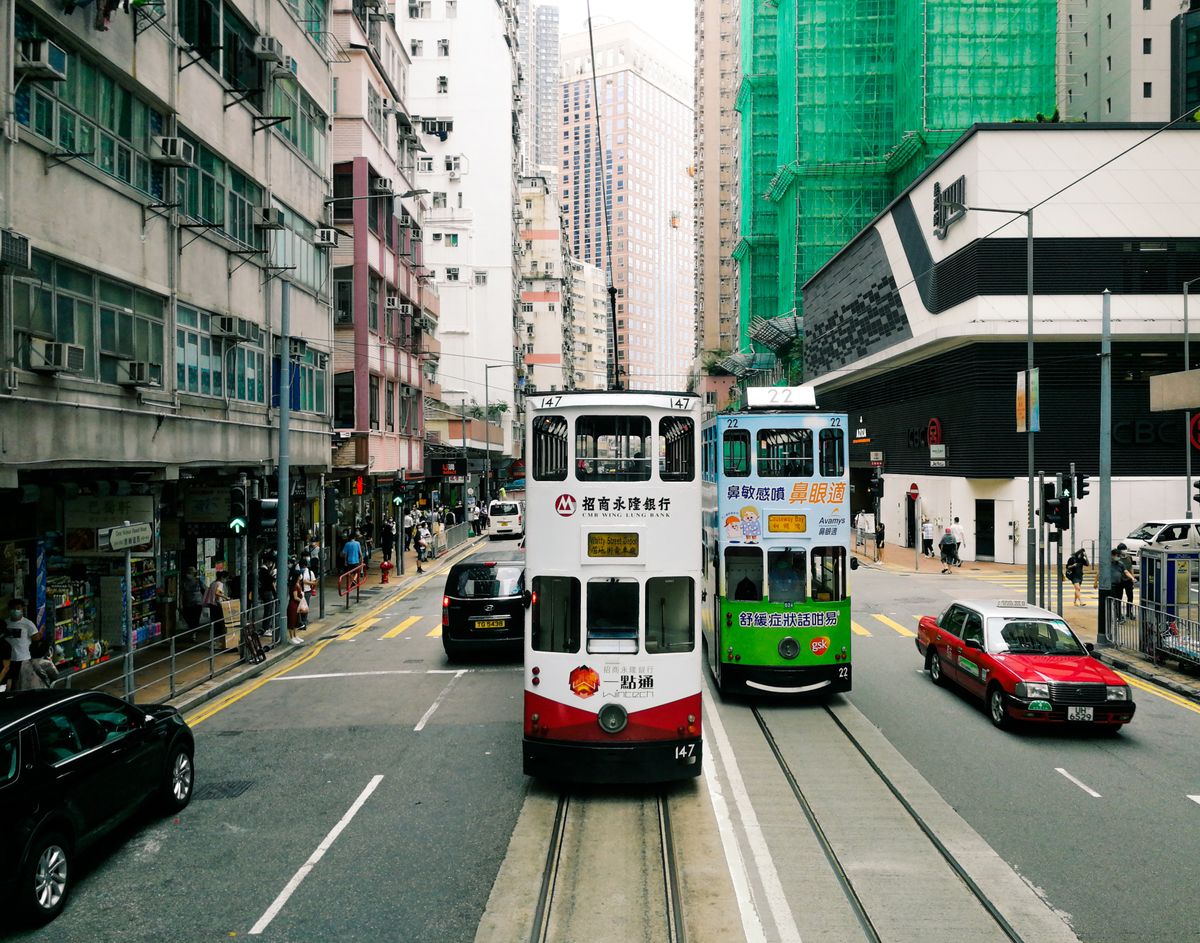
The cheapest ride in the city
Everyone in Hong Kong has a strong opinion about the tram fare because it's one of the last things in the city that still feels affordable. An adult single fare sits at HK$3.30 as of 2025 — no matter how far you ride. You can board at Kennedy Town, sit on the top deck through Sheung Wan, Central, Wan Chai, Causeway Bay and North Point all the way to Shau Kei Wan, and get off having crossed an entire city for the price of a small milk tea. Around 200,000 passengers do exactly this every day.
Why locals love the top deck
The tram is slow. That's the point. You can walk about as fast as a peak-hour tram in Central. But nobody rides the ding ding for speed. You ride it because the upper deck is one of the last places you can sit at the level of Hong Kong's neon signs, its bakery windows, its disappearing signage, its cha chaan teng interiors, and its second-floor mahjong parlours. From up there, the city moves at storytelling pace instead of MTR pace.
Locals also love the ding ding as a piece of daily nostalgia. Grandparents took their kids on it in the 1970s. Those kids now take their own kids on it, and point out the same landmarks in the same order. It's an intergenerational ritual disguised as a commute.
The tram in Cantonese culture
The tram shows up everywhere in Cantonese pop culture. It rattles through countless Hong Kong films as visual shorthand for the city, it's the punchline of comedy sketches about being late for work, and it appears in Cantopop lyrics as a symbol of a slower, kinder version of Hong Kong. When Cantonese-speaking travellers overseas want to explain what makes Hong Kong feel like Hong Kong to a foreign friend, "ride the tram" almost always makes the list before "go to Victoria Peak."
Locals sometimes describe things that happen at a gentle pace with an affectionate comparison to the tram — 慢慢嚟, take it slow. The ding ding is the city's answer to hurry.
The next 120 years
Every few years, someone in Hong Kong suggests scrapping the trams to speed up traffic on Hong Kong Island. Every time, the city says no. Because the trams have become something more than transport — they're a moving monument to the version of Hong Kong that isn't in a hurry, that still remembers what the harbour looked like before the reclamation, that still hangs onto a small ringing bell as a kind of civic heartbeat.
If you find yourself in Hong Kong, do this once: pay the HK$3.30, climb to the upper deck, sit at the front window, and let a stranger point out something in Cantonese. You'll understand instantly why this city refuses to let go of its trams.
📖 Related Articles
👉 Shop Cantonese Guy — Modern Streetwear for the Global Cantonese Community