

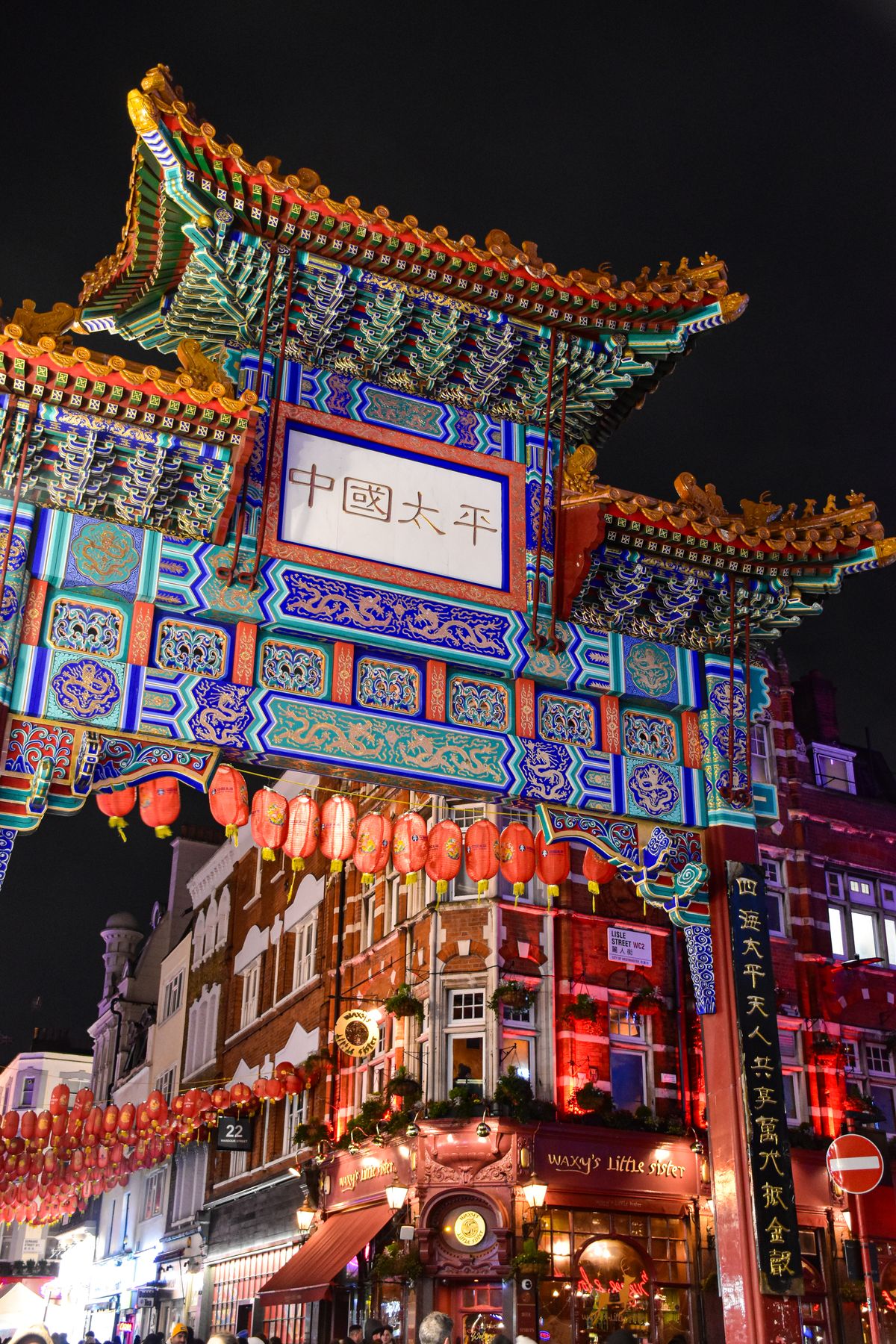
Walk down Gerrard Street in Soho on a Friday night and you're standing on the most Cantonese hundred metres of London. Roast ducks hang in the windows. Bubble tea queues spill onto the pavement. The pai lau — the red and gold ceremonial gate — glows above the crowd. It is very tempting to think this place has always been here. It hasn't. London's Cantonese Chinatown was built, block by block, by Hong Kong migrants who arrived after a war, took up empty Soho leases, and cooked their way into the city.
London's First Chinatown Was Somewhere Else Entirely
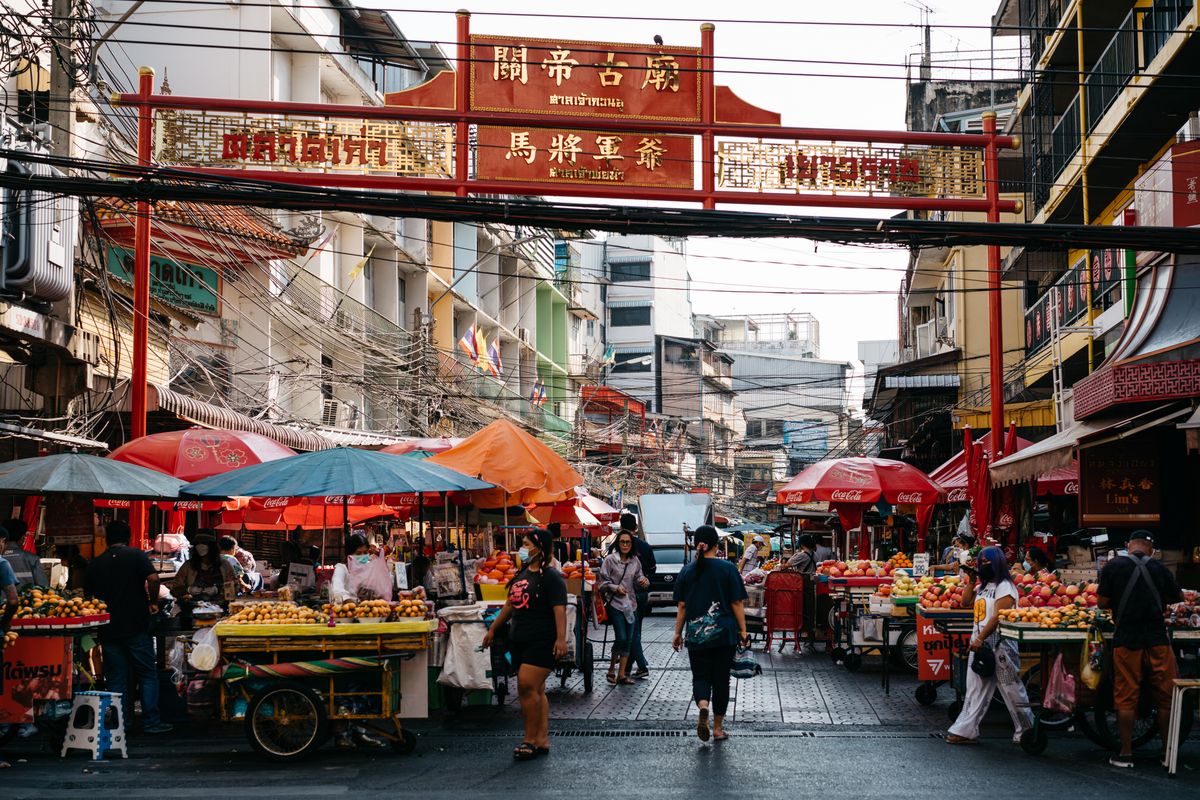
Before Gerrard Street there was Limehouse. From the 1780s onward, Chinese seafarers arrived in the East End on ships owned by the East India Company and started to settle around the docks. By the 1880s there was a small Cantonese-speaking community on Limehouse Causeway and a Shanghainese-speaking community on Pennyfields and Ming Street — two languages, two clusters, one neighbourhood. That was London's original Chinatown.
The Blitz ended it. Between 1940 and 1945, aerial bombing hollowed out the East End. The docks were prime targets and the streets around them took the punishment. Limehouse Chinatown was so badly damaged that the community began drifting west, into Soho, in search of somewhere still standing.
Why Soho, and Why Gerrard Street
Post-war Soho had two things Cantonese migrants needed: cheap commercial rents and hungry customers. British soldiers who'd served in Hong Kong and Malaya had come home addicted to Chinese food and were looking for it in London. The 1950s saw the first Cantonese restaurants set up shop on and around Gerrard Street. Soho already had a nightlife reputation; adding late-night noodles felt natural.
Then came the wave that made it permanent. Through the 1960s and 70s, Hong Kong itself was pushing out labour. Farming in the New Territories was collapsing, and Britain — thanks to its colonial link — was one of the few countries where a Hong Konger could arrive, get a work permit, and land in a restaurant job within days. Whole families followed. Wives came out to join their husbands. Kids grew up between two languages. By the 1970s, the neighbourhood had Cantonese barbers, Cantonese beauty parlours, Cantonese mini-cab firms, Cantonese bookshops, and even a Chinese chamber of trade — a full economy in a few square blocks.
🏮 The New Territories Connection
The London Cantonese diaspora is unusual among Chinatowns for one reason: most of the founding families came not from Guangzhou or urban Hong Kong, but from the villages of the New Territories — places like Fanling, Sheung Shui, and the walled villages. Their kids grew up speaking a village Cantonese that occasionally still baffles Kowloon relatives. The DNA of London Chinatown is farm villages, not city harbours.
The Arch That Made It Official
By the mid-1980s the area was booming — 80 restaurants, dozens of supermarkets and souvenir shops, a whole daytime and nighttime economy on a strip of streets that hadn't held a single Chinese business forty years earlier. In 1985, Westminster City Council and the London Chinatown Chinese Association formally designated the area as Chinatown. The Gerrard Street pai lau went up between 1985 and 1986. The Macclesfield Street arch followed in the 1990s.
That paperwork mattered. Naming the area "Chinatown" pinned it on the map, protected some of its street furniture, and gave the community a formal seat at the table in council decisions. It also gave every diaspora Cantonese kid in Britain somewhere to point at when their friends asked where they were from.
What You Can Still Hear on Gerrard Street
Walk the length of Gerrard Street with your ears open and you can still hear the shape of that founding wave. The older restaurant owners speak Cantonese with a village lilt. The soup counters still make wonton the Hong Kong way. Roast duck shops on Wardour Street still hang the birds in the window the way Kowloon shops do. Sunday morning yum cha at the old-guard restaurants still runs on trolleys — no iPad ordering, no QR codes, just aunties calling out har gow and siu mai in Cantonese.
It's also changing fast. A new generation of Mandarin-speaking business owners has moved in, and the food map now takes in Sichuan hot pot, Xinjiang skewers, Taiwanese beef noodles, and Korean fried chicken. Some old Cantonese restaurants have closed. Others are being handed to the second and third generations. Gerrard Street is negotiating what a lot of diaspora Chinatowns are negotiating: how to stay Cantonese and stay open.
Why It Still Matters to the Cantonese Diaspora
For a Hong Kong family who arrived in the 60s and 70s, Gerrard Street was the first place in Britain where their language was the default. That is not a small thing. It meant your grandmother could go shopping without English. It meant your kid could get a haircut from someone who understood "cin1 dim2 gau2" (thin on top). It meant a corner of a foreign capital where a familiar bowl of jook was fifty metres away.
London's Chinatown joins Vancouver, San Francisco, Sydney, and Manchester in a global chain of Cantonese neighbourhoods that grew up wherever the ships and the work took people from Guangdong. Each one is different. All of them share the same instinct: build a kitchen, hang a sign, put down roots, teach the kids to say m4 goi1.
📖 Related Articles
👉 Shop Cantonese Guy — Modern Streetwear for the Global Cantonese Community