

There is no pineapple in a pineapple bun. Everyone in Hong Kong knows this, and yet the joke never gets old. The bun is called 菠蘿包 (bo1 lo4 baau1) because the cracked, sugary, golden-brown crust on top vaguely resembles the skin of a pineapple — not because there is any fruit inside. The inside is soft milk-bread. That is the whole trick.
The pineapple bun was born in the tail end of the 1940s, in a Hong Kong that was still rebuilding from the Japanese occupation. Local bakers had learned Western baking from the British and Portuguese, and they blended those techniques with Cantonese sensibilities — sweet, warm, cheap, filling. What came out of the oven was arguably the most beloved handheld food Cantonese cuisine has ever produced. If you have ever bitten one hot out of a bakery window, you will understand why the 食飯 Dinner Is Ready oversized T-shirt is our tribute to Cantonese comfort food.
Where the pineapple bun came from
The exact origin of the pineapple bun is contested. One theory traces it to Japanese melonpan — a soft bun topped with a crisp biscuit dough that cross-hatches in the oven to look like a melon rind. Some Hong Kong bakers say it was inspired by Mexican conchas. Others insist it was invented from scratch by a Cantonese baker who wanted something more exciting than a plain sweet bun. What's clear is that by the late 1940s, Hong Kong bakeries were making them, and by the 1950s they were on every neighborhood shelf.
Tai Tung Bakery in Yuen Long has been baking pineapple buns since the 1940s and is one of the oldest continuous producers in the territory. At the peak, urban bakeries were pumping out up to 3,000 pineapple buns a day — the bun powered breakfasts, snack breaks, and after-school runs across three generations of Cantonese kids.
What actually goes into a pineapple bun
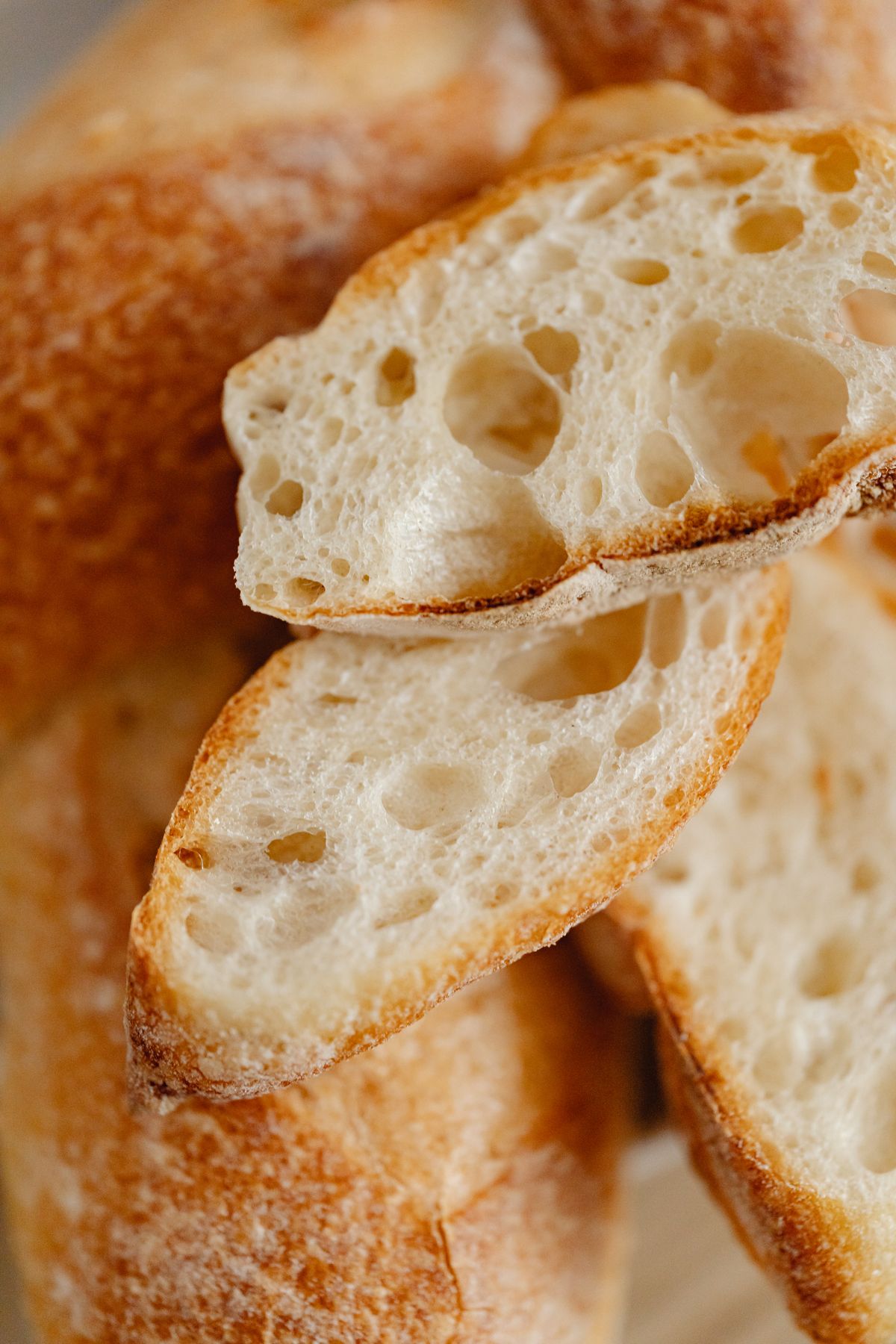
🥐 The two halves of a proper bo lo bao
The bun itself is a soft milk bread — flour, sugar, milk powder, yeast, egg, and lard or butter. The crust is a completely separate mixture pressed on top before baking: sugar, flour, lard and egg yolk kneaded into a paste, rolled into a disk and laid over the raw bun. As the bun rises in the oven, the crust cracks in the tell-tale pineapple pattern, catches heat, and browns to a deep amber. Break one open hot and steam rushes out. That's what you're paying for.
Bo lo yau: the cha chaan teng upgrade
Somewhere in the 1960s, a Hong Kong cha chaan teng cook decided the perfect thing to do with a still-warm pineapple bun was slice it in half, wedge in a thick cold slab of salted butter, and serve it immediately. Thus was born 菠蘿油 (bo1 lo4 jau4) — "pineapple butter," or as the diaspora calls it, the pineapple bun with butter. The butter melts on contact. The sweet crust and salted fat fight in exactly the right way. It is arguably Hong Kong's greatest single food invention.
Kam Wah Café (金華冕庳) in Prince Edward is the most famous house of bo lo yau in the world. There is a queue outside from 7am. The bun comes on a small chipped plate with a cup of milk tea. If you have ever ordered one and taken the first bite, you know you cannot go back. Our 得閒飲茶 Let's Catch Up sweatshirt is basically an invitation to do exactly this ritual with a friend.
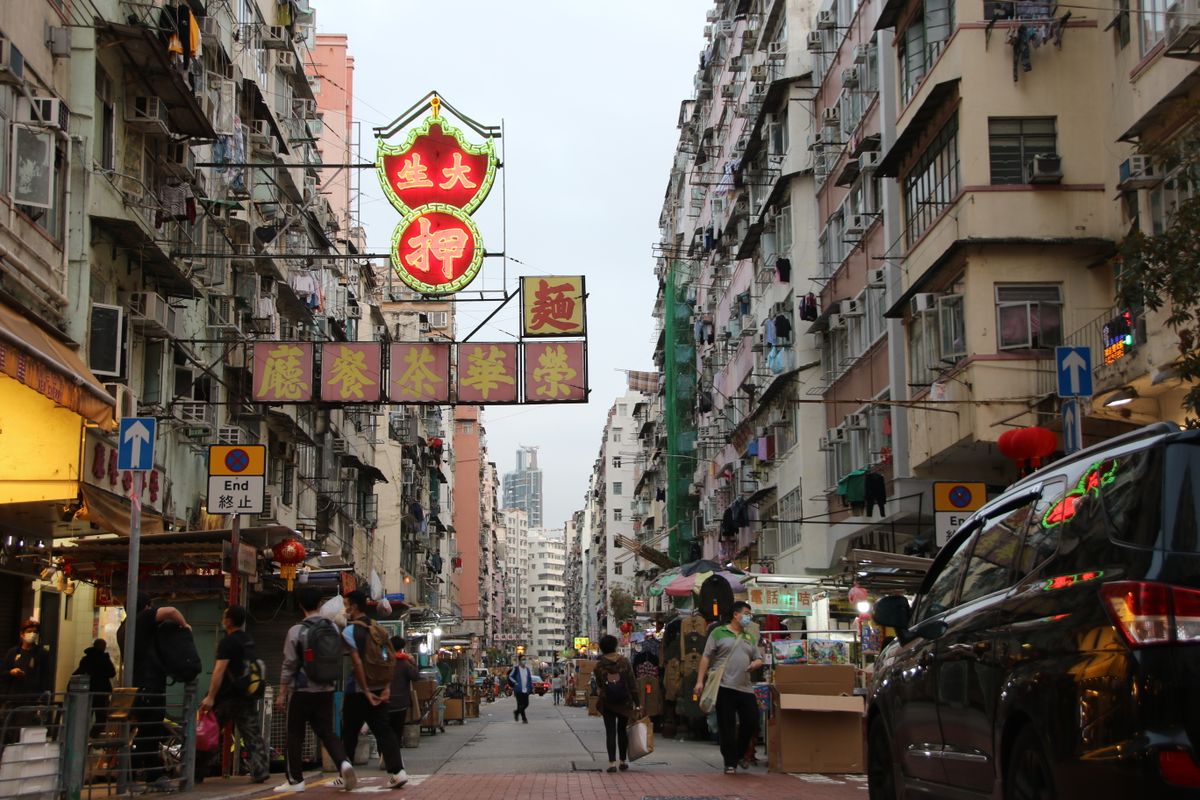
The bun that got its own government heritage listing
🏛️ Intangible cultural heritage, 2014
In 2014, the Hong Kong government's Intangible Cultural Heritage Office added the technique of making the pineapple bun to its official inventory — alongside Cantonese opera, bamboo scaffolding, and the making of milk tea. The listing is not for the bun itself but for the craft: the sponge-dough method, the cracked topping, the timing of the bake. Because in 2014, the government could see what was coming: neighbourhood bakeries closing to make way for chain cafes, and the recipe migrating into supermarket freezer aisles.
The bun as diaspora shorthand
Every Cantonese diaspora city has at least one bakery that does a defensible pineapple bun. In Vancouver, Kam Do and Maxim's on Main. In San Francisco, AA Bakery in Chinatown. In New York, Fay Da and Mei Li Wah. In London, Miao Bakery in Chinatown. The bun travels because the recipe is stubborn — you cannot fake the crust, and every bakery that knows how to bake one is a small anchor to Hong Kong for the neighborhood.
Ask any diaspora kid what they missed most when they left Hong Kong, and "a fresh bo lo bao from the bakery downstairs" is on the list every time. It is the smell of Sunday morning, the paper bag on the way to school, the after-school snack your grandmother used to buy. Its warmth is a portable piece of Cantonese childhood — like how our silk stocking milk tea and egg tart travelled around the world in the last 40 years.
Where the pineapple bun goes from here
The classic bakeries are under pressure — rent, aging bakers, chain cafes. But the pineapple bun is not going anywhere. Young Hong Kong bakers are experimenting with matcha crusts, salted egg yolk fillings, black sesame, chocolate, coconut. Some of them are extremely good; some are heresy. The classic version, still made properly in an old-school neighbourhood bakery at 6am, is what everyone quietly measures the newcomers against.
The pineapple bun is Cantonese food culture in miniature. It is Western technique bent to Cantonese taste. It is cheap, warm, honest, and completely uninterested in being fancy. It is a bun that has fooled the whole world about its ingredients for 80 years and is somehow still winning. Wear that spirit — our 叉燒 Char Siu oversized tee comes from the same food-first Cantonese heart.
📖 Related Articles
👉 Shop the Mami Says collection
Modern streetwear for the global Cantonese community.