

There is no pineapple in a pineapple bun. There has never been pineapple in a pineapple bun. Ask any Hong Konger — with a slightly weary smile, because they've explained this a thousand times — and they will confirm: 菠蘿包 (bo1 lo4 baau1) is named for what the top of the bun looks like, not what's inside it. The crackled, sugary golden crust bakes into a pattern that resembles the diamond-textured skin of a pineapple. Everything else about this Hong Kong bakery icon is uniquely Cantonese.
What actually is a pineapple bun?
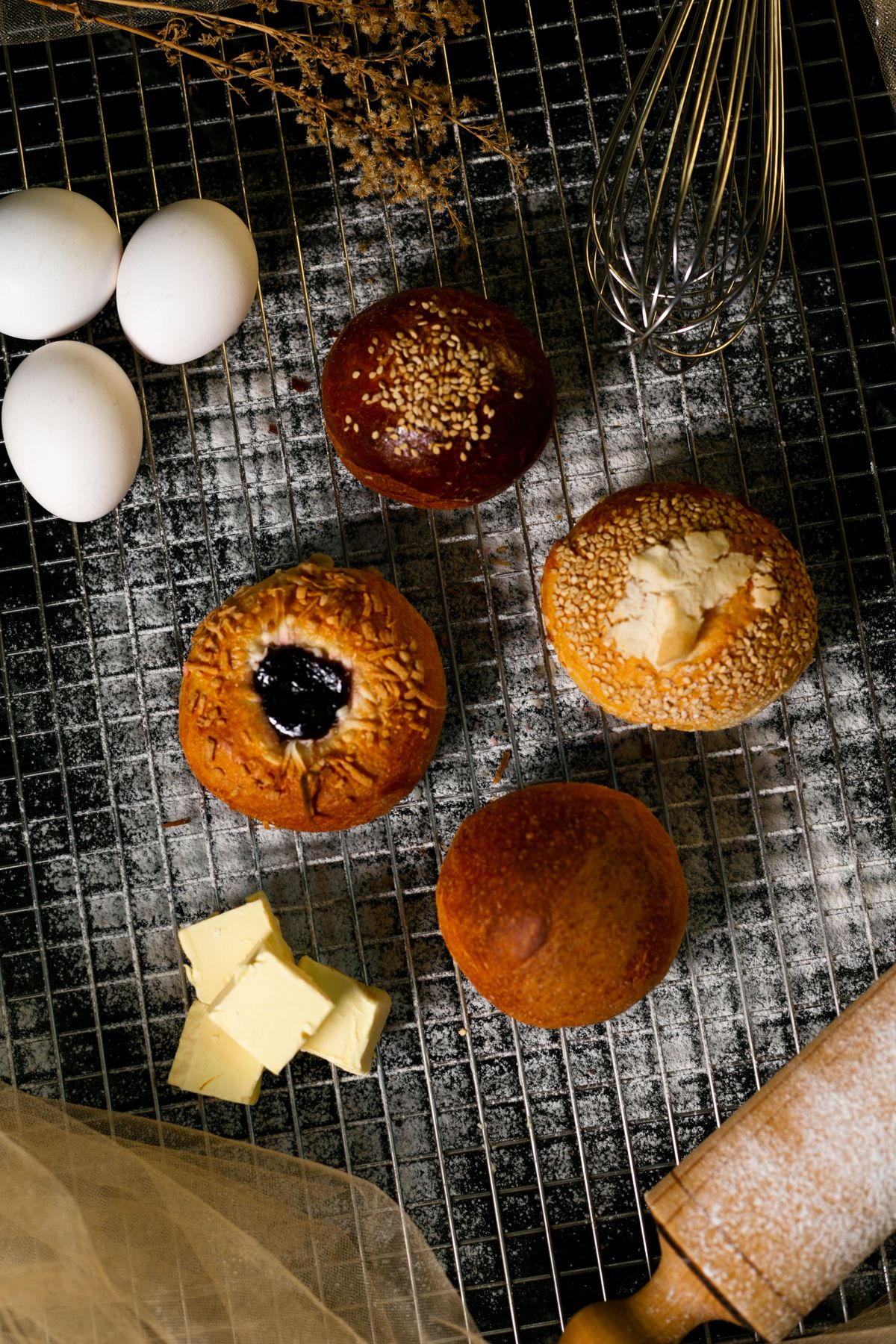
A pineapple bun is a soft, sweet Hong Kong bread roll — usually about the size of a fist — topped with a crumbly layer of sugar, egg, flour and lard (or butter). During baking, that topping cracks into an uneven diamond pattern that looks vaguely like the skin of a pineapple. The inside is plain, soft, and slightly sweet — designed to soak up milk tea. That's it. That's the whole thing. Its beauty is in its restraint.
The Cantonese name breaks down as: 菠蘿 (bo1 lo4, pineapple) + 包 (baau1, bun). Simple, honest, and — for anyone who grew up in Hong Kong — instantly nostalgic.
Where it comes from — a post-war Hong Kong invention
Most Hong Kong food historians place the pineapple bun's origin in Hong Kong bakeries around the mid-20th century. It was a local invention — not a direct import from Guangzhou or anywhere else. Post-war Hong Kong bakers were experimenting with hybrid Chinese-Western baked goods: soft milk-bread doughs inspired by European baking, but shaped, sweetened, and paired for local tastes. The sugary crackle-top was the master stroke — it turned an ordinary sweet roll into something visually unmistakable.
The pineapple bun quickly became a staple of the Hong Kong-style bakery (餅店, beng2 dim3) and later of the cha chaan teng menu, where it earned its most famous variant.
The bo lo yau — Hong Kong's most audacious upgrade
Somewhere along the way, some brilliant cha chaan teng cook took a fresh, still-warm pineapple bun, sliced it horizontally, and jammed in a thick cold slab of butter. The result is 菠蘿油 (bo1 lo4 jau2) — literally "pineapple oil" — one of the most gloriously excessive breakfasts in Cantonese food culture. The butter melts slightly against the hot bun. The sugary crust crackles. You eat it with a cup of Hong Kong-style milk tea and try not to make any long-term life plans.
Kam Wah Café (金華冰廳), opened in 1973 and located near Prince Edward MTR station in Mong Kok, is the address most famously associated with the modern bo lo yau. It reportedly sells around 5,000 pineapple buns a day. Every Hong Kong food guide points there. Every visiting Cantonese diaspora auntie makes the pilgrimage.
Why Hong Kong bakes them fresh, all day, forever
A pineapple bun's window of perfection is short — maybe two hours out of the oven. After that, the sugar crust starts to lose its crackle. This is why Hong Kong bakeries — proper, old-school ones — run their ovens in continuous rotation from early morning to late evening. Regulars know exactly what time their local bakery drops a fresh tray, and they'll time a detour on their way home from work to grab two before dinner.
Hong Kong-style milk tea — the drink that most often accompanies a pineapple bun — was recognised as intangible cultural heritage in 2014 and was inscribed onto the Representative List of Hong Kong's Intangible Cultural Heritage in 2017. The pineapple bun itself is regularly cited alongside milk tea and egg tarts as one of the most recognisable icons of local Hong Kong food culture.
The diaspora versions
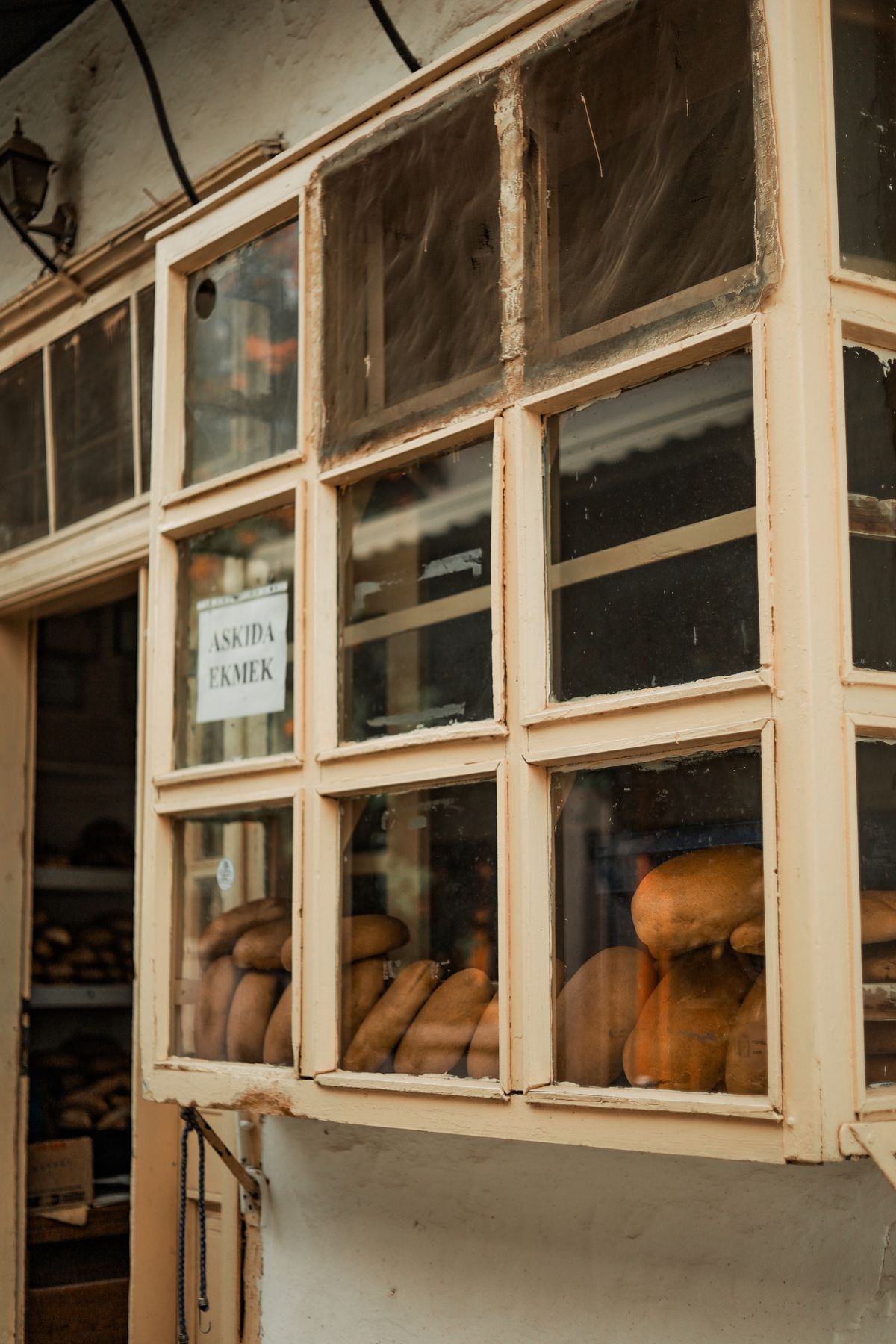
Every Cantonese immigrant community in the world has its version. In Vancouver's Chinatown, they're stacked in the front window at Kam Do and Maxim's Bakery. In Toronto's Spadina bakeries, they arrive on the tray in dozens and sell out by 10am. In London's Chinatown, in Sydney's Haymarket, in San Francisco's Grant Avenue — the same golden, cracked-topped bun sits waiting under a heat lamp. For any Cantonese kid raised outside Hong Kong, the bo lo bao is a shortcut back to the taste of a specific childhood.
Why it matters
The pineapple bun isn't a fancy pastry. It's not trying to be. It's a soft, sweet, cheap, glorious little bun that Hong Kong invented and refused to make more complicated. In a food culture that reveres restraint — from a plate of white cut chicken to a bowl of clear congee — the pineapple bun is that same philosophy applied to baking. Simple, honest, unbeatable when made properly. It carries no pineapple, no pretension, and no need to explain itself.
📖 Related Articles
👉 Shop Cantonese Guy — Modern Streetwear for the Global Cantonese Community