

Ask any Cantonese chef the hardest dish to cook well and a surprising number will tell you the same thing: it's not braised abalone or roast suckling pig. It's a chicken poached in salted water. White cut chicken (白切雞, baak6 cit3 gai1) has no sauce hiding anything, no seasoning covering anything, no flame browning anything. It is a whole bird dropped into hot water — and it either sings, or it doesn't. That's why this quiet, pale, almost naked dish is treated as the ultimate test of Cantonese kitchen mastery.
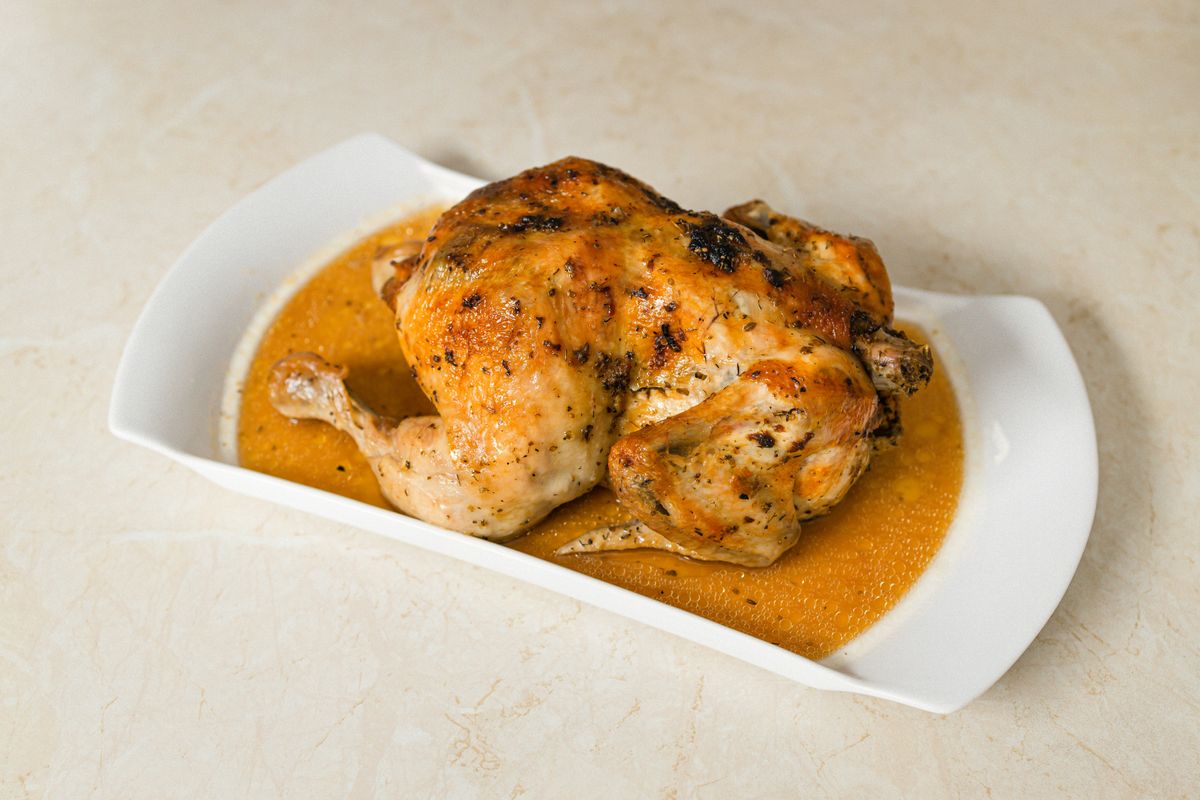
A Dish Born from Restraint
White cut chicken has more than 200 years of documented history. It first appeared in Qing Dynasty Guangdong, and the earliest written record shows up in the 18th century culinary text The Menu of Sui Garden (隨園食單) by poet Yuan Mei, who praised it as a fast, everyday dish that let the ingredient itself shine. From imperial banquets it drifted into everyday homes, and by the early 20th century it had become one of Guangdong's most beloved dishes.
The name tells you the philosophy. 白 (baak6) — literally "white" — here means "as-is," "nothing added," "clean." The chicken is cooked in salted water or a light stock, then chilled, chopped, and served with a small sauce on the side. There is nowhere for a poorly raised bird to hide. There is nowhere for a lazy cook to pretend.
The Technique: Hot Water, No Panic
The classic Cantonese method is called 浸雞 (zam3 gai1) — literally "soaking chicken." A whole chicken is dropped headfirst three times into boiling water (to plump the skin), then submerged into a pot of just-boiling water with ginger and scallion. The heat is turned off. The chicken is left to sit in the hot water, lid closed, for around 30 minutes. It cooks in residual heat.
What comes out is skin that stays pale and taut, meat that's tender but not falling apart, and — if you cut through the thigh joint — a bone still tinged with a whisper of pink at the marrow. That pink is not raw. It's the sign of a chicken cooked so gently that its juices are still inside the muscle, not driven out by boiling. Miss the timing by two minutes and the whole thing goes rubbery.
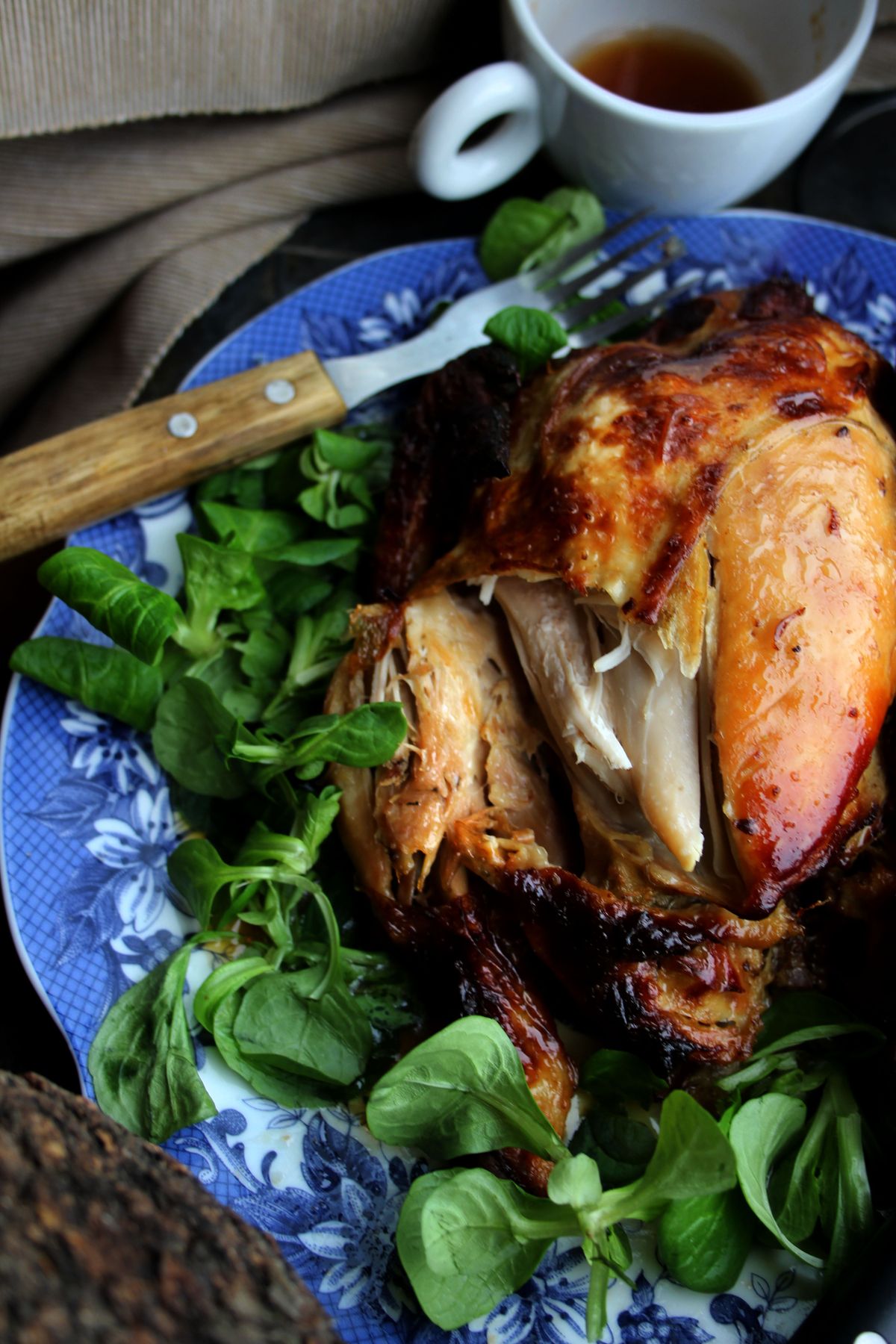
The Sauce That Makes Everything Sing
The dish comes with 薑蔥蓉 (goeng1 cung1 jung4) — ginger scallion sauce. Finely minced ginger and scallion whites are salted, then hit with a splash of smoking-hot oil until they sizzle. That's it. A few tablespoons of ginger, a few of scallion, a pinch of salt, hot oil. It takes 90 seconds.
And yet no two families make it the same. Some add a tiny drop of light soy. Some use pure peanut oil for its aroma. Some grate the ginger, others chop it fine. The sauce is a family fingerprint. Ask any Cantonese person to describe their mother's ginger scallion sauce and watch their eyes light up.
Why It's the Ultimate Test
Cantonese cooking is built on a single line of philosophy — 原汁原味 (jyun4 zap1 jyun4 mei6), "original juice, original flavour." Let the ingredient be the ingredient. Don't drown it in sauce. Don't over-cook it. Don't crowd it with spice. White cut chicken is that philosophy served on a plate. The whole dish depends on the bird — a corn-fed 三黄雞 (saam1 wong4 gai1, "three-yellow chicken" — yellow feet, beak, and skin) is traditional — the water temperature, and the timing. Nothing else.
This is why every serious Cantonese restaurant, from the fanciest Kowloon banquet halls to the diaspora hole-in-the-walls in Vancouver and San Francisco, puts white cut chicken on the menu. It's a signature. A statement. If you can nail the chicken, you're a serious kitchen. This is the same restraint you find in a bowl of wonton noodle soup or a piece of roast goose — small choices done exactly right.

The Cantonese Words That Live in This Dish
Watch a table of aunties dissect a plate of white cut chicken and you'll hear the whole vocabulary of Cantonese food praise. 滑 (waat6) — the skin is silky. 腍 (nam4) — the meat is tender. 鮮 (sin1) — the flavour is clean and full. 甘 (gam1) — there's a soft sweetness in the bone. Miss any one and someone will notice. Hit all four and the chef gets called out to the table.
Where to Find It Today
In Hong Kong, small siu mei shops still hang whole poached chickens beside their roast ducks and char siu, chopping each order to size on a wooden block. In Guangzhou, the dish is served in tall glass cases at chain restaurants like Bing Sheng (炳勝) and traditional houses like Guangzhou Restaurant (廣州酒家). In San Francisco Chinatown, Vancouver's Richmond, Sydney's Cabramatta, London Chinatown — the diaspora carries this dish forward without changing the formula. Because the formula is the point. Cook the bird gently. Cut it clean. Serve the sauce on the side. Let it speak.
📖 Related Articles
👉 Shop Cantonese Guy — Modern Streetwear for the Global Cantonese Community