

If you grew up in a Cantonese household — anywhere from Guangzhou to Sydney to San Francisco — you already know the rules, even if nobody ever explained them. Don't gift a clock. Don't share a pear. Never say the number four in a hospital. This isn't folklore we read about in books; it's the running commentary of daily Cantonese life. Vol. 50 is a milestone edition, so we're spending it on the words that reveal how Hong Kong actually thinks about fortune, fate, and the sound of a word.
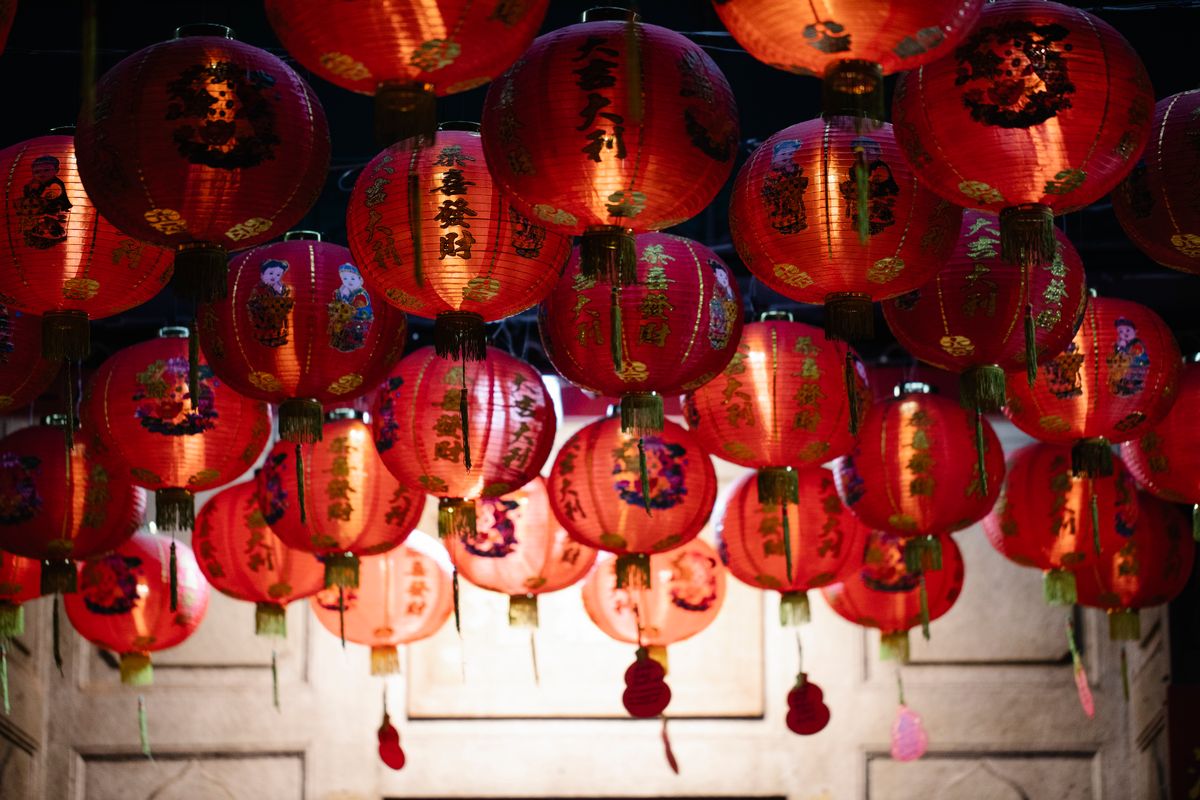
The 10 Superstition Words
1. 好意頭
hou2 ji3 tau4 — Jyutping romanisation
Meaning: A good omen; a lucky implication carried by a word, sound or object.
Explanation: This is the master concept behind every Cantonese superstition. If something sounds like or looks like a lucky word, it's hou ji tau. If it sounds like death, separation or misfortune, it's the opposite. Whole industries — florists, jewellers, banquet halls — run on hou ji tau logic.
2. 四
sei3 — Jyutping romanisation
Meaning: The number four — the unluckiest number in Cantonese.
Explanation: 四 (sei3) sits uncomfortably close to 死 (sei2), which means "to die." That single tonal shift is enough to make Hong Kong developers skip the 4th, 14th, 24th and sometimes entire 40-something floors in residential towers. Hospitals rarely have a Room 4. Licence plates ending in 4 sell at a discount.
3. 八
baat3 — Jyutping romanisation
Meaning: The number eight — the luckiest number in Cantonese.
Explanation: 八 (baat3) sounds close to 發 (faat3), "to prosper." That association turns 8 into cultural currency: Hong Kong phone numbers stuffed with eights fetch huge premiums at auction, and apartments on the 8th floor (or 18, 28, 88) typically list for more than identical units elsewhere in the same building.
4. 恭喜發財
gung1 hei2 faat3 coi4 — Jyutping romanisation
Meaning: "Congratulations and may you prosper" — the classic Cantonese New Year greeting.
Explanation: The four syllables Cantonese diaspora kids everywhere learn first. It's less a wish than a transaction: say it to an elder or married relative and the traditional response is a red packet. The 發 (faat3) again — that same prosperous sound that makes 8 lucky.
5. 利是
lei6 si6 — Jyutping romanisation
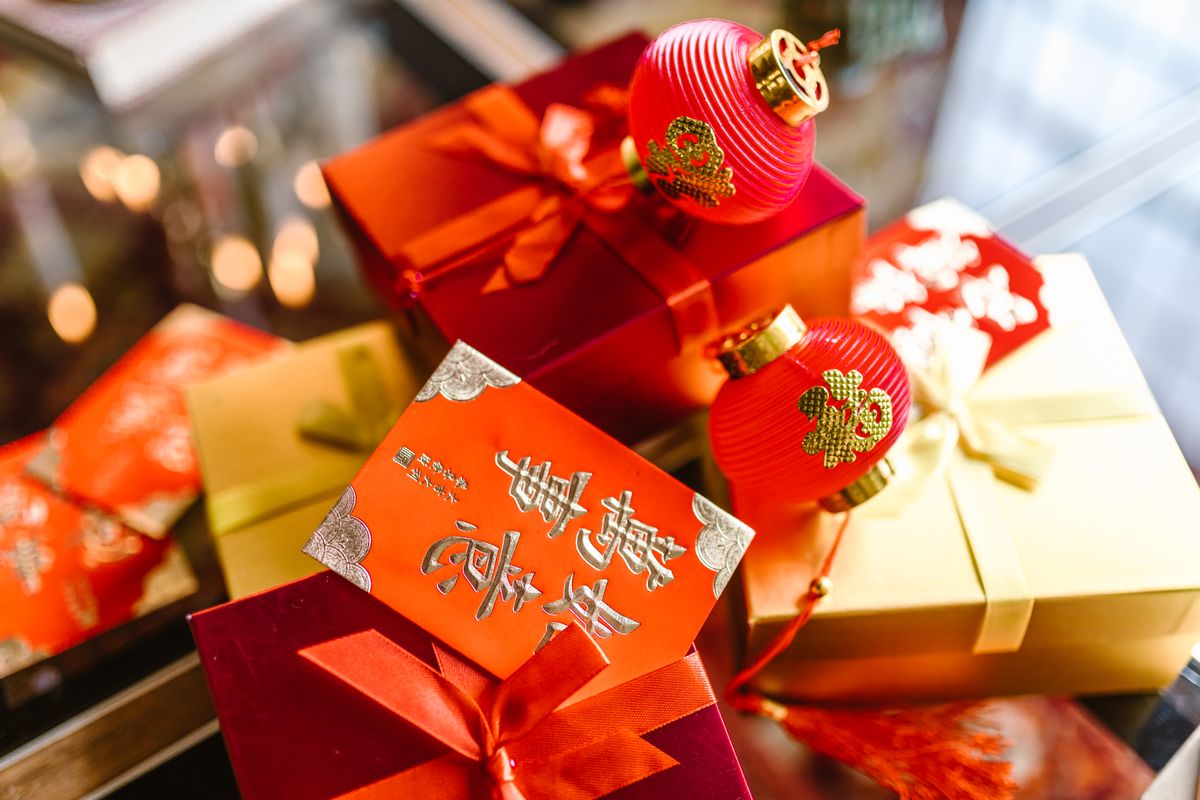
Meaning: A red packet containing money, given at New Year, weddings and other happy occasions.
Explanation: Also written 利市. Married adults give lei si to unmarried people, children and service workers over the Lunar New Year period. The money inside matters less than the gesture: the red envelope itself carries the luck.
6. 送鐘
sung3 zung1 — Jyutping romanisation
Meaning: Literally "to gift a clock." A serious gift taboo.
Explanation: 送鐘 (sung3 zung1) is a near-homophone of 送終 (sung3 zung1), "to attend a funeral / to pay last respects to the dying." Handing someone a clock is functionally telling them to hurry up and die. Even now, most Cantonese aunties will genuinely gasp if you unwrap one. If you must give a watch, wrap it in red and take a coin from the recipient to "buy" it back.
7. 分梨
fan1 lei4 — Jyutping romanisation
Meaning: "To split a pear" — traditionally avoided between couples and close friends.
Explanation: 分梨 (fan1 lei4) sounds exactly like 分離 (fan1 lei4), "to separate." Sharing a single pear between two people is said to invite a break-up. The workaround: cut the pear so each person has their own piece rather than sharing one, or eat pears in groups of three or more.
8. 打小人
daa2 siu2 jan4 — Jyutping romanisation
Meaning: Literally "beating the little person" — a folk ritual for cursing your enemies.
Explanation: One of Hong Kong's most vividly Cantonese traditions. Under the Canal Road flyover in Wan Chai, old women called "villain-beaters" hit paper effigies of your enemies with a shoe while chanting curses on your behalf. It's part folk religion, part therapy — and hugely popular during the seasonal 驚蟄 ("awakening of insects") in March.
9. 犯太歲
faan6 taai3 seoi3 — Jyutping romanisation
Meaning: "To offend the Grand Duke Jupiter" — the ruling deity of your current zodiac year.
Explanation: Each Chinese zodiac year has a ruling Grand Duke (太歲). If your own animal clashes with the year's animal, you're said to be faan taai seoi, and you're in for a rough twelve months. The traditional remedy: visit a temple (Wong Tai Sin is the most famous), light incense, and pay for a protective ritual.
10. 大吉大利
daai6 gat1 daai6 lei6 — Jyutping romanisation
Meaning: "Great luck, great profit" — a catch-all lucky phrase, also the reason tangerines flood every Cantonese home at New Year.
Explanation: 吉 (gat1) means auspicious, but it's also the Cantonese word tangerines carry inside them (the fruit's colloquial name, 桔, is a homophone). That's why every home fills with mandarin oranges and kumquat trees at New Year — the fruit is a physical stand-in for the phrase.
The Sound of Fortune
Almost every entry in this list runs on the same engine: two words that sound almost identical, one lucky and one cursed. That's Cantonese superstition in a nutshell — a language so tonally rich that puns become fate. To learn Cantonese properly is to eventually learn the hidden second meaning of every word. Explore more everyday vocabulary in our money and business dictionary, our celebration and festive words guide, or our Guangdong Lunar New Year traditions.
📖 Related Articles
- Cantonese Dictionary Vol. 49: 12 Money & Business Words Every Hong Konger Uses
- Cantonese Dictionary Vol. 18: 10 Celebration, Luck & Festive Words From Hong Kong
- Wong Tai Sin Temple: How a Zhejiang Shepherd Became Hong Kong's Most Prayed-To Deity
- Kung Hei Fat Choy: The Guangdong Lunar New Year Traditions You Need to Know
👉 Shop Cantonese Guy — Modern Streetwear for the Global Cantonese Community