

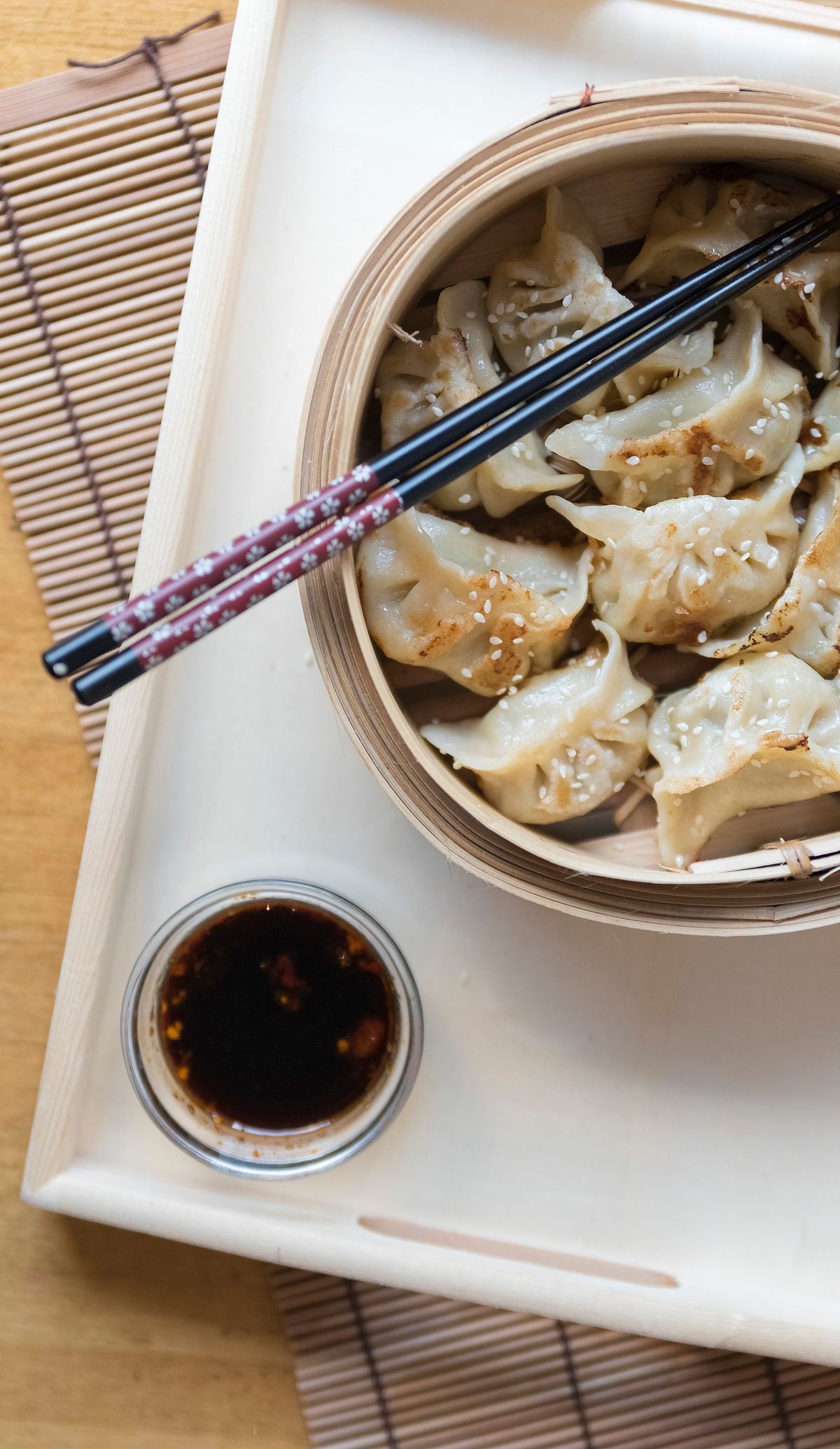
If you've ever pushed past a bamboo trolley at yum cha and watched a pair of scissors flash across a pale, glossy sheet of rice noodle — you've met cheung fun. If you've walked past a Guangzhou breakfast stall at 7am and watched a vendor pull steaming trays from a wall of drawers before slicing them into ribbons — you've met cheung fun in its purest form. This is the Cantonese noodle that looks like it should be delicate, but has actually been feeding Guangdong for the better part of a century.
What exactly is cheung fun?
Cheung fun (腸粉), literally "intestine flour," is a Cantonese steamed rice-noodle roll — a translucent sheet made from rice-flour batter that's steamed thin on a cloth or metal tray, then rolled up while still hot. The name comes from its shape: long, tubular, and pale, coiled up on the plate like a length of intestine. Ugly on paper. Utterly beautiful in real life.
The batter is deceptively simple — rice flour, wheat starch, tapioca starch, water, a pinch of salt. But the technique is what separates a decent cheung fun from a great one. The best sheets are pillowy, slightly chewy, translucent enough to see through. The bad ones are gummy, too thick, or fall apart the moment you try to lift them with chopsticks. There is no middle ground with cheung fun. You either honour it or you insult it.
A dish born in Guangdong, older than most people realise
Cheung fun comes from Guangdong province, and food historians generally place the modern version in the 1930s in Guangzhou, though the underlying technique — steaming a thin rice-flour batter into pliable sheets — goes back much further. Some accounts trace steamed rice-paste sheets all the way back to the Tang dynasty (618–907), when southern Chinese cooks were already grinding rice with water to make a range of steamed and rolled dishes.
Whatever the exact birthday, by the mid-20th century cheung fun had colonised two very different worlds. In the tea houses of Guangzhou and Hong Kong, it became a headline act on the yum cha trolley alongside char siu, siu mai, and har gow. On the street, it became a working-class breakfast — steamed to order in wall-mounted drawers, sliced with scissors, dressed with sweet soy sauce, and eaten in three minutes flat on the way to work.
The four cheung fun you should know
Order cheung fun at any half-decent Cantonese place and you'll usually see the same core cast on the menu. Each one is its own small ritual.
Har cheung (蝦腸) — plump whole shrimp wrapped inside the rice sheet. The snappy, briny contrast against the silky noodle is why this is the version most yum cha aunties will fight you for the last piece of. When done well, the shrimp is still barely-cooked and springs against your teeth. When done badly, it's rubbery and forgettable.
Ngau yuk cheung (牛肉腸) — minced beef mixed with cilantro, spring onion, and often water chestnuts for texture. This is the heartiest of the four, closer to a small hand-held stew than a delicate dumpling. Guangzhou breakfast stalls sometimes stuff it thicker than Hong Kong tea houses do — a tell of where the vendor learned to cook.
Char siu cheung (叉燒腸) — diced Cantonese BBQ pork inside the noodle. The sweet-salty glaze of char siu leaks into the rice sheet as it cools, so the bottom of the plate ends up with a small pool of pork-scented soy that you're morally obligated to mop up.
Jaa leung (灸兩) — the wildcard. This one wraps an entire youtiao (Chinese fried dough stick) inside a cheung fun sheet. The result is silky, chewy, crunchy, and greasy all at once. It's a Guangzhou street-cart classic — meant to be eaten hot, immediately, with sweet soy — and it's one of the truly great breakfast foods on the planet.
The sauce is not a side note
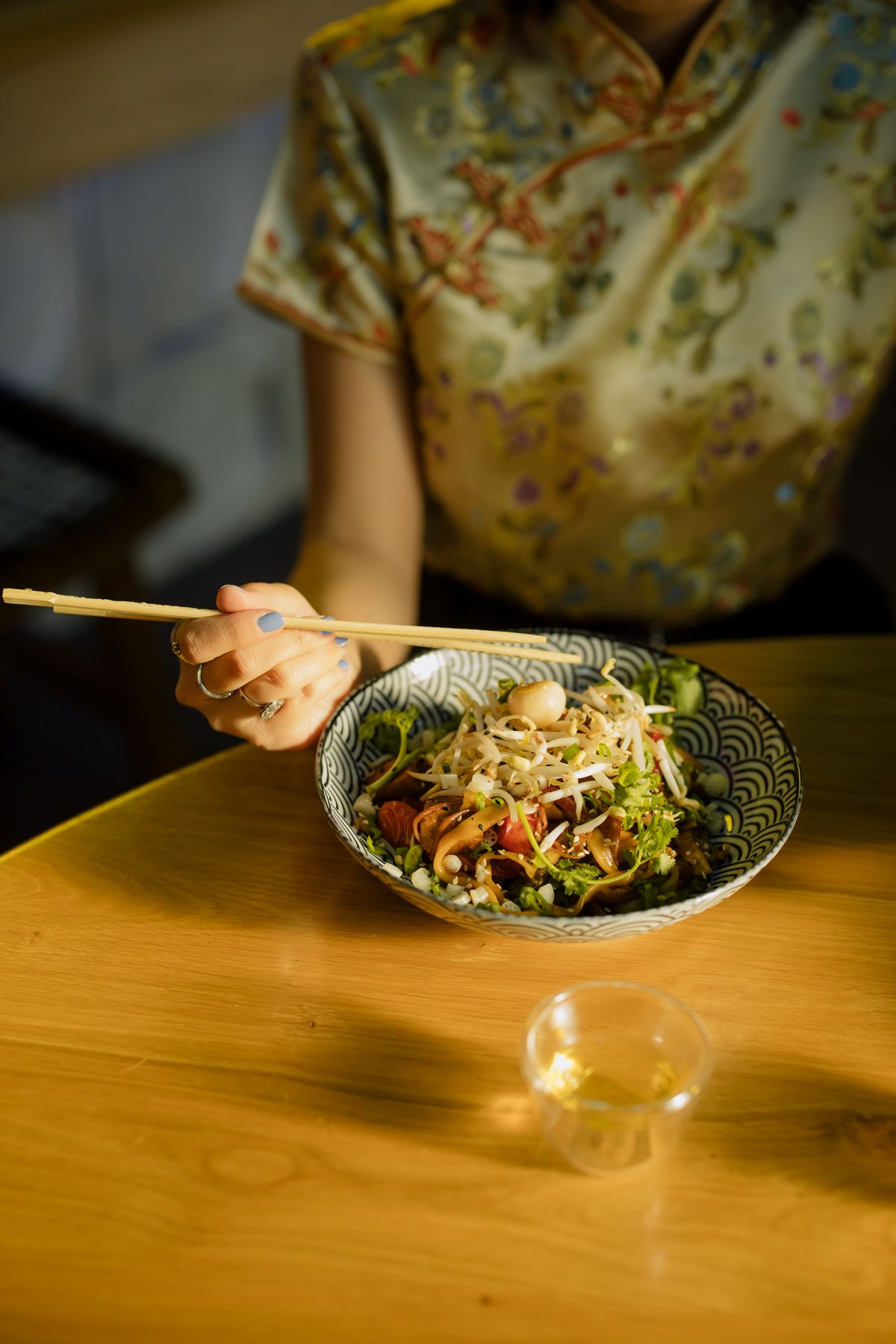
Every Cantonese cook worth their salt has an opinion on cheung fun sauce. The default is a sweet seasoned soy — light soy, dark soy, a splash of oyster sauce, sugar, sometimes ginger, sometimes toasted sesame oil, and always a whisper of stock. Tea houses guard their exact recipe like a state secret. The best sauces are almost lacquered — sweet enough to coat the back of the spoon, savoury enough to make you keep eating.
In Hong Kong, cheung fun sauce is often finished with sesame paste, hoisin, and a drift of chilli oil — the classic "three-sauce" combo you'll see doused generously over a plate of plain cheung fun at a dai pai dong or a cha chaan teng. That version — no filling, just plain rice rolls with sauce — has its own dedicated fan base. Some people would fight for that plate over any dim sum.
Cheung fun and the diaspora
Every Cantonese diaspora city with a real Chinatown has a cheung fun spot the locals argue about. Vancouver's has them. San Francisco's has them. Sydney, London, New York — all of them. The good ones open at 6am, close by early afternoon, and are staffed by uncles who make the batter by muscle memory. If you ever want to know how deep-rooted a Chinatown is, ask where you can get 蝦腸 at breakfast time. If the answer takes them five seconds, that Chinatown is still Cantonese at the core.
Cheung fun is a good reminder that Cantonese cuisine isn't only about the big-ticket dishes — the roast goose, the abalone banquets, the double-boiled soups. Some of the most defining Cantonese food is quiet: rice, water, a hot steamer, a pair of scissors, a bottle of soy sauce. And a technique passed down through so many hands that nobody remembers who did it first — only that it's been done, correctly, every morning, for as long as anyone can remember.
📖 Related Articles
- Char Siu: The 1,000-Year-Old Cantonese BBQ Pork That Still Rules Hong Kong Windows
- Wonton Noodles: The Cantonese Bowl a Guangzhou Master Perfected
- Egg Tart: The Guangzhou-Born Cantonese Pastry That Became Hong Kong's Most Beloved Handheld
- Dai Pai Dong: The Post-War Cantonese Street Kitchens Hong Kong Almost Lost
👉 Shop Cantonese Guy — Modern Streetwear for the Global Cantonese Community