

On the ninth day of the ninth lunar month, half of Hong Kong disappears into the hills. Families load into taxis with buckets of flowers, roasted suckling pig, incense sticks and rice wine to visit ancestors' graves. Others put on hiking boots and head for Victoria Peak, Lion Rock or Dragon's Back before the sun gets too hot. This is Chung Yeung Festival (重陽節, cung4 joeng4 zit3) — the Cantonese autumn ritual that has been observed for more than two thousand years, and one of the two annual holidays when Hong Kong's cemeteries and hiking trails are equally crowded.
Why the Ninth of the Ninth
In Chinese cosmology, the number nine is a yang number — associated with light, masculinity, and heaven. The ninth day of the ninth month is therefore a doubling of yang, an excess of solar energy that ancient Chinese philosophy considered dangerous rather than lucky. The traditional response was to ascend: to climb a hill, walk a ridgeline, drink chrysanthemum wine, and let the excess yang dissipate into the autumn air. That instinct — that the way to handle imbalance is to physically rise above it — is the heart of Chung Yeung. Our Dragon Kite oversized tee nods to the same skyward tradition — kites and mountains both point up.
The Legend That Started It All
The oldest story attached to the festival dates back roughly two thousand years to the Han dynasty. A scholar named Huan Jing (桓景) was warned by his Daoist teacher Fei Changfang (費長房) that a great calamity would strike his village on the ninth day of the ninth month. Fei told him to gather his family, tie sprigs of dogwood (茱萸) to their arms, climb the nearest mountain and drink chrysanthemum wine on the peak. Huan Jing did as instructed. When the family returned home, they found every animal in the village dead — but they themselves were safe. The tradition of ascending to high places, drinking chrysanthemum wine and celebrating the day with family was born.
Baai San: The Grave-Sweeping Ritual
Chung Yeung is one of two annual grave-sweeping days in the Cantonese calendar (the other is Ching Ming in the spring). Families make the trip together — often several generations at once — to clean an ancestor's grave, clear away weeds, arrange flowers, and lay out offerings. The offerings almost always include a whole roasted suckling pig (金豬, gam1 zyu1), oranges, apples, and a bottle of Chinese liquor. Incense is lit and stuck into the earth. Joss paper — spirit money, paper cars, paper mansions — is burned so the ancestors can receive it in the afterlife. Afterwards, the whole family shares the roasted pig on the spot. It's ritual, meal, and reunion all at once. If the day reminds you to text your parents, our 早啲返屋企 Come Home Earlier oversized tee is the classic Cantonese mother-guilt turned into wearable form.
Deng Gao: Climbing to High Ground
The other half of Chung Yeung is 登高 (dang1 gou1) — literally "climbing high." For urban Cantonese communities that no longer live near their ancestral villages, hiking has become the more accessible half of the festival. In Hong Kong, the classic Chung Yeung hikes are Victoria Peak, Lion Rock (獅子山) and the Dragon's Back ridge on Hong Kong Island. On the morning of the festival, the trails are unusually full — whole families, groups of aunties in sun hats, students, retirees. It's a day when the city collectively remembers that Hong Kong is actually a mountainous archipelago hiding under skyscrapers.
The Small Traditions That Still Live
Beyond hiking and grave sweeping, several smaller Chung Yeung customs are still quietly observed:
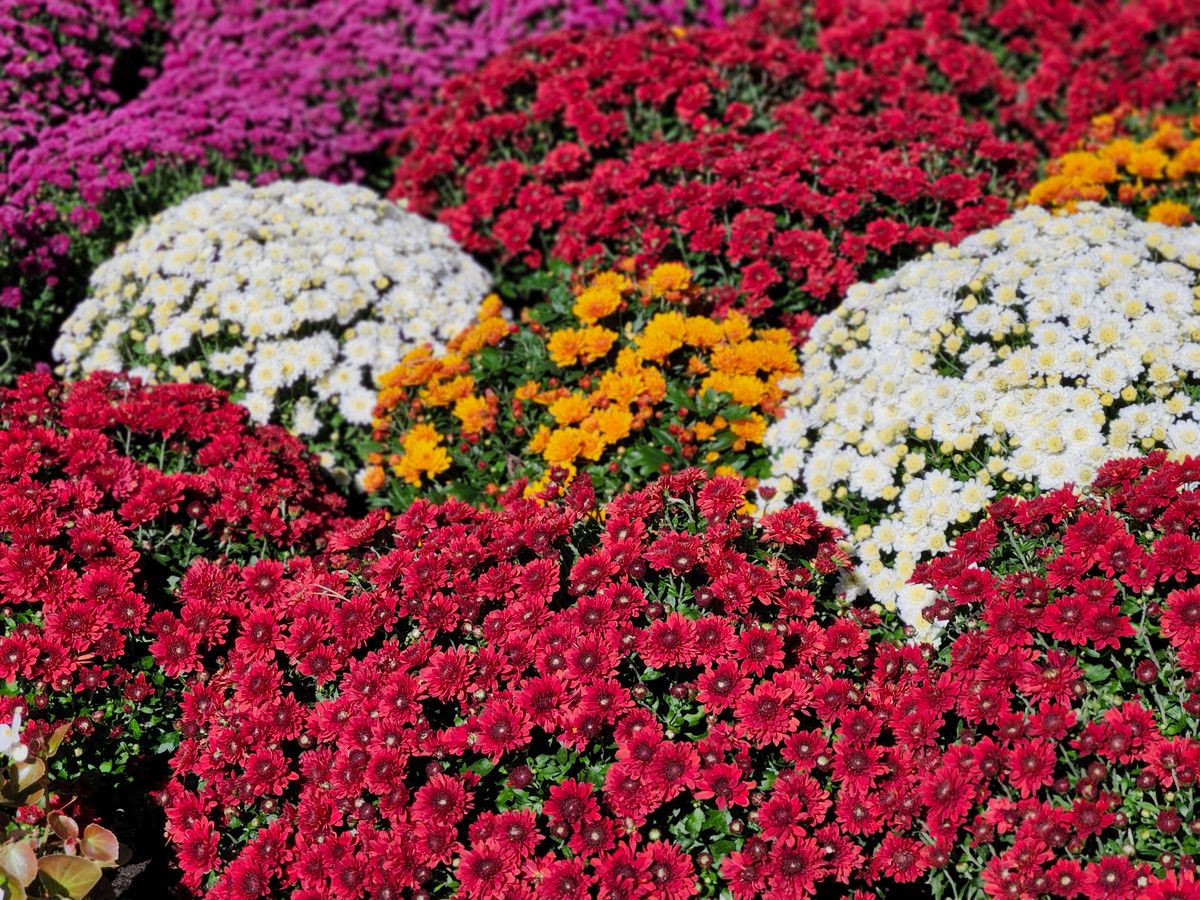
Chrysanthemums (菊花). The flower that blooms exactly around Chung Yeung. Older Cantonese families still buy potted chrysanthemums for the home, or brew chrysanthemum tea and wine during the festival. For a Cantonese floral symbol you can wear year-round, our Cotton Tree Flower printing hoodie puts Guangzhou's city flower on your back.
Chung Yeung cakes (重陽糕). Layered rice cakes, sometimes topped with red date or nuts. The name 糕 (cake) is a pun on 高 ("high") — so eating the cake is a symbolic way of "ascending" without having to climb.
Kite flying (放風筝, fong3 fung1 zang1). Historically, families flew paper kites on Chung Yeung and then cut the string to release bad luck into the sky. The tradition has faded in cities but is still practiced in some Guangdong villages.
Honouring the elderly. In Taiwan the festival has been officially reframed as 敬老節 (Senior Citizens' Day). The idea is quietly gaining ground in Hong Kong too — many Cantonese families now use the day to visit ageing parents and grandparents.
A Cantonese Rhythm the City Still Keeps
Chung Yeung is one of a small handful of lunar-calendar holidays that Hong Kong still observes as a full public holiday, alongside Mid-Autumn Festival and Lunar New Year. In an increasingly digital city, the festival is a reminder that the Cantonese calendar still runs on two clocks — the Gregorian one at work, and the lunar one at home. For the global Cantonese diaspora, from Vancouver to London, Chung Yeung is one of the days when many families pause, call their elders, and remember the ancestors whose graves they can no longer visit in person. Climbing a hill, opening a bottle of chrysanthemum wine, or simply making the phone call — that's all Chung Yeung really asks of you.
📖 Related Articles
👉 Shop the Accessories collection
Modern streetwear for the global Cantonese community.