

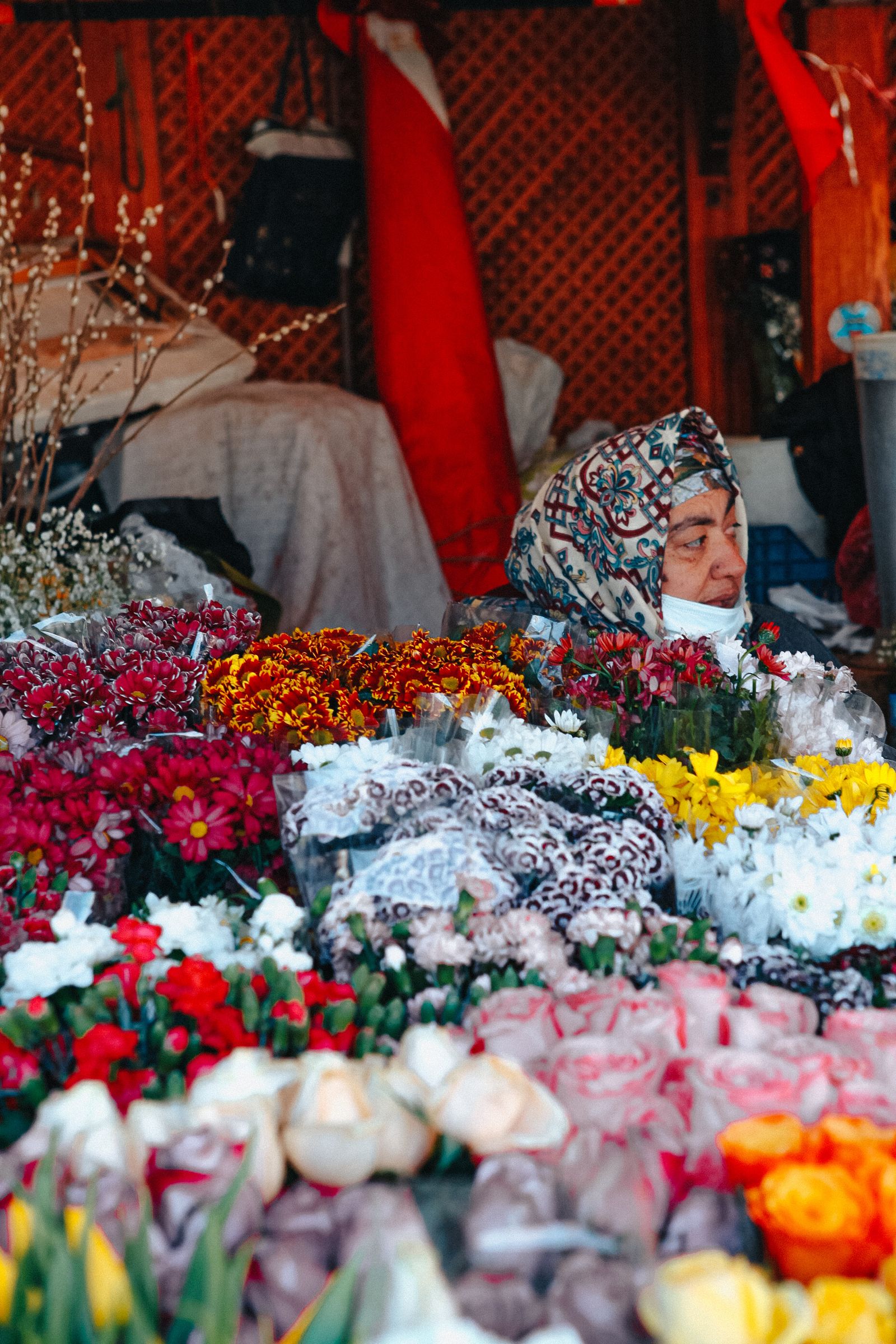
Three blocks north of Prince Edward station in Mong Kok, there is a stretch of road where every ground-floor shop sells flowers and nothing else. Buckets of pink peonies on the kerb. Branches of peach blossom tall enough to hit the awnings. Orchids wrapped in cellophane. Kumquats in red pots. Chrysanthemums bundled with raffia. Pine branches tied together with gold ribbon. This is 花墟 (faa1 heui1) — Flower Market Road — and if you want to understand how Cantonese culture actually feels about luck, hope, and new beginnings, you walk here first.
The street runs the length of Flower Market Road and spills onto Yuen Po Street. Officially it has been Hong Kong's flower district since the 1950s. Unofficially, it is the Cantonese city's most honest marketplace: a place where a family will spend serious money on a plant they know will die in two months, because the point of the plant was never longevity. The point was what the plant says.
Why Hong Kong Built a Street Just for Flowers
Cantonese culture reads flowers the way other cultures read tea leaves. Every bloom has a secondary meaning — a wish, a warning, a prayer — and that meaning is always keyed to a Cantonese pun. Peach blossom (tou4 faa1) carries romance because the word rhymes with the word for "relationship." Kumquat (gam1 gat1) brings wealth because the first syllable is a near-homophone for "gold." Narcissus (seoi2 sin1) ushers in new beginnings because its blooming timing lines up with Lunar New Year. A Cantonese family doesn't buy a flower; they buy a sentence in the floral language.
The city needed a street dense enough to hold every one of those sentences in one trip. Flower Market Road has been that street for seventy years. The Cotton Tree Flower hoodie we make draws on exactly this tradition — Hong Kong's own regional flower, carried as a visual language.
What the Street Actually Looks Like
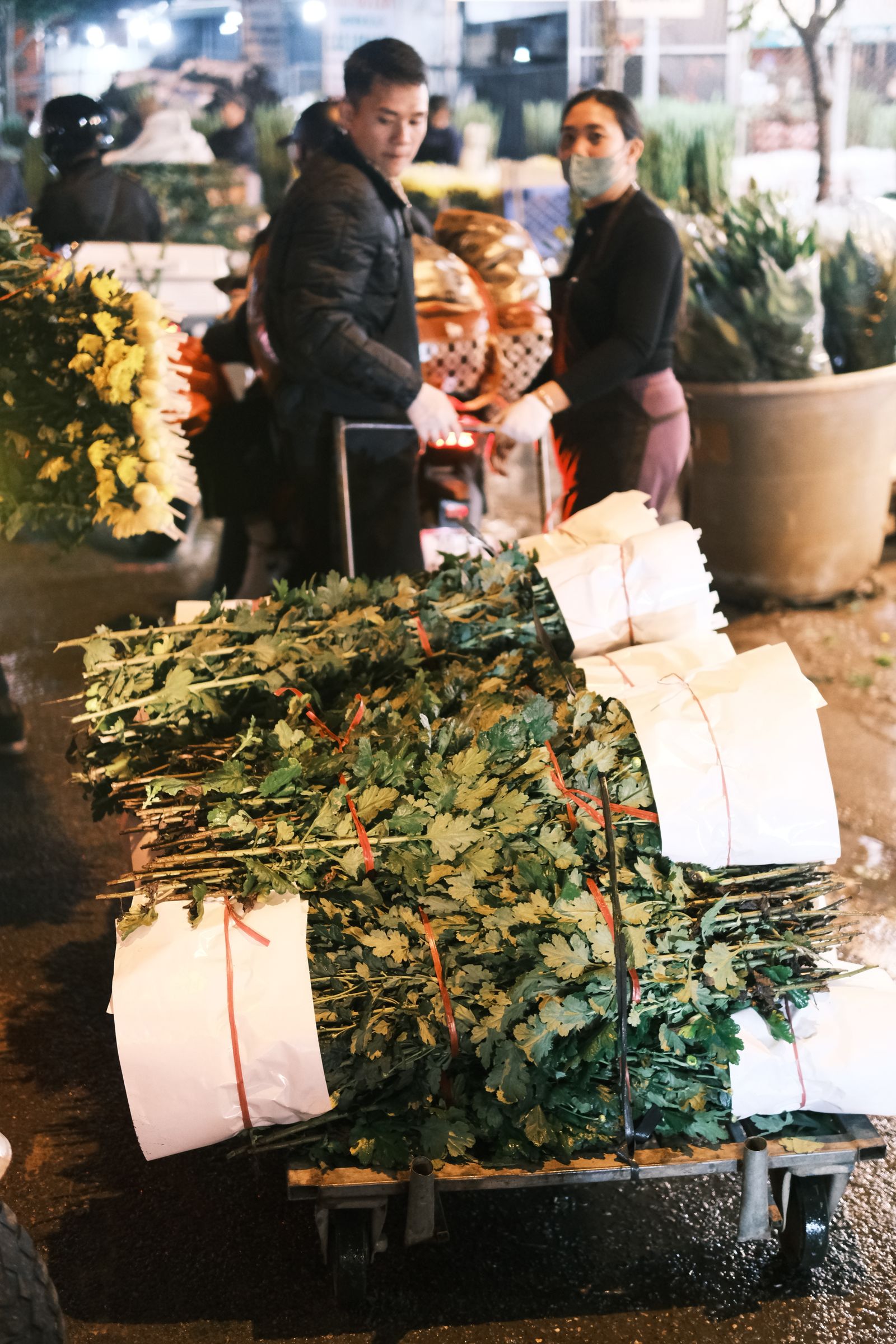
The best time to visit is early. A Cantonese florist starts work at 5 AM, unloading trucks from the international floral trade routes — roses from Kunming, orchids from Thailand, tulips from the Netherlands, lilies from Taiwan — and arranges them before the first customers show up at 7. By 10 AM the street is dense with people: aunties haggling with the pot plant uncle, florists trimming hydrangeas into bouquets at speed, delivery scooters threading between the parked vans, and a steady stream of office workers picking up ten-dollar bunches on the way to a wedding or a condolence visit.
The shops run twelve hours a day, every day. Most are specialists — orchid shops that only sell orchids, kumquat shops that only sell kumquats, cut flower shops that handle a hundred Western and Chinese species but almost no plants in pots. Walk the length of the road once and you've seen more flowers than most florists in the Western world handle in a year.
The Lunar New Year Explosion
The flower markets explode once a year. In the ten days before Lunar New Year, Flower Market Road triples in volume and the city sets up open-air markets — called faa1 si5 (花市) — across every district. Victoria Park's is the most famous, but Mong Kok's own Fa Hui Park market pulls crowds equally. Families walk through together, three generations deep, picking the plant that will be set up in the living room for the fifteen days of New Year. The usual shopping list:
🌸 The Lucky Flowers of Lunar New Year
桃花 Peach blossom (tou4 faa1): A full branch tall enough to brush the ceiling. For romance, luck, and single relatives who should be looking harder.
金橘 Kumquat (gam1 gat1): A potted tree hung with HK$5 red packets. For wealth. Keep it alive and your money year will be good.
水仙 Narcissus (seoi2 sin1): Timed to open on New Year's Day exactly — a Cantonese grandmother's annual engineering project.
牡丹 Peony (maau5 daan1): For honour, prosperity, and the family altar.
蒭花 Orchid (laan4 faa1): For elegance and friendship. The quiet gift.
The Faa Si tradition has been part of Guangdong life for centuries — Hong Kong just made it denser, louder, and open all night in the final 48 hours before New Year's Eve.
The Yuen Po Street Bird Garden Next Door
If you keep walking east from Flower Market Road, Yuen Po Street turns into something even more Cantonese: the Bird Garden. Fifty tiled stalls selling songbirds, bamboo cages, millet feed, and the sort of patient uncles who've been breeding canaries for fifty years. Cantonese men used to walk their birds the way other cultures walk dogs — cage on one hand, newspaper on the other, down to the yum cha hall for breakfast. Fewer do it today, but the Bird Garden is still the second half of a proper Flower Market walk. Fifteen minutes between the two and you've seen the full Cantonese relationship with living things that make the city feel like itself.
The Florists Who Hold the Memory
The stories on this street are their own kind of heritage. Many of the shopkeepers are second- or third-generation — inheriting the shop from a grandfather who opened it after fleeing Guangzhou in the 1950s, learning to grade peonies from a father who worked the trade through handovers and SARS. These are the kind of Cantonese small-business lives that built the city from the ground up and still define its texture. If you've ever met an older Cantonese shopkeeper who can tell you the quality of your flower by looking at the stem for one second, you've met a Flower Market Road florist in spirit.
A Cantonese Word for What This Street Does
辰意頭
san4 ji3 tau4 — Jyutping romanisation
Meaning: A good omen; a sign at the start of something that sets its direction.
Explanation: 辰意頭 is the Cantonese word for an opening lucky sign — the first customer of the day, the first dish at a dinner, the first day of a new year, the first flower in a new vase. Hong Kongers walk through Flower Market Road specifically to set a good 辰意頭 for whatever is coming next. A peach branch brought home before a wedding. A kumquat tree carried into a new office. These aren't decorations. They're first signs.
Visit Before It Changes
Flower Market Road is still itself, but Hong Kong keeps changing underneath it. Rents climb. Shops close. The MTR extensions move foot traffic. A Cantonese tradition this specific — a whole street of family-run florists, open twelve hours a day, every day of the year — doesn't exist anywhere else in the world. If you're in Hong Kong this winter, go on a Saturday morning. If you're in the Cantonese diaspora, make it part of your next trip home. Walk the length of the road once. Buy a kumquat. Carry it through Mong Kok back to the MTR. You will understand how a Cantonese person decides a year has started.
📖 Related Articles
👉 Shop the Accessories collection
Modern streetwear for the global Cantonese community.