

At its peak, roughly 50,000 people lived stacked inside a 2.7-hectare (6.7-acre) block in Kowloon. That's a population density of around 1.25 million people per square kilometre — the highest ever recorded anywhere on Earth. The block had no elected government, no proper city services, no police force willing to enter, and no working sunlight on its lower floors. It was Kowloon Walled City (九龍寨城), and for about forty years it was the strangest, most Cantonese, most impossibly alive corner of Hong Kong. Then, one morning in 1993, the demolition crews arrived.
A Song-dynasty outpost that fell through a legal crack
The site began as a military outpost during the Song dynasty. In 1898, the Second Convention of Peking leased the New Territories to Britain — but the treaty carved out a tiny exception: a small walled Chinese fortress inside the leased zone would remain under Qing Chinese jurisdiction. The British didn't want a Chinese military presence next to their new colony. The Chinese didn't want to give it up. Neither side was willing to fight over a few acres. So the walled fort was left in an administrative no-man's-land.
Over the next fifty years, its status quietly rotted. The Qing dynasty fell. The Republic of China lost the mainland. World War II came and went. Nobody quite owned the little walled patch. By the late 1940s and early '50s, Cantonese refugees fleeing the civil war and the new communist government began pouring in, throwing up shanties inside the old walls where the Hong Kong government had no legal right to remove them.
How a legal loophole became the world's densest city
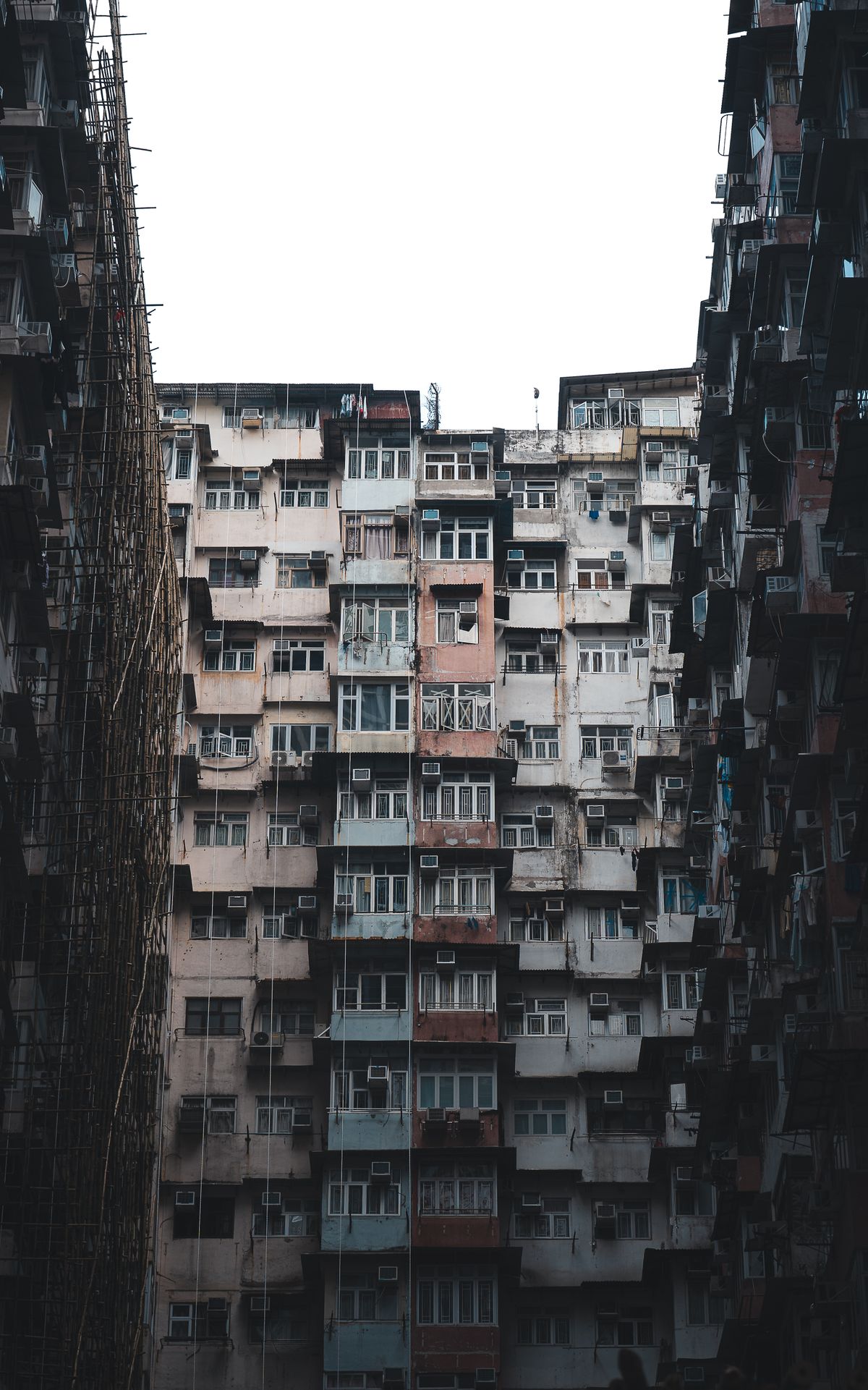
From the 1950s onward, the Walled City grew upward because it could not grow outward. Since neither Hong Kong nor Beijing officially enforced building codes there, residents built without permits, without inspections, without stopping. Buildings leaned into each other and were joined by pipes, cables, and walkways. Some blocks were connected on the roof so children could run between towers without descending to street level. The alleys below became permanent night — lit only by bare fluorescent tubes and the leaking glow of shopfronts.
By the late 1980s the enclave had roughly 350 interconnected buildings crammed onto its footprint. Cantonese-speaking refugees ran unlicensed dentist clinics (many trained on the mainland, unable to get Hong Kong licences), noodle factories, fish-ball workshops, Chinese medicine shops, kindergartens, mahjong parlours, and small Buddhist and Taoist temples. Everything a Hong Kong neighbourhood needed — minus the parts a government would normally provide.
The triads, the raids, and the myth of the lawless city
The Walled City's international reputation was shaped by the parts that made the best story: triad-run gambling dens, opium parlours, and unlicensed brothels dominated the imagination of Hong Kongers in the 1950s and '60s. Local triads did operate there, especially before the Hong Kong Police carried out a series of major raids in the 1970s that broke much of their operational grip.
But the everyday reality was far more ordinary. Most residents were working-class Cantonese families — factory workers, seamstresses, cooks — raising children in tiny flats, sending them to unlicensed schools, and paying invisible landlords. Photographers and journalists who spent time inside in the '80s came back with a consistent message: the residents were as neighbourly as any other Kowloon district, and the myth of a total lawless dystopia was mostly a tabloid invention.
The end — announced in 1987, executed in 1993
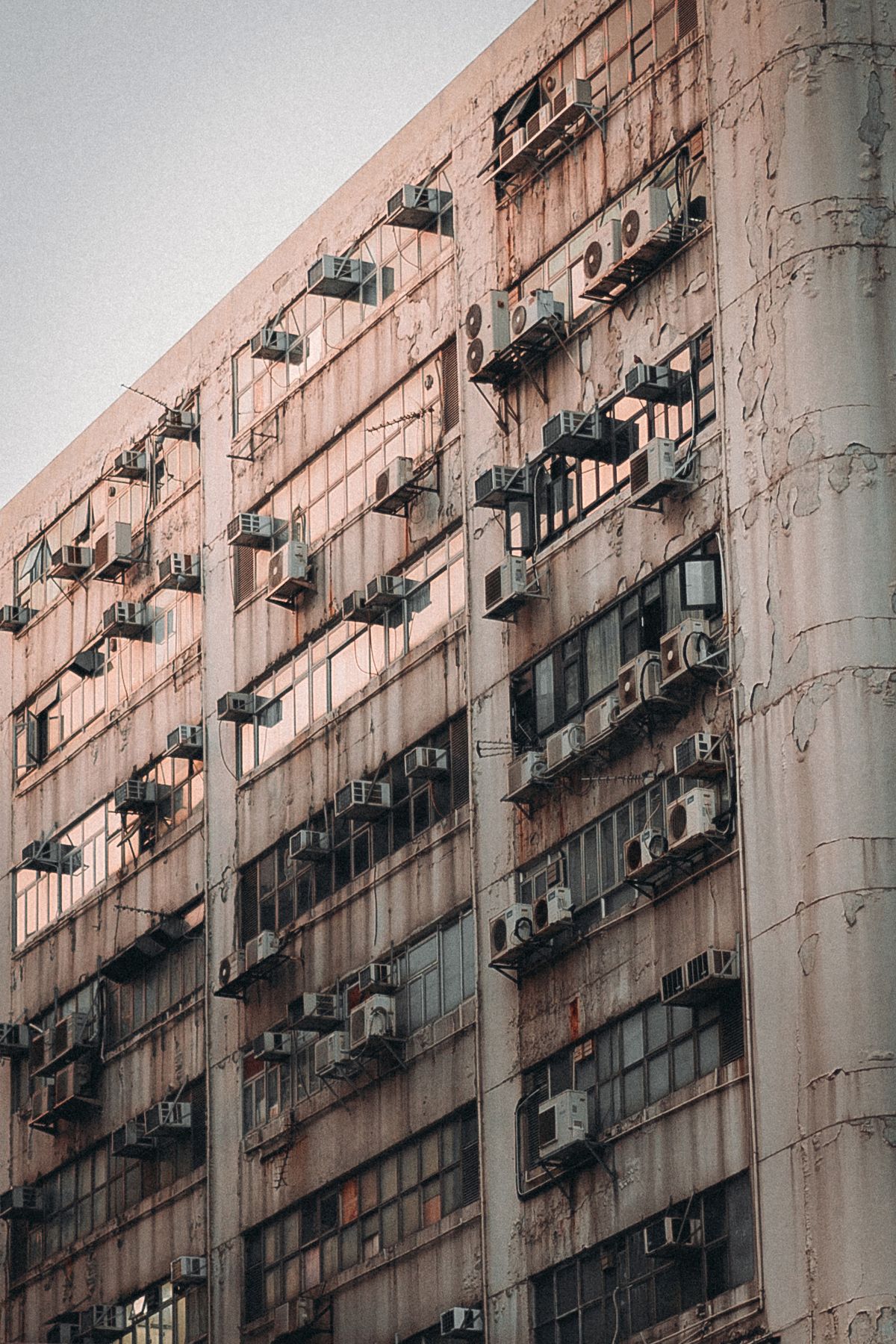
In January 1987, with the 1997 handover approaching, the Hong Kong government announced that the Walled City would be cleared. The eviction and compensation process cost roughly HK$2.7 billion (about US$350 million) and dragged on for years, involving painful negotiations with tens of thousands of residents. Demolition began on 23 March 1993 and continued until April 1994. In its place, the Hong Kong government built Kowloon Walled City Park, a manicured Qing-dynasty style garden that opened in December 1995.
Before the wrecking crews finished, a team of Japanese architects, photographers, and researchers spent months documenting the interior of the enclave inch by inch. Their work — the book City of Darkness and its follow-ups — preserved detailed cross-section drawings, floor plans, and thousands of photographs. Without them, most of what we know today about how the Walled City actually functioned would have been lost.
Why the Walled City still lives in Cantonese memory
The enclave has become a global reference point for anyone thinking about vertical density, urban self-organisation, or the strange places human beings will build a life. It shows up in video games (Shenmue, Call of Duty: Black Ops, Kowloon's Gate), Hong Kong cinema, cyberpunk architecture, and countless Wong Kar-wai-adjacent art photobooks. In 2024, the film Twilight of the Warriors: Walled In (九龍城寨圖圍城) turned it into a martial-arts epic that grossed over HK$100 million in Hong Kong alone.
For older Cantonese Hongkongers, the Walled City sits at a complicated point in the memory. It was overcrowded, poorly ventilated, and dangerous in real ways. It was also, for many families, the place they built a life when nowhere else would take them. When Cantonese people talk about 「城寨里面」 (“inside the Walled City”), they're not just talking about a place. They're talking about a whole era of refugee ingenuity, invisible economies, and the specifically Cantonese refusal to be defeated by circumstance.
📖 Related Articles
Kowloon Walled City park is now a quiet Qing-style garden with a chess pavilion and a small museum near where the old south gate used to stand. It's peaceful in a way the original never was. But if you're Cantonese and you close your eyes there, you can almost hear the old sound: the buzz of fluorescent tubes, someone yelling a dinner order, a mahjong tile hitting a table, and the whole vertical city humming above you.
👉 Shop Cantonese Guy — Modern Streetwear for the Global Cantonese Community