

On 30 May 1888, a strange red carriage clanked its way up the side of Victoria Peak, dragged by a steel cable and powered by a coal-fired boiler. It was Asia's first cable funicular railway. It was also, in a way, an act of pure Cantonese ambition — an outrageous piece of Victorian engineering grafted onto a Guangdong hillside because a Scot named Alexander Findlay Smith wanted the colonial elite to reach their mountain homes without breaking a sweat.
138 years later, the Peak Tram (山頂纜車) is still climbing. Six generations of carriages. Millions of passengers. And a story woven so tightly into Hong Kong's identity that most Hongkongers can't imagine the city without it.
A Scottish Idea for a Cantonese Mountain
In May 1881, Scottish entrepreneur Alexander Findlay Smith proposed a tram to connect Murray Barracks to Victoria Gap. Approval landed in 1882, the Hong Kong High Level Tramways Company was formed, and construction began in September 1885. Three years later — 30 May 1888 — the line opened. The original track ran 1,350 metres with five intermediate stations, and the carriages were varnished timber with open-air slatted seats at both ends and an enclosed middle compartment for the paying elite.
The tram was quietly revolutionary. Before 1888, reaching The Peak meant hiring a sedan chair carried by Cantonese labourers up brutal switchbacks. The tram automated all of that in one steel cable. It also, whether Smith intended it or not, opened up Victoria Peak to more people than the colonial officers who had previously claimed it as their own private neighbourhood.
Six Generations of Red
The Peak Tram has now cycled through six distinct generations of rolling stock. The first three were coal-powered. In 1926 the system electrified. In 1959 aluminium replaced timber. In 1989 an all-new fleet arrived. And in August 2022 the sixth generation debuted after a HK$799 million overhaul funded privately by The Hongkong and Shanghai Hotels Limited — the owner of The Peninsula, which took over Peak Tram operations back in 1971.
🚋 The 2022 Overhaul in Numbers
The sixth-generation carriages, built in Switzerland by Garaventa, CWA and Frey, carry 210 passengers — a 75% capacity jump from the previous 120. Wider doors give step-free access. Panoramic windows expose the full ride to Victoria Harbour views. The whole system reopened on 27 August 2022 after 14 months of closure, and the formal opening ceremony followed on 2 December 2022 with the unveiling of the "Eye of Infinity" sculpture at the Central Terminus.
Cantonese Names, Cantonese Legends
In Cantonese the tram is 山頂纜車 (saan1 deng2 laam6 ce1) — literally "peak top cable car." Locals often just say 纜車. Ride it long enough and you'll hear an urban legend that the Peak Tram once nearly collided with a horse-drawn carriage in the 1890s, a rumour that pops up in guidebooks and old newspaper clippings but is hard to pin down. What isn't a rumour: the track has been maintained continuously since 1888 with only wartime and upgrade suspensions, giving the Peak Tram one of the longest continuous service records of any funicular in the world.
What the Ride Actually Feels Like
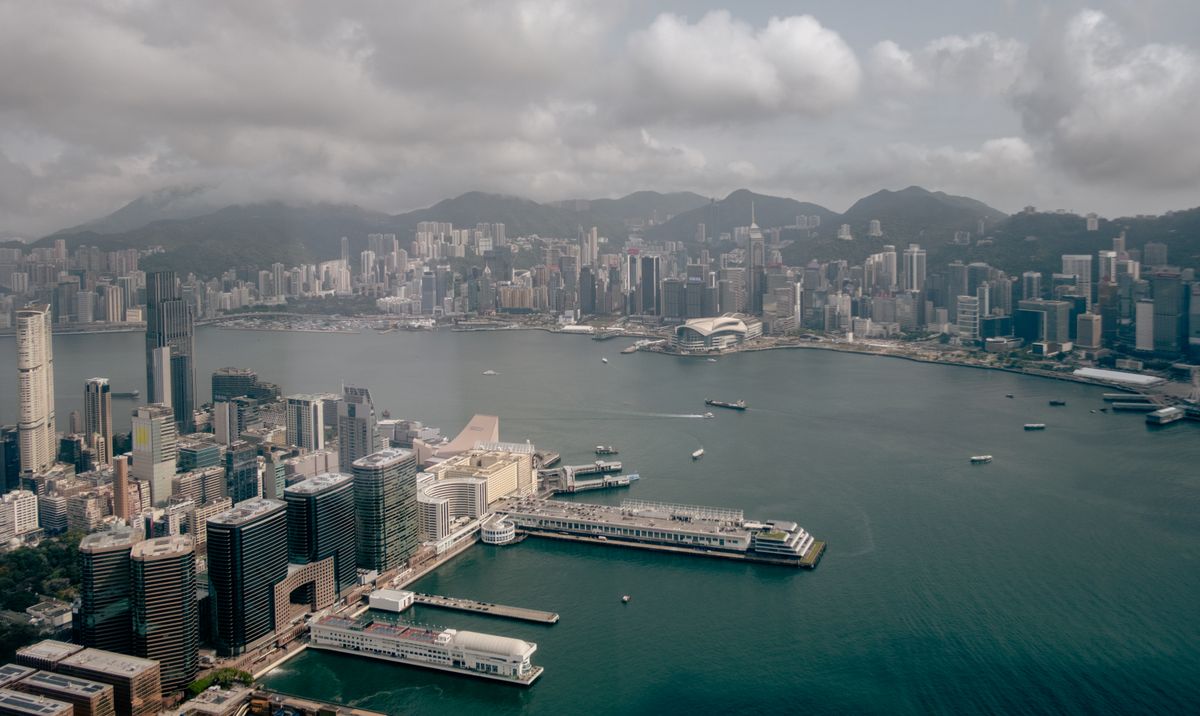
The physics of the Peak Tram are legitimately weird. Passengers experience gradients up to 27 degrees, which is steep enough that at certain points the surrounding skyscrapers appear to lean sideways — an optical illusion locals call the "Peak Tram tilt." The ride from the Central Terminus to Victoria Peak Terminus covers 1.4 km in roughly 7 minutes, rising to 396 metres above sea level. At the top, if the sky cooperates, you get one of Asia's most photographed views: the full sweep of Victoria Harbour, Central's skyline, and Kowloon rising in the distance.
Why the Peak Tram Still Matters
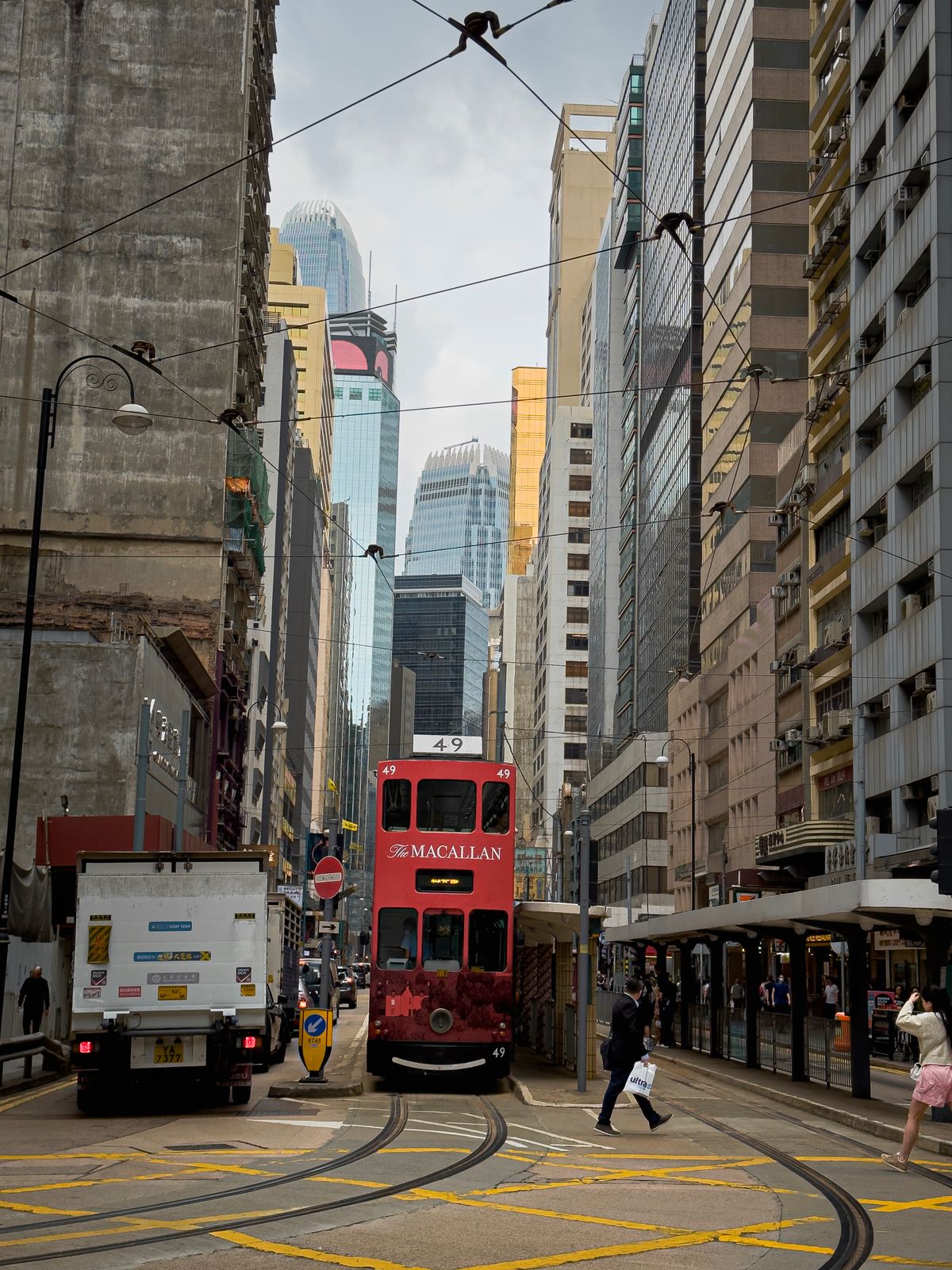
Hong Kong loses landmarks fast. Rooftops that defined the skyline last decade are already gone. Neighbourhoods vanish under redevelopment. The Peak Tram is the outlier — a piece of infrastructure that's remained essentially in the same shape, doing essentially the same thing, since 1888. It sits in the same conversation as the Star Ferry and the Ding Ding tram: living heritage that keeps proving useful.
For the global Cantonese diaspora, the Peak Tram means something specific. It's often the first ride grandparents take grandchildren on when they visit Hong Kong. It's the vantage point where kids born in Vancouver or London see the city their family came from at full scale. In a Hong Kong that changes constantly, the Peak Tram is one of the very few things that feels almost the same on every visit — and that constancy is a gift.
📖 Related Articles
👉 Shop Cantonese Guy — Modern Streetwear for the Global Cantonese Community