

The cheapest cross-harbour trip in Hong Kong still costs only a few dollars. For that money, you get a five-minute crossing of Victoria Harbour on a green-and-white double-decker boat that was designed before television existed, in a company founded eleven years before the Boxer Rebellion. This is 天星小輪 (tin1 sing1 siu2 leon4) — the Star Ferry — and it may be the single most Cantonese thing you can do in Hong Kong.
While the MTR carries millions of commuters underground and speedboats cross the harbour in minutes, the Star Ferry keeps chugging along at the same pace it has kept for 138 years. Locals still queue for it. Tourists photograph it. Directors film it. And it began, unexpectedly, with a Parsee bakery in Hollywood Road.
A Bombay Stowaway Who Became a Hong Kong Baker
In 1852, a young Parsee man named Dorabjee Naorojee Mithaiwala stowed away on a ship leaving Bombay for the Far East. When the crew discovered him, they set him to work in the galley as the ship’s cook. When the ship reached Hong Kong, he stepped off with almost nothing and never left.
He opened a bakery on Hollywood Road. It thrived. He opened a hotel. It thrived. By the 1870s, Mithaiwala was one of Hong Kong’s more prosperous Indian merchants, and he had noticed something that every commercial mind of the era eventually noticed — crossing Victoria Harbour was a nightmare. Sampans were slow. Junks were unreliable. If you wanted to move between Central and the growing settlements of Kowloon, you gambled every time.
The Morning Star
In 1880, Mithaiwala bought a small steamboat, named it the Morning Star, and started ferrying passengers between what is now Central and Tsim Sha Tsui. Business boomed. By 1888, he had formally incorporated the Kowloon Ferry Company, running four boats — the Morning Star, Evening Star, Rising Star and Guiding Star.
The names came from an unusual source. Mithaiwala loved English poetry, in particular Alfred, Lord Tennyson’s “Crossing the Bar,” whose opening line reads: Sunset and evening star, and one clear call for me. The company name that would become world-famous — Star Ferry — came from a Victorian English poem read by a Parsee immigrant to Hong Kong.
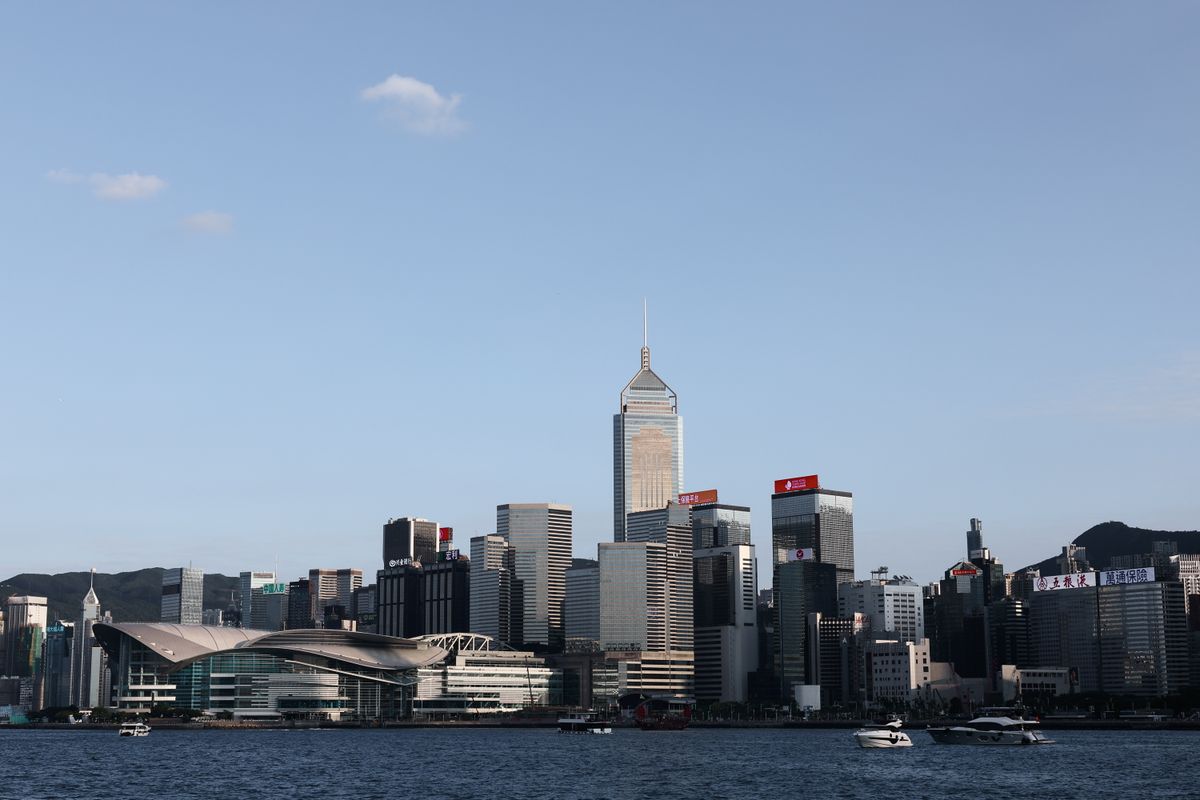
1898: The Business Passes to Jardine and Chater
When Mithaiwala retired in 1898, he sold the entire ferry business to the Hongkong and Kowloon Wharf and Godown Company — controlled at the time by Jardine, Matheson & Co. and Sir Paul Chater. The new owners kept the star names, kept the routes, and eventually renamed the whole company the Star Ferry Company Limited. That name has never changed.
The green-and-white livery, the wooden benches with reversible seat backs so passengers always face forward, the specific whistle of the horn as a boat approaches the pier — all of it was locked in during the early twentieth century and has been guarded jealously by locals ever since. When Star Ferry proposed a subtle change to the ferries’ smoke stacks in the 1990s, the public complained until the plan was abandoned.
The 1966 Riots — When a Fare Hike Changed Hong Kong
On 4 April 1966, Star Ferry applied to raise its first-class fare by five cents. A young Hong Konger named So Sau-chung (蘇守忠) started a hunger strike outside the pier to protest. Within a few days, the protest had exploded into three nights of riots in Kowloon involving thousands of young people — the first time Hong Kong’s post-war youth generation had risen up on this scale.
The colonial government eventually approved the fare hike, but the shock forced a Commission of Inquiry that would reshape social policy in Hong Kong for a decade. Cheap public housing, expanded education, and new youth programmes all trace their beginnings to those five cents at Star Ferry. Few five-cent decisions in world history have carried more consequences.
Queen’s Pier, and the Loss of the Old Central Pier
For much of the twentieth century, Star Ferry docked at a beloved Central pier attached to Queen’s Pier — a place where Hong Kongers welcomed British monarchs and, more importantly, said goodbye to each other. In 2006, the government decommissioned the pier and moved Star Ferry to a new pier further into the reclaimed harbour, closer to the IFC skyscraper.
The demolition became a flashpoint. Protesters occupied the pier for weeks. The images became some of the defining photographs of Hong Kong’s 2000s conservation movement. Old Central Star Ferry Pier is gone, but its clock tower is still remembered in murals, in movies, and in the way older Hong Kongers describe direction (“walk toward the old pier” still makes sense to people over fifty).
Why Locals Still Take the Ferry
The Star Ferry is not the fastest crossing. The MTR’s Tsuen Wan Line is faster. Buses are more direct. Ubers exist. So why does the ferry still carry roughly 26 million passenger trips a year?
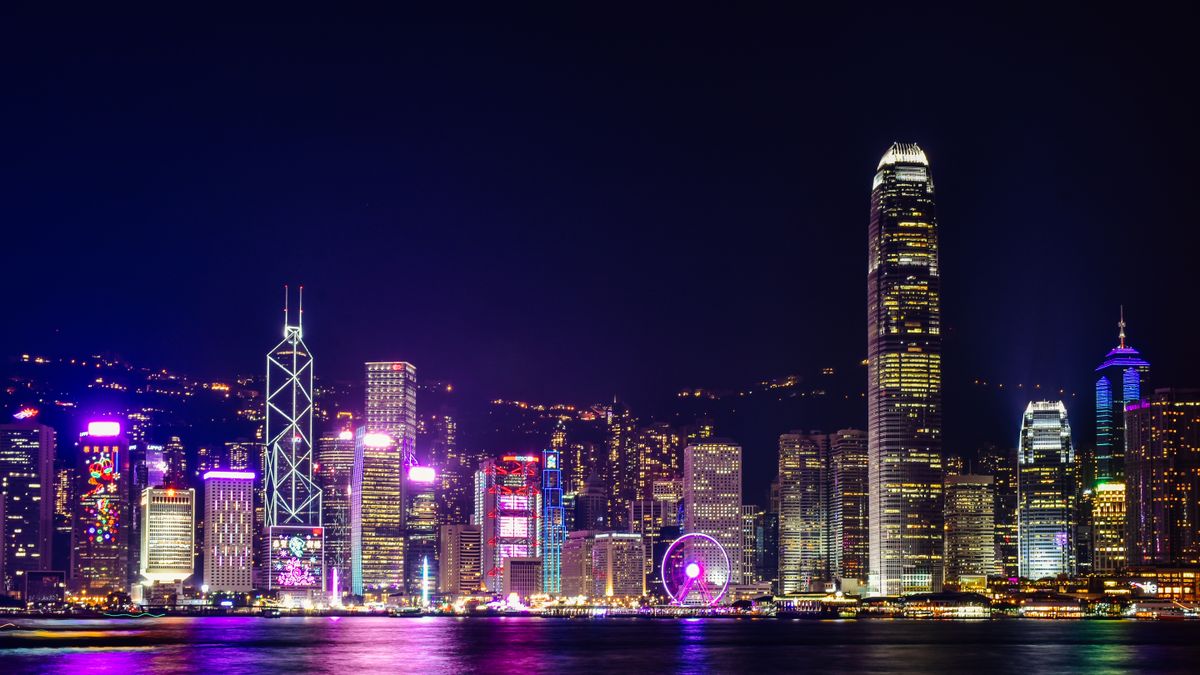
Cantonese people will tell you it is because the harbour is the actual heart of the city. Everything else in Hong Kong — the skyline, the neon signs, the trams, the cha chaan tengs, the wet markets — sits around the harbour like an audience. Only the Star Ferry crosses it slowly enough to remind you that Hong Kong is, at its core, a city built on the water. For five dollars and five minutes, you become part of that older Hong Kong. See how the Ding Ding tram earned the same devotion for the same reason.
A Cantonese Phrase Every Local Uses on the Ferry
過海 (Gwo3 Hoi2)
gwo3 hoi2 — Jyutping romanisation
Meaning: To cross the harbour — the standard Cantonese way to say “go to the other side.”
Explanation: Literally “cross the sea.” In Hong Kong, 過海 is much more than logistics — it is an old shorthand for going from Hong Kong Island to Kowloon or the other way around. Ask an older auntie if she wants to 過海 for dim sum and it feels like a small adventure.
Why the Star Ferry Still Matters
In a city that constantly demolishes its own history, the Star Ferry is one of the few institutions that has refused to disappear. It survived the Japanese occupation, the 1966 riots, the 1997 handover, SARS, the 2019 protests, COVID, and the collapse of tourism during the pandemic. It kept running.
For the diaspora, it is often the first place returning Hong Kongers visit — before dim sum, before the shopping centres, before family reunions. Stepping onto the Star Ferry is a way of telling yourself: I am home, and home has not entirely disappeared.
A hundred and thirty-eight years after a Parsee immigrant read a Tennyson poem and named his boats after stars, the ferry still carries the city across the harbour — slowly, cheaply, beautifully. That is a very Cantonese kind of endurance.
📖 Related Articles
👉 Shop Cantonese Guy — Modern Streetwear for the Global Cantonese Community