

Before there was a Chinatown in Vancouver, in London, in Toronto, in Sydney — there was Chinatown in San Francisco. It is the oldest Chinese neighbourhood in North America, born in the mud of the 1849 Gold Rush and built almost entirely by Cantonese hands. And after it was burned to ashes in 1906, those same hands built it again — this time with pagoda roofs, dragon lamps, and a spectacular gate that had never actually existed in China.
Gold Mountain and the First Wave
In 1848, gold was discovered at Sutter’s Mill in California. Within two years, thousands of men from the Pearl River Delta had crossed the Pacific to the place they called Gam Saan (金山) — "Gold Mountain." Most came from a small handful of counties in Guangdong — particularly Toisan (台山), Hoiping, Yanping, and Sunwui — speaking not standard Cantonese but the tougher, older Toisanese dialect (台山話). For the next century, if you heard Chinese spoken in America, you were almost certainly hearing Toisan-wa.
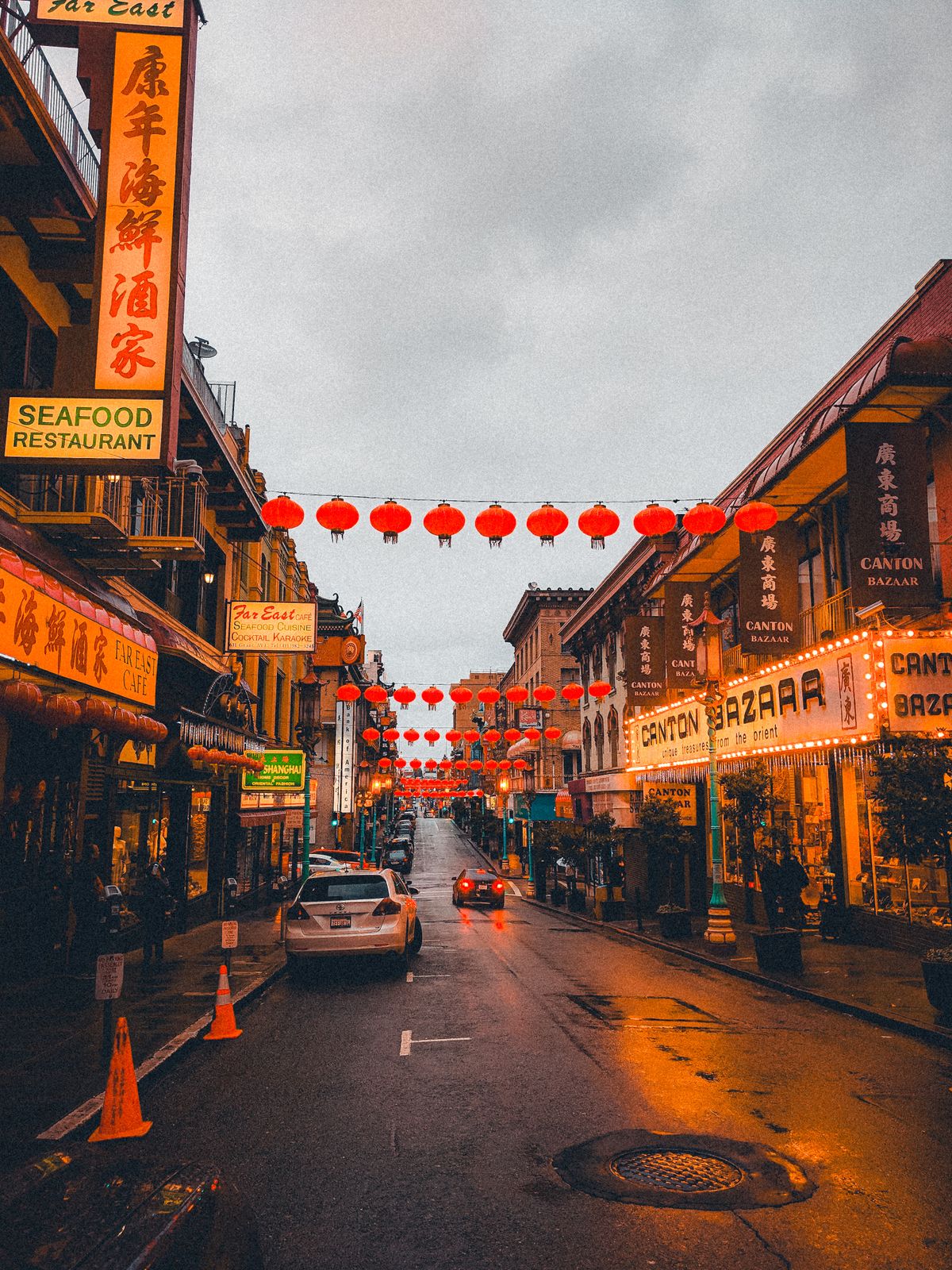
These early arrivals settled around Dupont Street — today’s Grant Avenue — in a cluster of shops, laundries, and boarding houses. By 1852, thousands of Chinese men were working the mines and, soon after, building the Central Pacific Railroad. It is a history that runs parallel to another Cantonese frontier story: the building of Vancouver’s Chinatown by Cantonese railway workers a generation later.
The Six Companies and a Self-Governed Neighbourhood
Excluded from most American courts, banks, and schools, the Cantonese community organised itself. Around 1862, the Chinese Consolidated Benevolent Association — known in English as the "Six Companies" — was formed to represent the district associations of the various Cantonese counties. They mediated disputes, ran language schools, built temples, sent bones of the deceased home to Guangdong, and negotiated with an increasingly hostile American state. By the 1880s, San Francisco Chinatown was effectively a self-governed Cantonese enclave inside America.
The Chinese Exclusion Act Changed Everything
In 1882, the United States passed the Chinese Exclusion Act — the first federal law in American history to bar immigrants of a specific nationality. It froze Cantonese men in America without their families, sometimes for decades. Chinatown became a bachelor society, ageing and shrinking, but it did not disappear. It quietly became the beating heart of Chinese America — a place where language, food, temples, funeral rites, and dialect survived when the outside world wanted them gone.
1906: The Fire That Almost Erased Chinatown
On the morning of 18 April 1906, a magnitude 7.9 earthquake ripped through San Francisco. The buildings mostly held. The fires that followed — spreading for four days and four nights — did not. Chinatown was burned to ashes. Almost immediately, city officials tried to seize the moment. Plans were drawn up to relocate the Chinese community to Hunter’s Point on the edge of the city and hand over the valuable Chinatown land to white businesses.
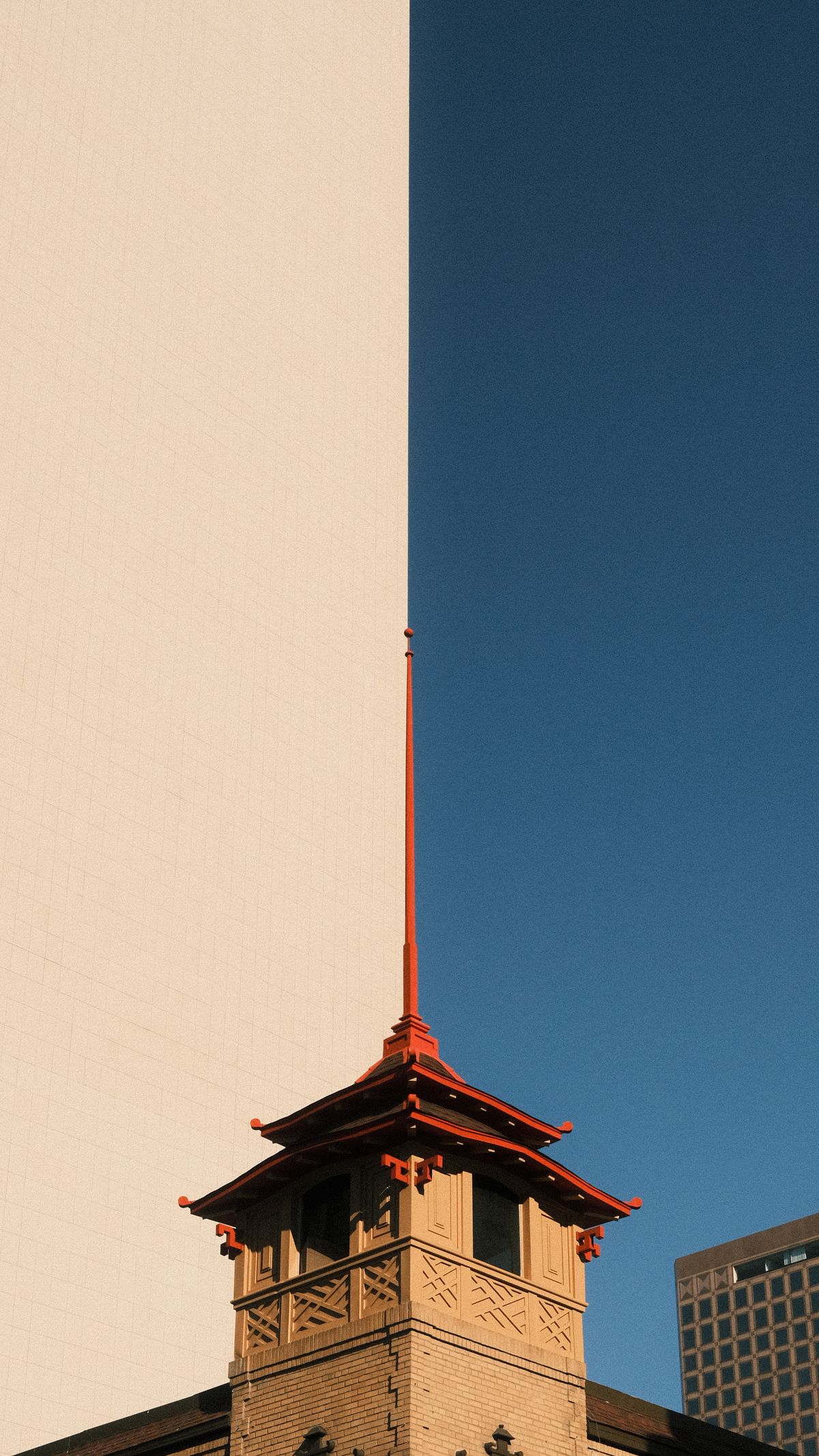
The community fought back. A merchant named Look Tin Eli led the counter-offensive. His argument was pragmatic — Chinatown was a major tourist draw, generating tax revenue the city could not replace. He then made a masterstroke: he hired American architects T. Paterson Ross and A.W. Burgren — neither of whom had ever set foot in China — to design a new Chinatown that would look more "Chinese" than any real Chinese city. They studied religious woodcuts and vernacular illustrations, then built a fantasy version of dynastic architecture in the middle of San Francisco.
The Dragon Gate and a Cantonese-American Invention
The pagoda roofs, the upturned eaves, the dragon-decorated lampposts, and eventually the ceremonial Dragon’s Gate at Grant Avenue and Bush Street — all of it was invented in San Francisco. There was nothing quite like it in Guangzhou or Hong Kong at the time. But it worked. It became the template for how the Western world would picture Chinatown for the next century — borrowed by London, Sydney, Manchester, and Los Angeles. Every green-tiled gate you have ever walked under owes something to that 1906 rebuild.
Cantonese Neighbourhood, Cantonese Food
Alongside the architecture, the food went global from here. Char siu, wonton noodles, egg tarts, and roast duck all crossed the Pacific through San Francisco kitchens. Local staples like chop suey were invented in Chinatown kitchens by Cantonese cooks improvising for American tastes. Ross Alley’s Golden Gate Fortune Cookie Factory — still folding cookies by hand — is a Chinatown institution. And no visit is complete without a proper Hong Kong-style milk tea from one of the old cha chaan tengs on Jackson Street.
From Toisanese Bachelors to Global Cantonese Culture
After the Chinese Exclusion Act was finally repealed in 1943 — and especially after the 1965 Immigration Act — the demographic of Chinatown shifted. Standard Cantonese speakers from Hong Kong began to arrive in bigger numbers, gradually replacing Toisan-wa on the streets. Today you will hear both, alongside Mandarin — but the bones of the neighbourhood are still Cantonese. The temples, the family associations, the herbal medicine shops on Stockton Street, the wet market vendors calling out prices — they are speaking the language of the Pearl River Delta, 6,000 miles from home.
Why San Francisco Chinatown Still Matters
Every Cantonese person in North America — whether their family arrived last year or in 1868 — owes something to the men who dug the tunnels, ran the laundries, cooked in the kitchens, and rebuilt after the fire. San Francisco Chinatown is not just a tourist stop. It is the original Cantonese city outside of Guangdong — the blueprint for what a diaspora community can be when it refuses to disappear. Walk down Grant Avenue at dusk, hear the language switch from Cantonese to Toisanese to Mandarin and back, and you are walking through 175 years of Cantonese resilience.
📖 Related Articles
👉 Shop Cantonese Guy — Modern Streetwear for the Global Cantonese Community