

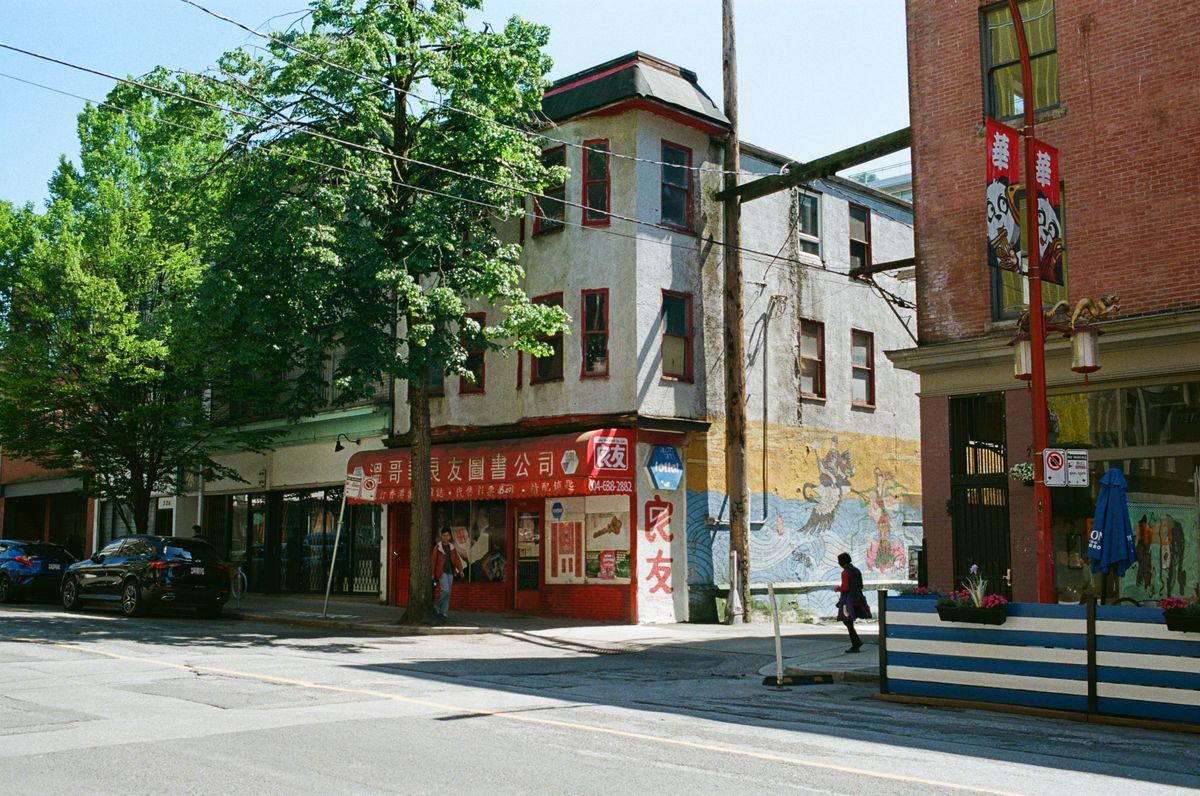
Walk down Pender Street on a wet Vancouver morning and, if you slow down, you can still hear it: the muffled clatter of mahjong tiles from an association hall on the second floor, a shopkeeper calling out prices in Toisanese, the same twelve tones of Cantonese that have echoed off these bricks since before Vancouver had streetlights. This is one of the oldest and largest Chinese neighbourhoods in North America, and almost everything you see was carved out of the mud by Cantonese hands.
Chasing Gum San — the Cantonese arrival
The story starts, as most Cantonese diaspora stories do, with a gold rush. In 1858, gold was discovered along the Fraser River in British Columbia, and news of it travelled fast across the Pacific. Within a year, Cantonese miners — mostly from the Pearl River Delta and the Siyi (四邑) counties around Taishan (台山) — were making the long, brutal steamship journey to what they called Gum San (金山), Gold Mountain.
They were followed by the Cariboo Gold Rush (1861–1867), which pulled thousands more Cantonese men into the BC interior. When the gold ran thin, most of them stayed. Some fanned out along the coast to fish and log. A great many drifted toward the young settlement at the mouth of the Fraser — a mudflat that would eventually be renamed Vancouver — and began quietly building the neighbourhood we now call Chinatown.
The railway years and the Canadian Pacific
The second great wave of Cantonese migration arrived in the 1880s to build the Canadian Pacific Railway. Contractors recruited over 15,000 Chinese labourers, almost all of them from Guangdong province, to blast tunnels through the Rocky Mountains and lay the rails that would finally connect BC to the rest of Canada. Thousands of them died in the mountains from explosions, rockfalls, scurvy, and winter — by some estimates more than 4,000. The rails would not exist without them.
When the railway was finished in 1885, thousands of surviving Cantonese workers had nowhere to go and no money to go home. Many of them settled in the neighbourhood around Pender, Carrall, Keefer, and Columbia Streets in Vancouver — the same rough grid that still anchors Chinatown today. They opened laundries, groceries, tailors, herbalists, and boarding houses for the men still waiting for their families to be allowed into Canada.
The Head Tax, the Exclusion Act, and the years of silence
The Canadian government thanked the Cantonese for the railway by promptly turning on them. In 1885, the same year the last spike was driven, Ottawa imposed a $50 Chinese Head Tax — a fee levied only on Chinese immigrants entering Canada. It was later raised to $100, then to $500 — an astronomical sum meant to keep more Cantonese families out. And in 1923, on July 1 — the day Canadians celebrated as Dominion Day — the Chinese Immigration Act (better known as the Exclusion Act) effectively banned Chinese immigration entirely.
For the next 24 years, hardly any new Chinese people were allowed into Canada. Vancouver's Chinatown became a "bachelor society" — thousands of Cantonese men separated from wives and children they had no legal way to bring over. Cantonese people in Vancouver referred to July 1 as "Humiliation Day" for decades. The exclusion wasn't repealed until 1947.
The Cantonese neighbourhood that survived everything
Despite all of it, Vancouver's Chinatown grew. By the mid-20th century it had its own newspapers, herbalists, benevolent associations, film halls, tea houses, and a rich underground economy of family networks. The neighbourhood's clan associations — the Wongs, the Lees, the Mahs, the Chans — functioned as banks, matchmakers, funeral homes, and immigration lawyers all rolled into one. If you were Cantonese and needed help in Vancouver, you didn't call city hall. You climbed the wooden stairs to the association hall on Pender Street.
In 1986, Vancouver hosted Expo 86, and the city marked it by opening the Dr. Sun Yat-Sen Classical Chinese Garden on Carrall Street — the first full-scale classical Chinese garden built outside Asia. It was designed by 52 craftsmen from Suzhou using Ming-dynasty techniques, and it sits on the exact block where Vancouver's Chinatown first began. Walking through its moon gates and koi pond, you're standing on the mud where Cantonese labourers pitched their first tents 130 years ago.
The Toisanese layer nobody talks about
The Chinese you hear in Vancouver's oldest Chinatown isn't Mandarin. And often it isn't even standard Guangzhou Cantonese. The dialect that dominated the neighbourhood for its first hundred years was Toisanese (台山話) — the language of the villages around Taishan county, where the overwhelming majority of early BC Cantonese came from. Old-timers in the neighbourhood still speak it, and you can hear it in the accents of the Chinatown aunties who've been running the same shops since the 1960s.
This is one of the things that makes Vancouver's Chinatown feel different from newer ones in Richmond or Metrotown, where post-1997 Hong Kong migrants and mainland arrivals brought fresh waves of standard Cantonese and Mandarin. The old Chinatown, downtown, is the Toisanese story — the story of the villagers who came first, worked hardest, waited longest, and built the whole thing with almost no help.
Why it still matters
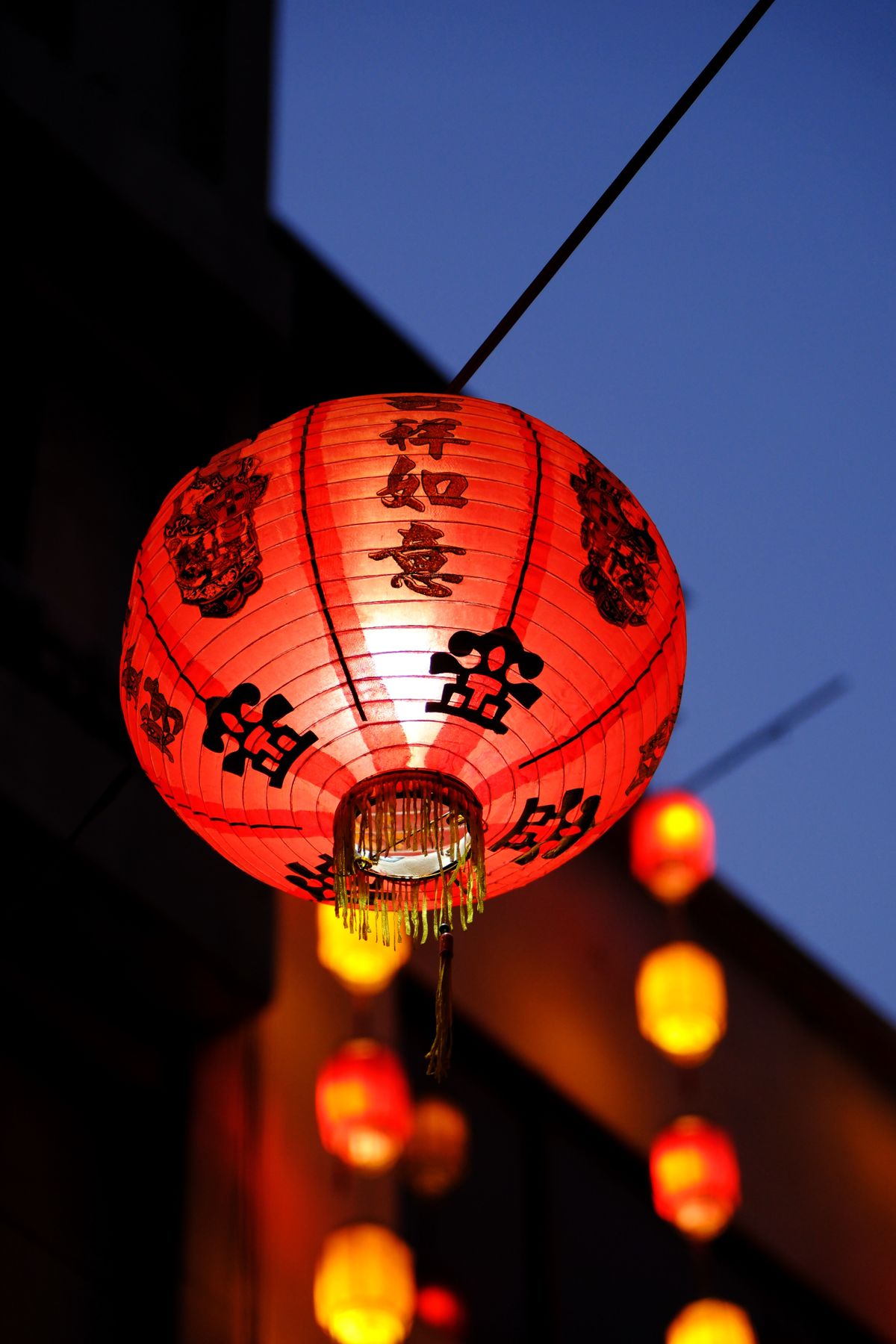
Vancouver's Chinatown has been through waves of gentrification, redevelopment threats, storefront closures, and community fights to preserve its heritage buildings. It has been counted out more than once. But it keeps holding on, because the Cantonese community keeps holding on. Every dim sum lunch at a still-Cantonese-run tea house, every mahjong game upstairs at a clan hall, every red banner draped across Pender Street for Chinese New Year — those aren't nostalgia. They're proof that this neighbourhood is still, at heart, exactly what it was in 1885. It is a Cantonese place, built by Cantonese people, for a diaspora that never forgot who it was.
If you have Cantonese roots and you've never walked down Pender Street, you should. It doesn't just belong to Vancouver — it belongs to the entire global Cantonese story. Same story as London Chinatown, same story as Yokohama Chinatown, same story as San Francisco's Gold Mountain South — but told with a Toisanese accent, on wet Pacific pavement, under Vancouver rain.
📖 Related Articles
- London Chinatown: How Cantonese Seamen and Hong Kong Migrants Built Britain's Most Iconic Chinese Neighbourhood
- Yokohama Chinatown: How Cantonese Migrants Built Japan's Largest Chinese Neighbourhood
- Gold Mountain South: The Cantonese Pioneers Who Built San Francisco's Chinatown
- Tanka: The Forgotten Cantonese Boat People Who Built Hong Kong Before Hong Kong Existed
👉 Shop Cantonese Guy — Modern Streetwear for the Global Cantonese Community