

Step through the vermilion arch of Zenrinmon Gate in Yokohama's Naka Ward and you enter what looks, at first glance, like a piece of Guangdong that has floated across the East China Sea and landed intact. Roast ducks hang in the shop windows. Ancient uncles play mahjong at a wooden table on the street. A tram rings a bell somewhere over the rooftops of central Yokohama. This is Yokohama Chukagai — Japan's largest Chinatown, and one of the most Cantonese places in Asia that isn't actually in Guangdong.
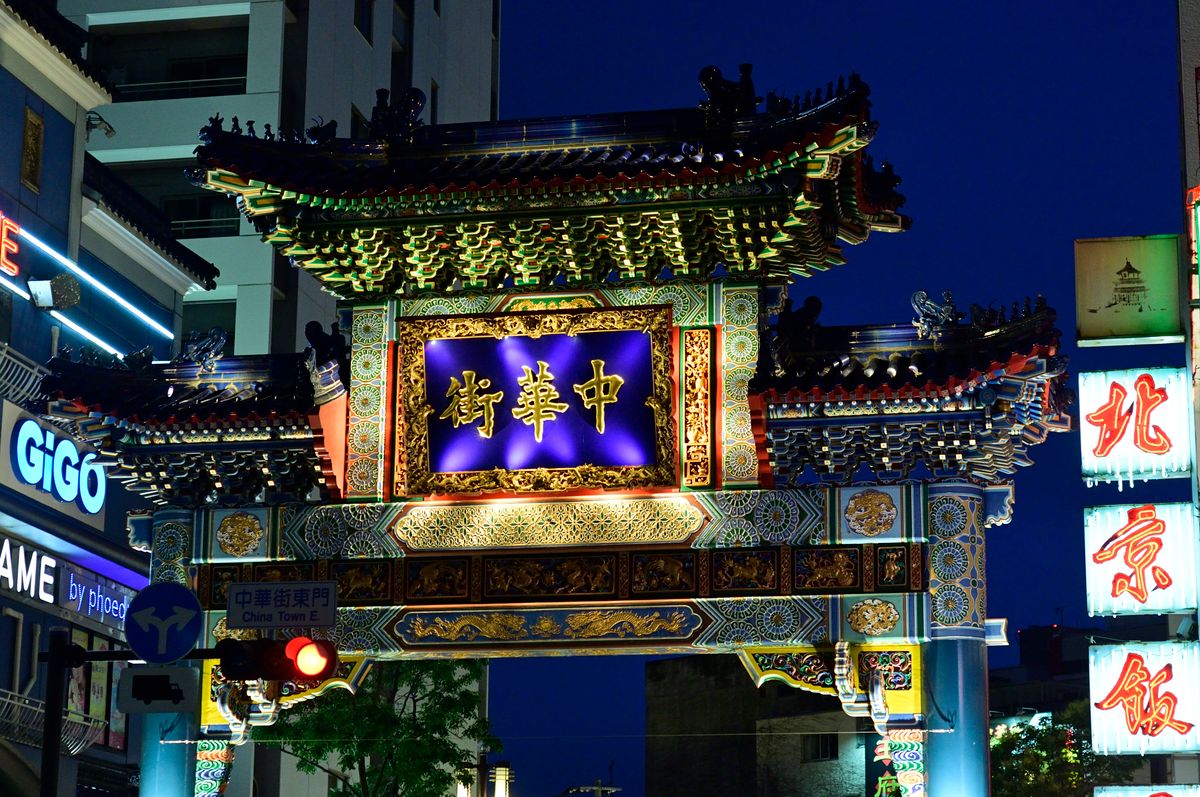
A Chinatown Born on the Day Japan Opened
The story starts in 1859. That summer, under pressure from the Treaty of Kanagawa, the small fishing village of Yokohama was declared a treaty port and thrown open to foreign trade. American, British, and Dutch merchants poured in — and so did their Chinese business partners. Many of those merchants brought a specific kind of colleague: Cantonese-speaking clerks and traders from Guangzhou and Hong Kong who had already learned to operate between English, Chinese, and pidgin during the treaty-port era in South China.
By the 1860s these Cantonese migrants — mostly from Guangdong — had settled in the marshy foreign concession south of Yokohama's docks. They opened import-export houses. They set up money-changing shops. They cooked their own food. Within a decade, the district had a Chinese school, a community centre, and enough Cantonese speakers that it would still be a Cantonese neighbourhood 165 years later.
The Temple That Refuses to Die
The spiritual heart of the community is Kanteibyō — 關帝廄 — a bright, red-and-gold temple to Guan Yu, the third-century general and Cantonese folk deity of loyalty, prosperity, and honest business. Cantonese merchants in Yokohama built the first wooden shrine to him in 1862. In 1871 they raised a proper temple with donations from Chinese communities across the Kanto region.
And then the disasters started. The Great Kanto Earthquake flattened the temple in 1923. American air raids destroyed the rebuilt structure in 1945. A lightning strike burned down the third temple in 1986. Each time the Cantonese community of Yokohama rebuilt it. The current fourth temple, completed in 1990, is a stubborn, glowing reminder of what Cantonese diaspora communities do best: keep going.
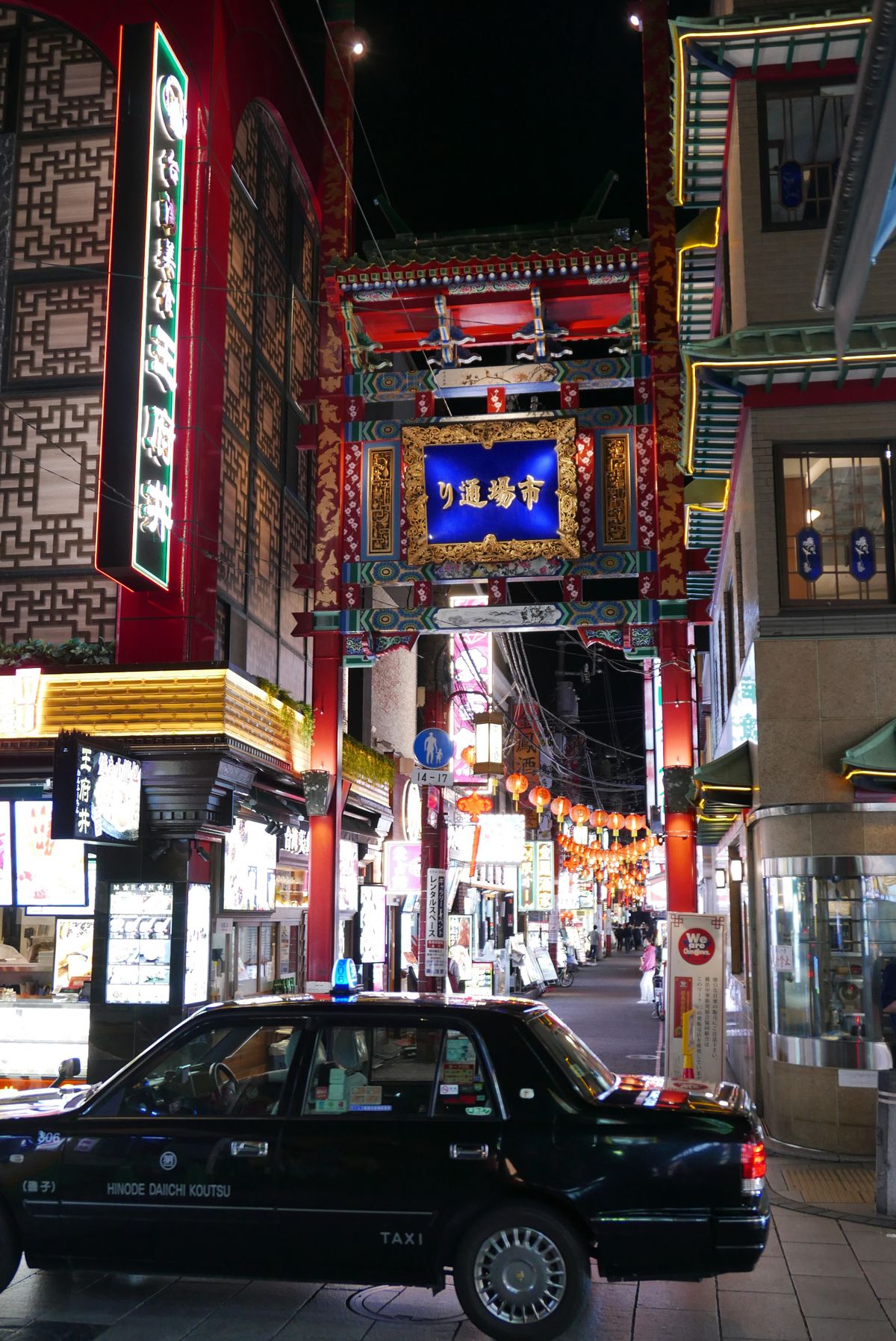
The Cantonese Character of the Streets
Walk around today and Yokohama Chinatown covers roughly 250,000 square metres — the largest Chinatown in Japan, and by some measures the largest in Asia. It packs around 500 restaurants and shops into a grid of narrow streets watched over by ten symbolic gates. The cuisine lean is unmistakably Cantonese: dim sum houses, roast meat windows, char siu bao, egg tarts, silky congee, and — reflecting the diaspora's origin — a level of siu mei craftsmanship you don't find anywhere else in Japan.
This is what happens when a diaspora holds on. The neighbourhood is fully Japanese in every legal and civic sense — Japan Post delivers there, the trains stop there, and everyone speaks Japanese in the shops. But the food, the temples, the language of the oldest aunties, and the rhythm of the New Year celebrations all sound like they could be echoing off the walls of Sham Shui Po or Guangzhou's Xiguan district.
Lunar New Year, Yokohama Style
The best time to see the community's Cantonese roots on full display is Lunar New Year. The Cantonese southern lion dance troupes come out in force. Red envelopes appear. Firecracker strings stretch across the streets. And the elderly generation — the ones whose grandparents came from Toisan or Panyu or Sunwui in the 1870s — bring out family altars that would look right at home in a Kowloon walk-up. For a weekend every February, this piece of Japan sounds like a Guangdong village at festival.
Why Cantonese Migrants Chose Yokohama
Historians point out that Yokohama was, in many ways, the perfect Cantonese destination. It was a treaty port, like Hong Kong. It was on the coast. It welcomed foreign merchants who wanted middlemen who could handle both Chinese and Western business etiquette. And crucially, it was reachable by direct steamer from Hong Kong — a two-week journey that many Cantonese trading families had already normalised. By the 1880s, second-generation Cantonese Yokohamans were being sent back to Hong Kong for schooling and returning for family businesses. The link was two-way and never really broke.
A Diaspora Story With a Different Ending
Most Cantonese diaspora communities in the West — San Francisco, Vancouver, London — grew under the pressure of exclusion laws and open racism. Yokohama's story is different. The Cantonese community there faced periods of Japanese wartime nationalism and post-war economic pressure, but the neighbourhood was never legally sealed off, never forcibly relocated. It weathered earthquakes, air raids, and lightning strikes with the same phrase Cantonese people use for every disaster: 冇問題 mou man tai — no problem, we'll rebuild.
That's why Yokohama Chukagai matters to the global Cantonese diaspora today. It's a reminder that Cantonese communities didn't only travel west across the Pacific. They also travelled east — a shorter, quieter journey — and built one of the world's most enduring pieces of a Guangdong that has been carried in memory, in temples, and in soy sauce chicken for nearly two centuries.
📖 Related Articles
👉 Shop Cantonese Guy — Modern Streetwear for the Global Cantonese Community