

Before there was a Chinatown in Vancouver, Toronto, London, or Sydney — there was one in San Francisco. Established around 1848, San Francisco's Chinatown is the oldest Chinatown in North America and the largest Chinese community outside of Asia. It was built, block by block, by Cantonese migrants from the Pearl River Delta — and above all, from the villages of Toisan (Taishan) in western Guangdong. This is how the corner of Grant Avenue and Bush Street became the beating cultural heart of Cantonese America.
1848 — the Gold Rush that started everything
The first Chinese arrivals in San Francisco came in 1848, at the earliest edge of the California Gold Rush. The overwhelming majority were Cantonese-speaking men from Guangdong province — specifically from the Sze Yup (四邑, "four counties") region around Toisan, Hoiping, Sunwui and Yanping, plus the Zhongshan area. They spoke Toisanese and standard Cantonese, not Mandarin. To this day, the older streets of Chinatown are still primarily Cantonese- and Toisanese-speaking.
They didn't call California "America." In Cantonese, they called it 舊金山 (Gau6 Gam1 Saan1) — "Old Gold Mountain" — a name that stuck as new gold mountains (Australia, then Canada) opened up.
Why Grant Avenue and Stockton Street
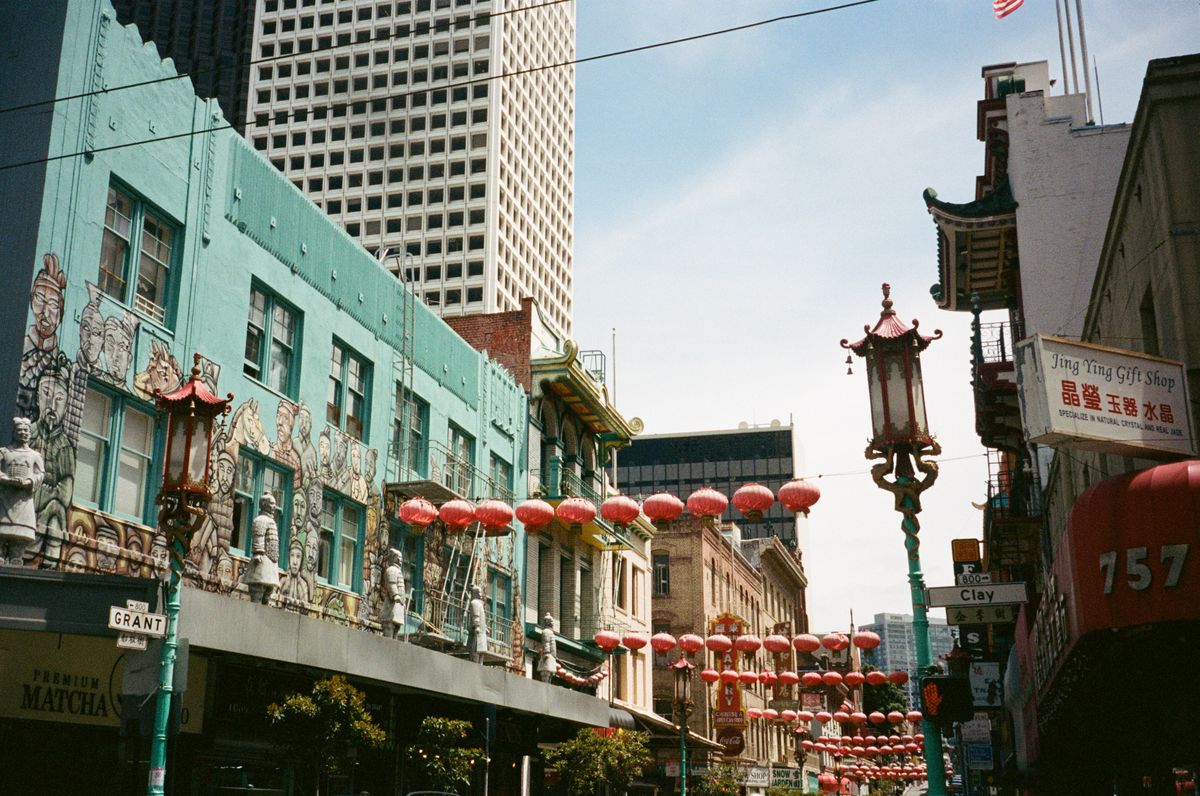
The Chinatown that grew up in the 1850s and 1860s occupied the blocks between Grant Avenue, Stockton Street, Bush Street and Broadway — a compact grid on the slopes above the port. It was where Chinese labourers could find rooming houses, food they recognised, family associations that spoke their village dialect, and — critically — protection from the constant hostility of the wider city.
The neighbourhood served every wave of Cantonese migration that followed. When the transcontinental railroad recruited thousands of Cantonese labourers in the 1860s, Chinatown was their base. When the Chinese Exclusion Act of 1882 barred most new arrivals, Chinatown became the community's fortress.
1906 — the earthquake that nearly ended it
On 18 April 1906, the great San Francisco earthquake struck, and the fires that followed did more damage to Chinatown than any of the anti-Chinese laws had managed. Thousands of homes and businesses in the neighbourhood were destroyed. City officials openly discussed relocating Chinatown to Hunter's Point, far from the city centre. Chinese leaders — including businessman Look Tin Eli — pushed back, hard.
They won. Look Tin Eli hired architect T. Paterson Ross and engineer A.W. Burgren to rebuild Chinatown in a deliberate new architectural style: pagoda-style rooflines, upturned eaves, dragon motifs, and painted balconies. Neither man had ever been to China — they drew on centuries-old religious imagery from the Song dynasty period. The look was a form of visual defense that made Chinatown legible to American tourists as "authentically Chinese," and therefore worth keeping. By 1915, the neighbourhood was rebuilt and busy again.
The Dragon Gate — a very Cantonese thank-you
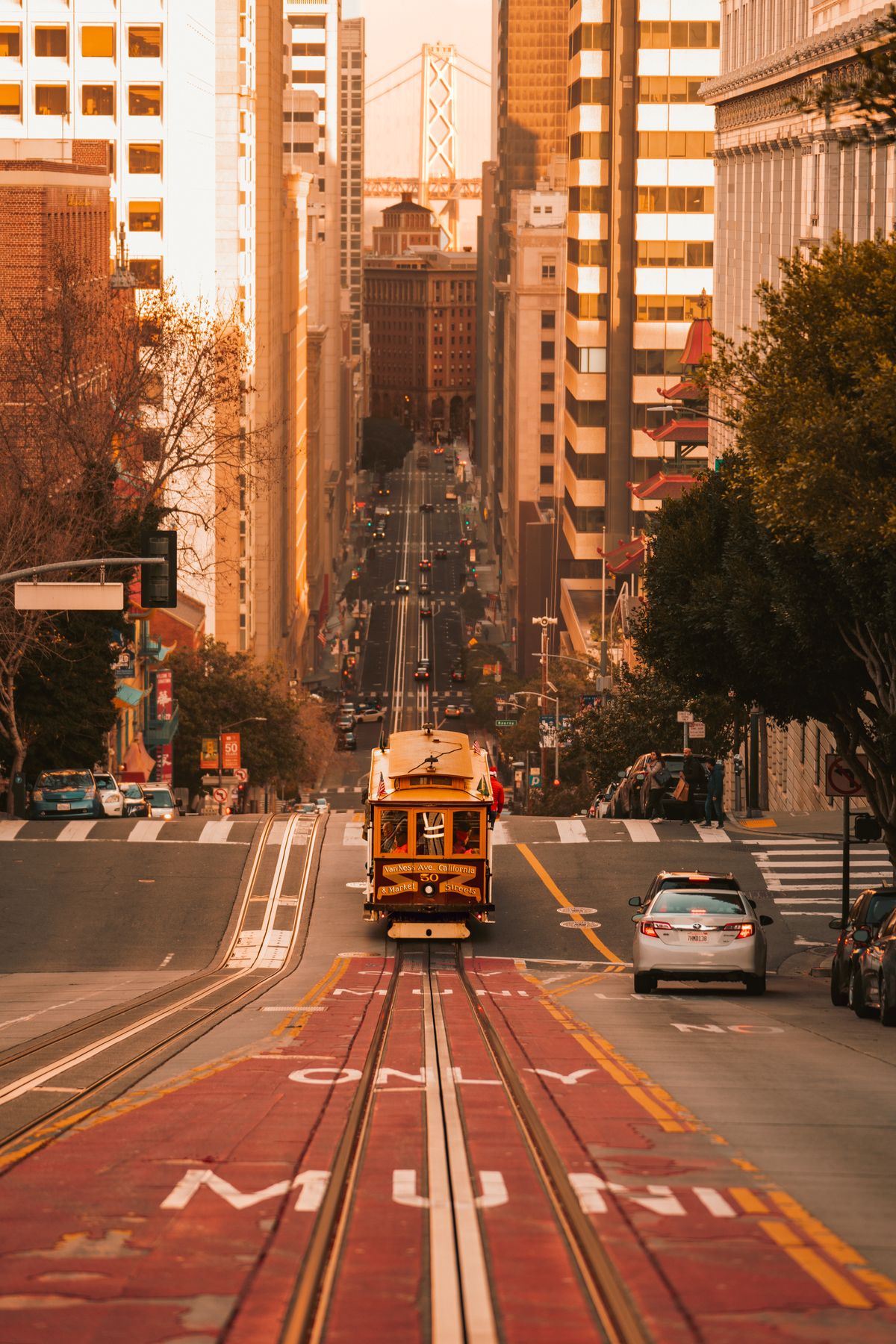
Stand at the intersection of Bush Street and Grant Avenue and you'll walk under the Dragon Gate (華埠牌樓) — a three-arched pailou gifted by the Republic of China (Taiwan) in 1969 and completed the following year. The dragons and koi motifs are pure Cantonese temple-gate design. It's the most photographed spot in Chinatown, and it marks the community's determination to still be here — after every attempted relocation, every exclusion law, every earthquake.
What's Cantonese about SF Chinatown today
Walk down Grant Avenue and Stockton Street today and it still feels distinctly Cantonese in a way that newer Chinatowns don't. The bakeries sell char siu bao and egg tarts. The tea shops sell leung cha in paper cups. Older residents chat in Toisanese and Cantonese on the benches of Portsmouth Square. Delivery vans double-park to unload live seafood destined for yum cha restaurants that were opened by families who arrived on ships from Hong Kong 60 years ago.
Yes, there's been demographic change — many Cantonese families have moved to the Sunset and Richmond districts, and newer Mandarin-speaking arrivals have shifted the makeup of nearby neighbourhoods. But the original 24 blocks around Grant Avenue remain, culturally, Cantonese ground.
Why SF Chinatown belongs to the whole diaspora
Every Chinatown in North America — Vancouver, Toronto, Seattle, LA, New York — traces its lineage back through San Francisco. This is where the family associations, the tongs, the newspapers, the herbal medicine halls, the first Cantonese-language schools in the Americas were all pioneered. For any Cantonese kid who grew up watching their grandparents write letters home to Toisan, San Francisco Chinatown isn't just a tourist destination. It's the first chapter of the North American Cantonese story.
📖 Related Articles
- Vancouver Chinatown: How Guangdong Migrants Built Canada's Historic Cantonese Neighbourhood
- Toronto Chinatown: How Guangdong Migrants Built Canada's Loudest Cantonese Neighbourhood
- Sydney Chinatown: How Gold-Rush Cantonese Migrants Built Australia's Largest Chinese Neighbourhood
- London Chinatown: How Hong Kong Migrants Built Gerrard Street After the Blitz
👉 Shop Cantonese Guy — Modern Streetwear for the Global Cantonese Community