

Walk into any old Cantonese neighbourhood in Hong Kong and you'll find them: narrow shops with a row of gleaming copper cauldrons on the counter, each holding a different dark, bitter brew. A handwritten sign lists prices in Chinese characters. An auntie ladles the tea into a small porcelain bowl, waits for you to drink it standing up, and takes the bowl back with a nod. Welcome to a Cantonese leung cha po (涼茶鋪) — the herbal tea shops that have been keeping Hong Kong "cool" for nearly two hundred years.
What Even Is Leung Cha?
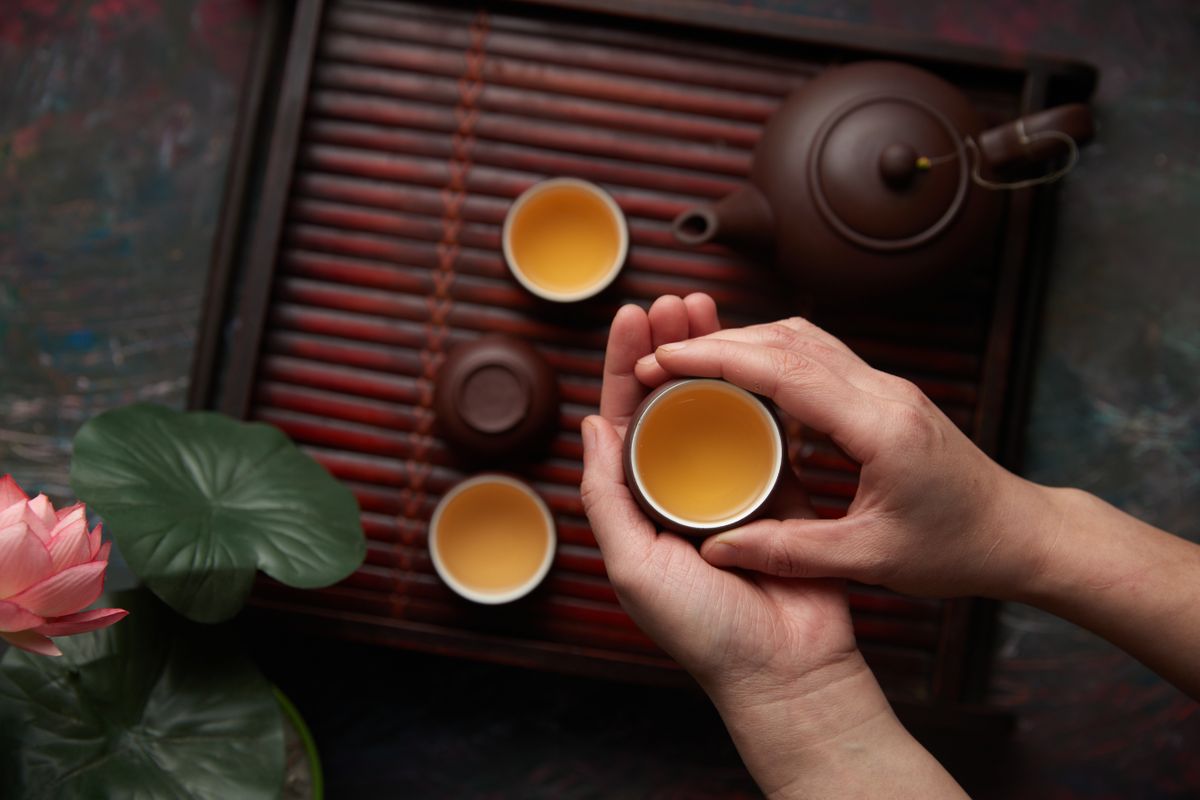
涼茶 (leung4 caa4) literally means "cool tea" — but the "cool" isn't temperature. In Cantonese folk medicine, the body swings between 熱氣 (jit6 hei3, "hot energy") and 涼 (leung4, "cool energy"). Eating too much fried food, staying up late, or getting angry pushes you into jit hei. Symptoms range from sore throats to pimples to a bad mood. The Cantonese cure? A bowl of leung cha to bring you back to balance.
Each brew is a specific herbal blend targeting a specific issue. Some clear heat. Some ease colds. Some fight hangovers. All of them are bitter enough to make first-timers wince. That's the point. A Cantonese grandma will tell you: the more it hurts to drink, the better it works.
A Guangzhou Grandfather's Recipe (1828)
The story of the modern herbal tea shop begins in Guangzhou in 1828, when a herbalist named Wang Zebang opened a small stall in Jingyuan Street, in the famous "Thirteen Factories" trading district. His concoction — a blend of chrysanthemum, honeysuckle, and other cooling herbs — was aimed at labourers and dockworkers dealing with the humid southern summers. The shop's name? Wong Lo Kat (王老吉). It's still around today, sold in red cans in every Cantonese supermarket in the world.
From that one Guangzhou storefront, the leung cha shop spread across the Pearl River Delta. When Cantonese migrants poured into Hong Kong before and after WWII, they brought the shops with them.
The Golden Age of Copper Cauldrons
In 1930s Hong Kong, leung cha was still mostly sold by street vendors. In the 1940s, as the city grew and workers wanted a reliable pick-me-up before or after long shifts, dedicated shops started opening in residential districts. By the 1950s and 60s, herbal tea shops were everywhere.
Here's the part outsiders never quite believe: in that era, leung cha shops doubled as neighbourhood entertainment centres. Television was still a luxury most families couldn't afford, so shop owners installed a TV set to lure customers in. Whole Cantonese families would stop by after dinner, order a bowl of tea, and stand around the counter watching TVB dramas together. It was social media in its most literal, sociable form.
The Bowls You'll Actually Drink
If you walk into a Hong Kong leung cha shop today, here's what you'll usually see on the menu:
廿四味 (jaa6 sei3 mei6) — "Twenty-four flavours". The most legendary brew. Two dozen bitter herbs simmered for hours. Locals down it standing up like a shot. Tastes like a punishment. Locals swear by it.
五花茶 (ng5 faa1 caa4) — "Five flowers tea". Chrysanthemum, honeysuckle, kudzu, plumeria, and cotton-tree flower. Milder, fragrant, floral. A good gateway leung cha.
雞骨草 (gai1 gwat1 cou2) — "Chicken bone grass". Good for the liver, especially after a night of drinking. Popular with Cantonese uncles.
感冒茶 (gam2 mou6 caa4) — "Cold-and-flu tea". A blunt name for a blunt tea. The Cantonese first line of defence when you sniffle.
Most shops also sell 龜苓膏 (gwai1 ling4 gou1), a jelly-like dessert made from turtle plastron and herbs — sweeter, cooling, and famously good for skin.
Why the Shops Started Disappearing
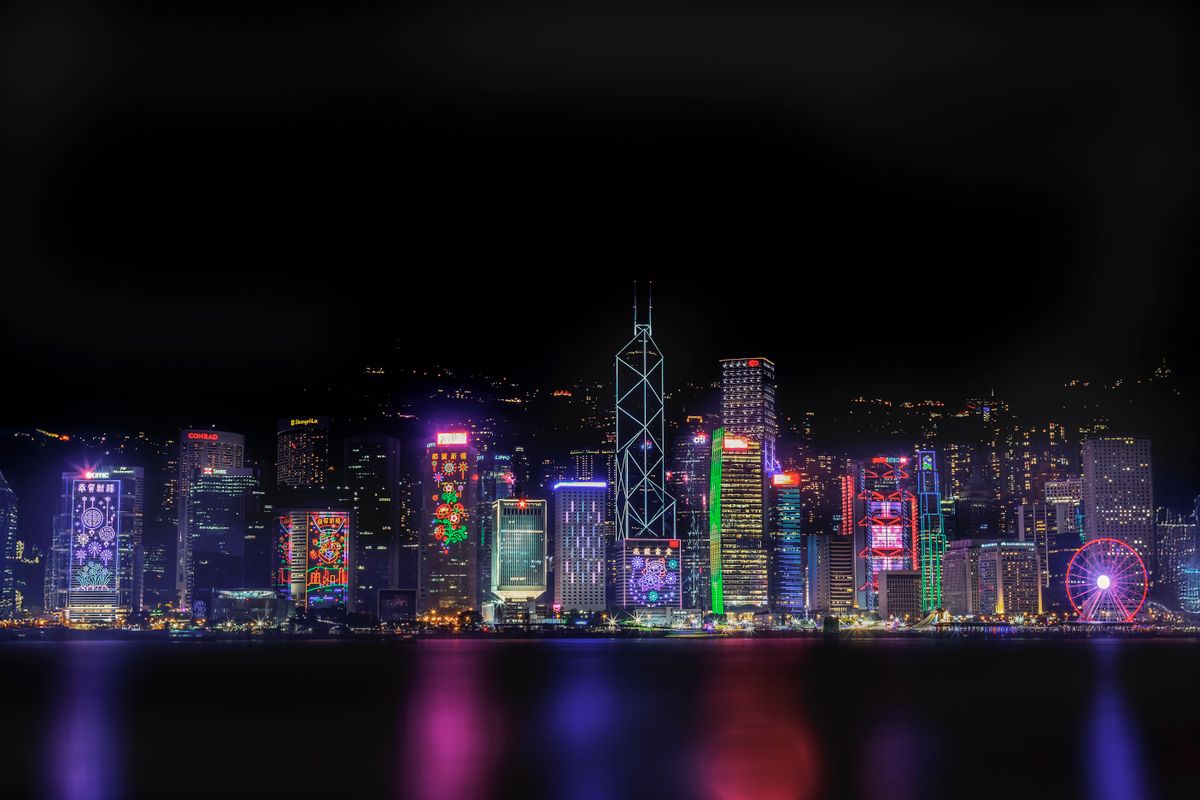
Hong Kong's manufacturing boom of the 70s changed everything. Air conditioning became standard. People could afford doctors. Cold soft drinks and juice arrived in bright plastic bottles. Leung cha shops — with their bitter medicine and communal TVs — slowly lost their edge.
By the 2000s, dozens of neighbourhoods had lost their local leung cha shop. Rent hikes crushed the rest. Some brands survived by going industrial: Wong Lo Kat and Hung Fook Tong (鴻福堂) turned their brews into canned drinks and mass-market chains. Purists shudder. But it kept the tradition alive.
Intangible Cultural Heritage — Officially
In 2006, leung cha was officially added to Hong Kong's intangible cultural heritage list. That mattered. It gave the tradition legitimacy in the eyes of the government, and a small wave of younger Cantonese entrepreneurs started rethinking the shops — keeping the copper cauldrons, adding better lighting, sometimes stocking traditional Cantonese desserts like mango pomelo sago alongside the bitter tea.
Today you'll still find the classic old-school shops in districts like Sham Shui Po, Yau Ma Tei, and Wan Chai. The ones where the tea has been simmering on the same stove for 40 years.
Why the Diaspora Still Craves It
Ask a Cantonese person overseas what they miss most about Hong Kong and you might hear about egg tarts, wonton noodles, or dim sum. But dig a little deeper and someone will mention leung cha. It's the taste of being fussed over. Your Cantonese mum handing you a bowl of bitter tea when you had a sore throat as a kid. Your grandma dragging you into a shop after school because your pimples were, in her medical opinion, entirely due to eating too much fried chicken.
The tea itself is bitter. But the memory is soft. That's the Cantonese contradiction — tough love brewed in a copper pot, ladled out in a shop no bigger than a bathroom, drunk standing up, and paid for in coins. Not glamorous. Not photogenic. Just deeply, unmistakably Cantonese.
📖 Related Articles
👉 Shop Cantonese Guy — Modern Streetwear for the Global Cantonese Community