

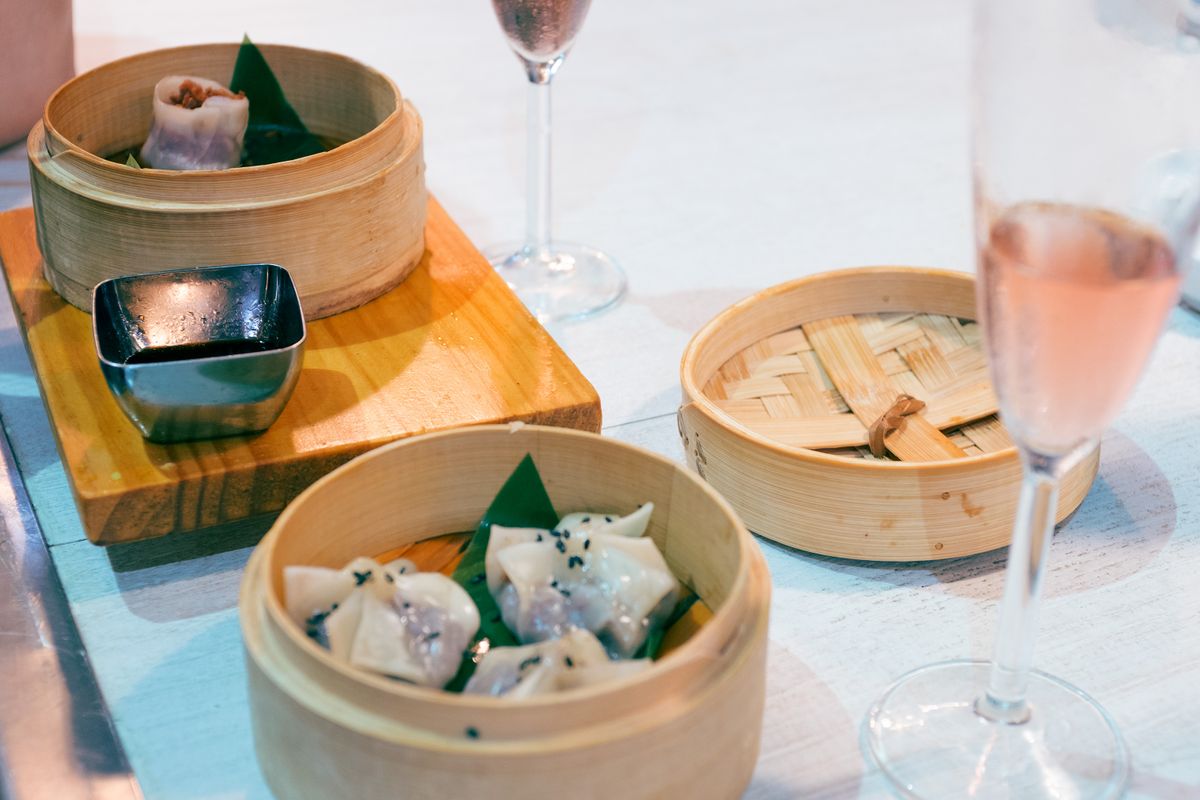
Ask a Cantonese family what they are doing on Sunday morning, and half the time the answer is two syllables: 飲茶 — jam2 caa4, yum cha, "drink tea." It is never really about the tea. It is about three generations pushed around a round table at nine in the morning, the trolley squeaking past, somebody's grandmother reading the newspaper, and a bamboo steamer of har gow arriving before anyone has said hello. Yum cha is Cantonese social infrastructure disguised as a meal.
What yum cha actually means
The Cantonese word 飲茶 (jam2 caa4) translates literally as "drink tea," but every Cantonese person understands it to mean tea plus small plates — a lingering, table-based meal that can last three hours. The small plates themselves are called 點心 (dim2 sam1), which translates as "touching the heart" — the Cantonese phrase for a light bite meant to satisfy without filling. Yum cha is the ritual; dim sum is the food inside it.
The Cantonese have a two-word encapsulation of the whole tradition: 一盅兩件 — jat1 zung1 loeng5 gin6 — "one cup, two pieces." A single cup of tea, two little plates of dim sum. That is the minimum viable yum cha. Everything else is scaling up.
A Qing-dynasty Guangzhou invention
The origin story usually starts in late Qing-dynasty Guangzhou. As the port city grew into a hub of commerce in the eighteenth and nineteenth centuries, travellers and traders needed places to rest between deals. Small teahouses called yat lei (一立) hung out wooden boards reading "tea talking" — essentially inviting anyone to come in, sit, drink tea and negotiate. Over time these teahouses started offering small foods to accompany the tea. By the second half of the nineteenth century, Guangzhou's dim sum culture was flourishing.
This is worth pausing on: yum cha did not evolve from a fine-dining tradition. It evolved from working commerce. Merchants haggling, dockworkers between shifts, rickshaw drivers stealing a break — they were the first customers. The tables were communal. The tea was strong. The dumplings were cheap. Cantonese sociability was born in that room.
In 2007 the government of Guangzhou officially designated Cantonese morning-tea culture an Intangible Cultural Heritage of Guangzhou — a recognition that yum cha is not just a meal but a piece of the region's identity worth protecting.
The dim sum canon
There are hundreds of dim sum items on a proper Cantonese menu. A short list of the ones a table absolutely orders:
🥤 Har Gow (蝦餃)
Translucent shrimp dumplings in a wheat-starch wrapper. The gold standard by which every dim sum kitchen is judged: the wrapper should be thin enough to see the pink shrimp through it, folded in the correct number of pleats (traditionally seven or more), and never sticky.
🤟 Siu Mai (燒賣)
Open-topped pork-and-shrimp dumplings crowned with a dot of orange fish roe or crab tomalley. The most consistently ordered item in the Cantonese dim sum universe. If a shop's siu mai is loose, the whole kitchen is suspect.
🍞 Char Siu Bao (叉燒包)
Fluffy steamed buns filled with sweet-savoury char siu. Steamed versions crack open on top like a smile; baked versions come glazed and golden.
🍜 Cheung Fun (腸粉)
Rolled rice noodle sheets wrapped around shrimp, char siu or beef, drenched in sweet soy at the table. The texture is silky and slippery — a Cantonese engineering feat of a dish.
🍛 Fung Zaau (鳳爪)
"Phoenix claws" — chicken feet braised in black bean sauce until the skin slips off the bone. An acquired look, a universally loved bite. Ask any Cantonese diaspora kid what they missed most about yum cha with grandma, and this is on the list.

The tea part matters more than you think
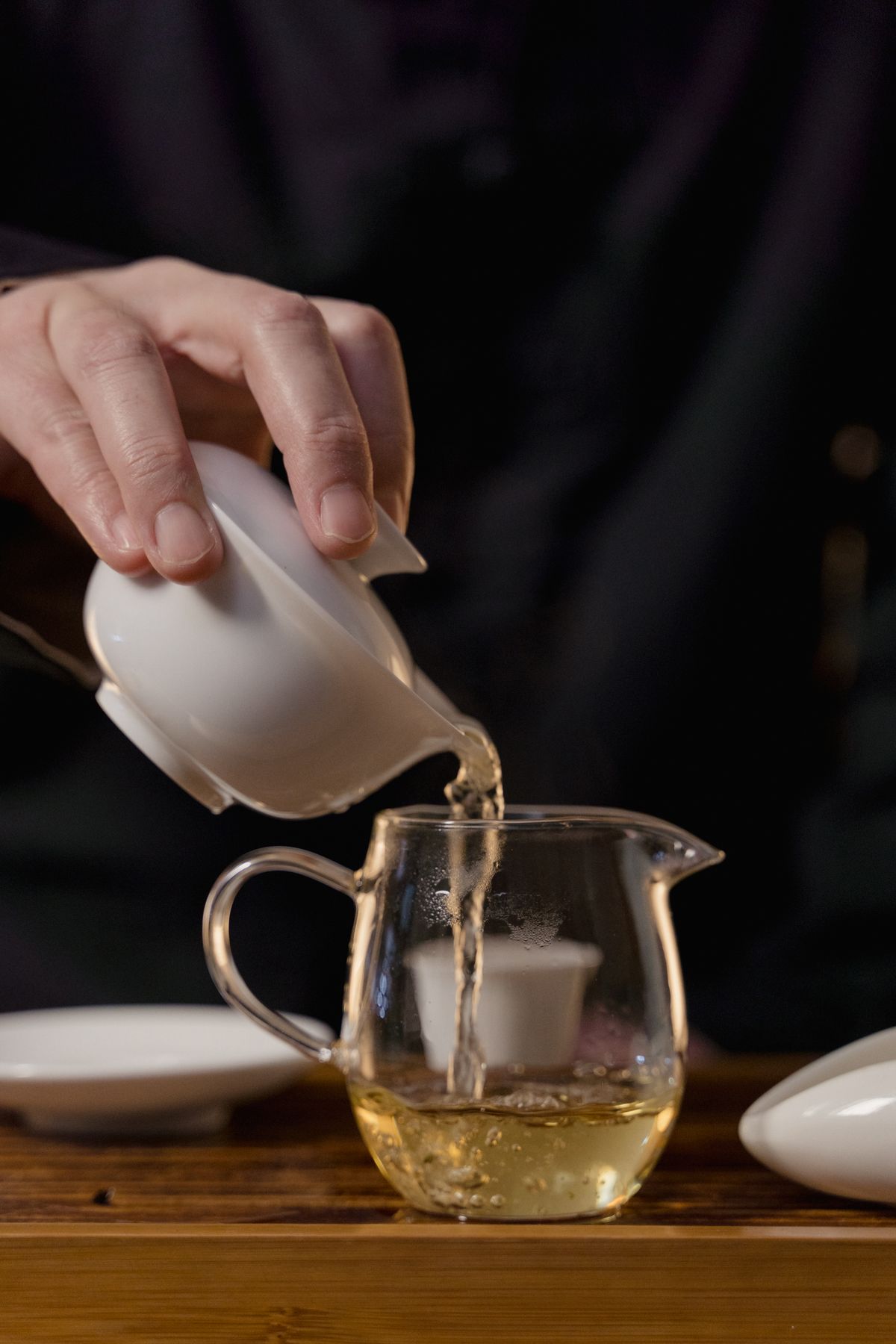
Every Cantonese yum cha table opens with the same ritual: the waiter asks what tea you want. The four traditional answers are pou lei (普洱, dark fermented pu'er, the classic), heung pin (香片, jasmine), sau mei (壽眉, mellow white tea), or tit gwun jam (鐵觀音, oolong). Pu'er is the yum cha default because its earthy tannin cuts through the fat of the dim sum.
There are unspoken rules. When someone pours your tea, you tap two fingers on the table — a wordless "thank you" that legend traces to a Qing emperor travelling in disguise. When the pot is empty, you lift the lid or tilt it open on top of the teapot; the staff will refill it without you having to call across the room. Yum cha runs on small courtesies.
How yum cha went global
Cantonese migrants took yum cha with them. In Vancouver and San Francisco, weekend dim sum became a diaspora institution — a way for Cantonese-Canadian and Cantonese-American families to remain themselves in a new country. In Sydney, Melbourne and London, the trolleys arrived by the 1960s and never left. In New York, yum cha in Manhattan's Chinatown is how a lot of second-generation kids first learned that being Cantonese was a specific thing, not just a generic "Chinese" thing.
The globalisation of yum cha has also flattened it. Fast, wall-mounted-menu dim sum chains have replaced trolleys in a lot of new-generation restaurants. Some of that is progress — the food is fresher — and some of it is loss. The slow, communal, argument-friendly Sunday morning table is a specific Cantonese cultural technology, and it deserves to be preserved.
Why yum cha is Cantonese in a way nothing else is
The best yum cha meal you will ever have is not in a fancy restaurant. It is in a Kowloon teahouse with your parents, with a broken lazy susan and a menu longer than your arm and a grandmother at the next table calmly cutting her char siu bao with the corner of a teaspoon. Yum cha is what Cantonese people do when there is nothing urgent to do — which, when you think about it, is a fairly bold declaration of how a culture wants to spend its time. Three generations. One cup, two pieces. A whole morning.
📖 Related Articles
👉 Shop Cantonese Guy — Modern Streetwear for the Global Cantonese Community