

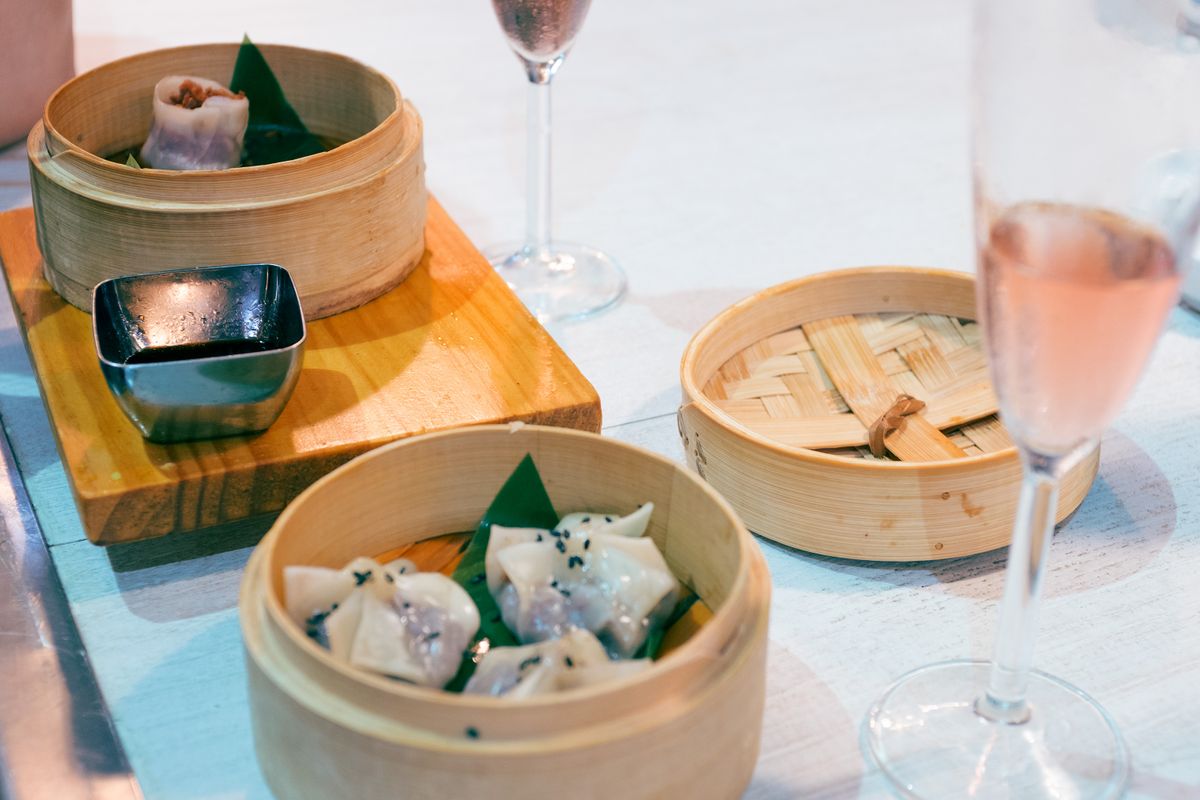
Every Cantonese dim sum trolley has one truth on it: the small round yellow parcels with the pork peeking out the top and the little dot of orange roe on the crown. Siu mai (燒賣) is the dumpling that every kid in Hong Kong learns the name of first, the one the aunties always order without asking, the one street vendors in Sham Shui Po skewer four to a stick and hand you in a paper cup. It's older than you think, humbler than it looks, and it did not start in Cantonese kitchens at all.
A Dumpling From Somewhere Else, Adopted by Guangdong
Siu mai did not start Cantonese. Food historians trace it back at least to the Yuan dynasty (1279–1368), when it appears in northern Chinese texts as a savoury tea-house snack — the fillings shifting with the seasons: garlic chives in spring, mutton in summer, crab in autumn, seafood in winter. From Shanxi and Beijing it slowly rolled south, following the trade roads and the tea trade, until it reached Guangzhou and, later, Hong Kong.
What Guangdong did was rewrite it. The northern version wrapped sticky rice and mushrooms in a thick, pleated skin. The Cantonese version tossed the rice out. In its place came the two ingredients that would define it forever: minced pork and whole shrimp.
Why It's Yellow
The wrapper is the fingerprint. Cantonese siu mai uses a thin round dough made with wheat flour and egg — the egg is what turns it that unmistakable pale gold. Northern siu mai uses a plain white wrapper. If you're ever unsure which lineage you're eating, look at the colour of the skin: yellow means Cantonese, white means someone else's tradition.
The classic filling is minced pork mixed with chopped shrimp, a knuckle of Chinese black mushroom, spring onion, ginger, a little sesame oil, and enough seasoning to hold the pork's honesty. Some cooks add water chestnut for crunch. The best ones don't over-season. Siu mai is one of those dishes where the ingredients do the talking and the cook stays out of the way — a very Cantonese approach, close cousin to the same restraint you find in white cut chicken.
👑 One of the Four Heavenly Kings
In Cantonese dim sum, four dishes carry the informal title "the Four Heavenly Kings" (四大天王): har gow, siu mai, char siu bao, and egg tarts. Every dim sum menu has them. Every yum cha regular can rank them. If you learn to make one of the four, siu mai is the forgiving choice — the shape hides your mistakes.
The Street-Food Version Every Hong Kong Kid Remembers
Somewhere along the line siu mai stopped being only a yum cha dish and became the most democratic snack in Hong Kong. Walk past any street cart in Mong Kok, Sham Shui Po, or Kwun Tong after school lets out and you'll see it: siu mai bobbing in shallow trays of hot broth, four to a stick, doused in soy sauce and chilli oil, sold for a coin.
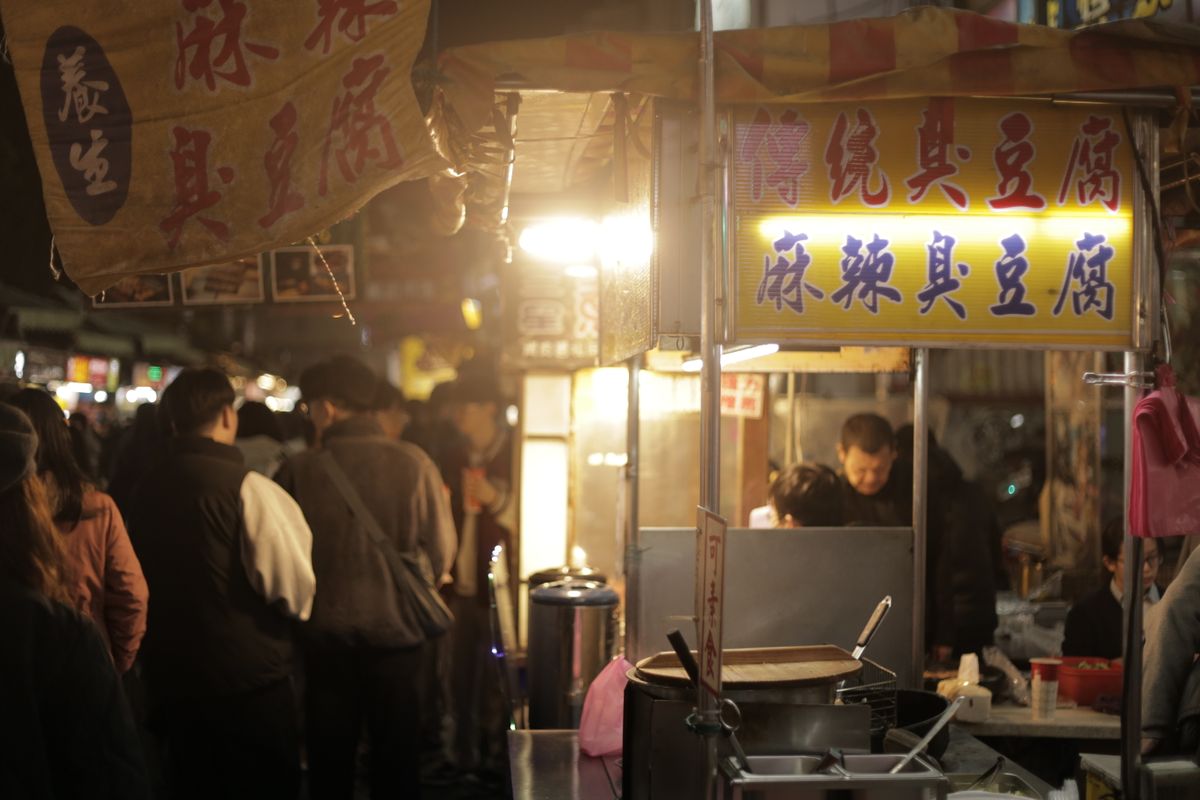
Street siu mai is a different animal. The filling is mostly fish paste with a little pork, the wrappers are thicker and chewier, and everything is boiled instead of steamed. Nobody pretends it's the same food as the dim sum version, and nobody minds. If har gow is the elegant older sister, street siu mai is the little cousin who eats standing up with sauce on their chin.
How to Order Siu Mai Like a Local
In a proper dim sum house, siu mai comes four to a bamboo steamer. If the trolley auntie asks how many you want, she means how many baskets. Two is normal for a table of four. Add soy sauce sparingly — the good stuff doesn't need it. Never dunk. Cantonese diners will tip a drop onto the pork through the open top, take a bite, and let the shrimp underneath do the second half of the work.
Also: the tiny orange dot on the crown. That's meant to be crab roe or fish roe on the traditional version. In cheaper restaurants it's a scattering of diced carrot. It's not just decoration — it's how you know somebody at the kitchen still cares about the details.
Why We Still Line Up for a Steamer of Pork
The whole point of Cantonese food is that a great dish shouldn't need showing off. Siu mai is a small piece of proof: pork, shrimp, a wheat-and-egg wrapper, a bamboo basket, and 800 years of cooks slowly agreeing on the shape. It survived the Yuan dynasty, the Qing, the collapse of trade cities, the invention of frozen dim sum, and the Instagram era. It survived because it's honest. Because your grandmother could recognise it. Because you can still buy one on a stick for the price of a bus fare.
Next time you sit down to yum cha, order the siu mai first. It's the dish that tells you whether the rest of the trolley is going to be worth it.
📖 Related Articles
👉 Shop Cantonese Guy — Modern Streetwear for the Global Cantonese Community