

A proper bowl of Cantonese wonton noodles (雲吞麵 wan4 tan1 min6) is a small architectural project. At the bottom sit four to six shrimp-and-pork parcels the size of a walnut, wrapped so thin you can almost see the pink of the filling through the skin. On top of them, a nest of springy egg noodles — pressed by bamboo pole and not by machine, if you have found the right shop. Over the whole thing, a clear amber broth simmered for hours with dried flounder, prawn shells and pork bones. Yellow chives on the side. A tiny saucer of red vinegar to cut the richness. That is the bowl an entire diaspora is homesick for.
Where the bowl came from
Wonton noodles trace their lineage to Guangzhou in the late Qing dynasty (1644–1911). The word 雲吞 ("cloud swallow") is a Cantonese respelling of the older Chinese 馗飩 — the ancient wonton — but the specific Cantonese style, with fresh shrimp inside the wrapper and thin bamboo-pressed egg noodles beneath, took shape in the shophouses and dai pai dongs of Sai Kwan and Yau Ma Tei in the late 1800s and early 1900s.
The dish did not reach Hong Kong at scale until the early 1940s, when Cantonese cooks fled the Second Sino-Japanese War and set up shop across the border. Chief among them was Mak Woon-chi (麥奠光), a Guangzhou wonton legend whose family recipe eventually became the foundation of Hong Kong's famous noodle-shop tradition. His son Mak King-hung opened a food stall in Central in 1968 and, in 1989, the shop we now know as Mak's Noodle on Wellington Street. Today it is run by the third generation — Mak Chi-ming — with outlets in Hong Kong, Macau and Singapore.
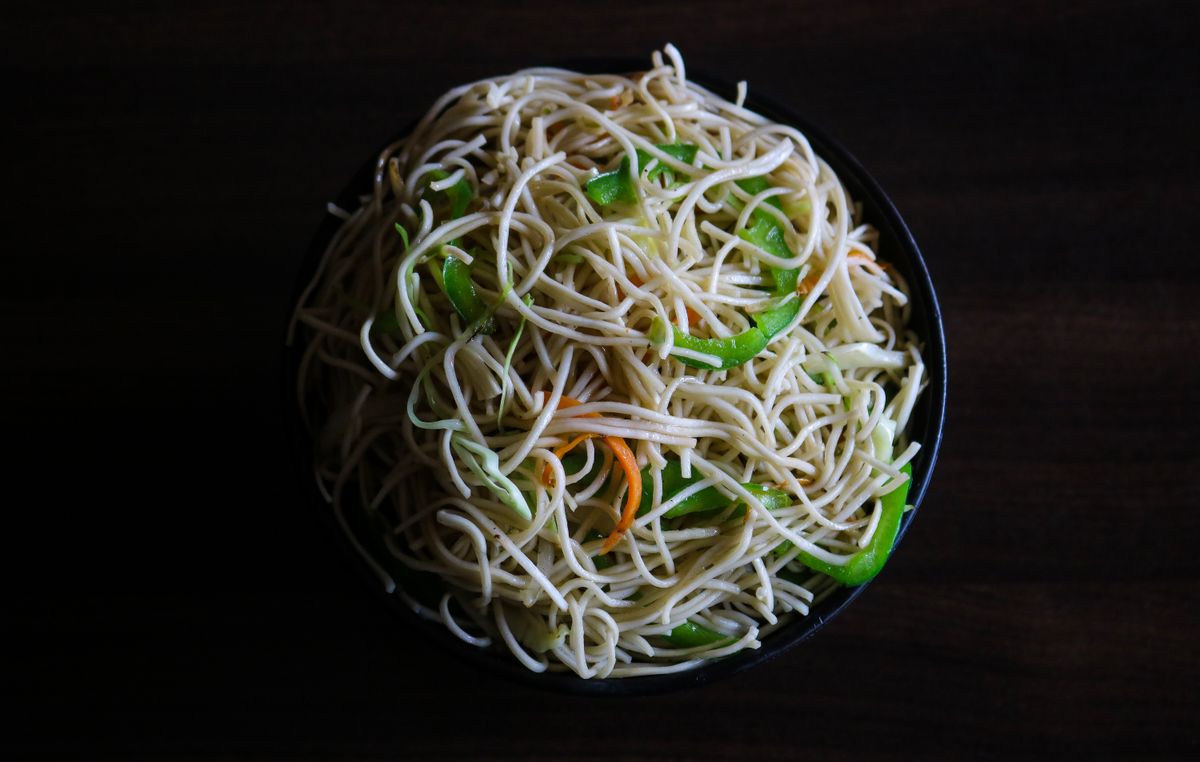
The four parts of a real wonton noodle bowl
To Cantonese eaters, the bowl has four rules. Break any one and the shop loses face.
The wontons should be four to six pieces, no larger than a mahjong tile, wrapped in a thin square skin that gathers into a "cloud" or "goldfish tail" at the top. Traditional Cantonese fillings lean shrimp-heavy — whole prawns with a small ratio of minced pork — not the pork-only wontons of northern China.
The noodles are thin, springy, alkaline egg noodles known as saang min (產麵). At old-school shops the dough is still pressed by a cook straddling a bamboo pole — zuk sing min (竹升麵). The bamboo delivers a controlled, uneven pressure that machines cannot replicate. That is the springy bite older uncles will queue for.
The broth is the fingerprint of the shop. A proper Cantonese broth simmers dried flounder (大地魚), prawn shells, pork bones and yellow chives for hours. It should be clear, faintly sweet, and end with an umami wallop from the flounder. Broth done badly is broth done cloudy.
The details are non-negotiable: yellow chives (韭黃) on top, a saucer of 浙醇 (Zhenjiang black vinegar) on the side, and — in the old style — the wontons at the bottom of the bowl so the noodles do not go soggy. If your bowl arrives with the wontons on top, you are eating a modern reinterpretation.
The shops that made the dish immortal
Hong Kong's wonton noodle canon is short and fiercely defended. Mak's Noodle on Wellington Street is the aristocrat — tiny portions, higher prices, and a following that includes local uncles and Michelin inspectors. Mak Man Kee on Parkes Street in Jordan is the working-class cousin, opened by another branch of the Mak family and famous for a slightly bigger bowl. Ho Hung Kee (河金記) in Causeway Bay was the first wonton noodle shop to earn a Michelin star. Sister Wah (華姐) in Tin Hau, better known for beef brisket, does a fine wonton on the side.
Across the border in Guangzhou, the original masters still trade. Ng Wai Kee (吳興記) in Xiguan has served wonton noodles since the Qing era. Bit Sing Zai (必胜齋) in Liwan District is another Guangzhou institution. When Cantonese uncles argue about who invented the modern bowl, the argument is always Guangzhou versus Hong Kong, and it never resolves.
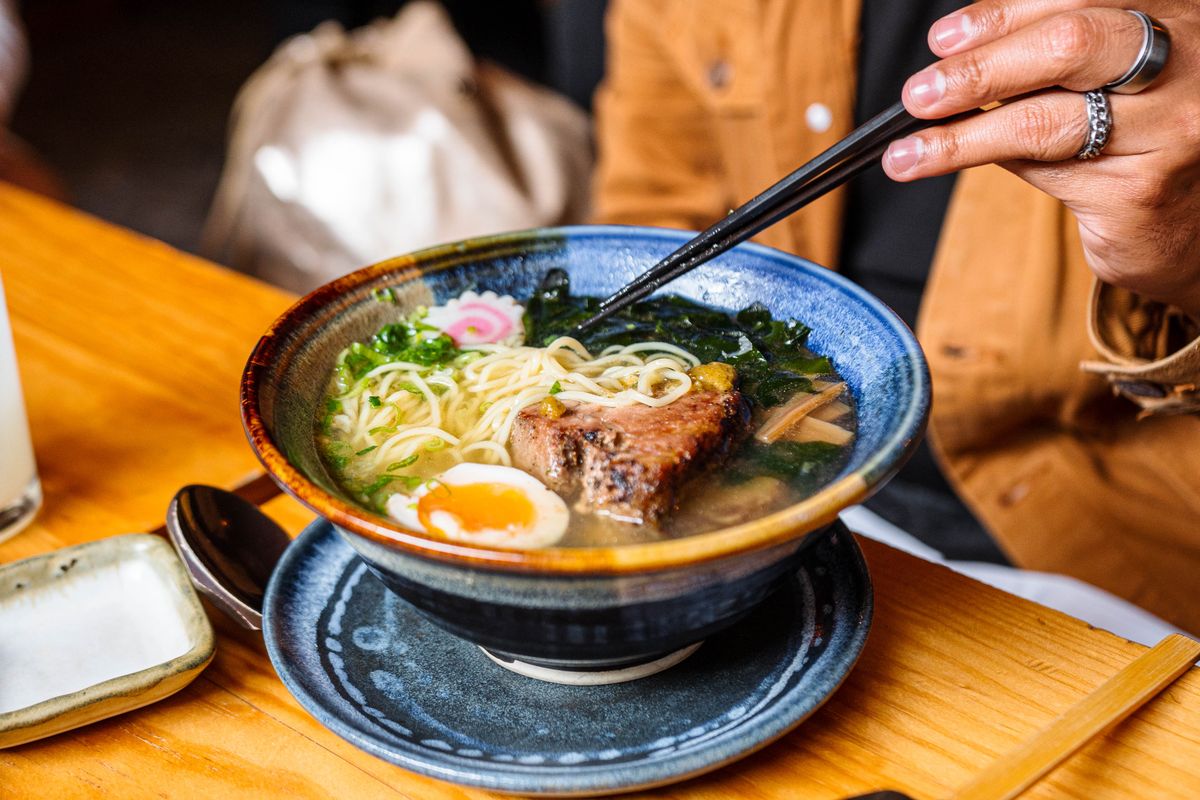
How the bowl travelled with the diaspora
Wherever Cantonese people went, wonton noodles followed. In San Francisco Chinatown, Sam Wo and Ho's Wonton kept the tradition alive for over a century. In London, Wong Kei on Wardour Street served generations of homesick Hong Kongers. Vancouver Chinatown has Kam Do. Sydney's Haymarket has half a dozen. Every migration wave built its own noodle shop, and every noodle shop argued that theirs was the closest to home.
Malaysia and Singapore developed their own local versions — drier, with soya sauce, char siu and pickled green chillies, served with soup on the side. Purists will tell you that is a wonton mee, not a Cantonese wonton noodle. Malaysians will tell you the purists can eat somewhere else. Both are right.
Why the bowl still matters
For the global Cantonese community, a bowl of wonton noodles is a passport stamp. You can be in Kowloon or Vancouver or Melbourne — the moment you tear the wonton skin with chopsticks, dip it in vinegar, and hit the broth, you are home. Guangzhou made the dish. Hong Kong made it famous. The diaspora made it eternal. And every good shop, from Wellington Street to the far side of the Pacific, is really doing one thing: keeping the bamboo pole alive.
📖 Related Articles
👉 Shop Cantonese Guy — Modern Streetwear for the Global Cantonese Community