

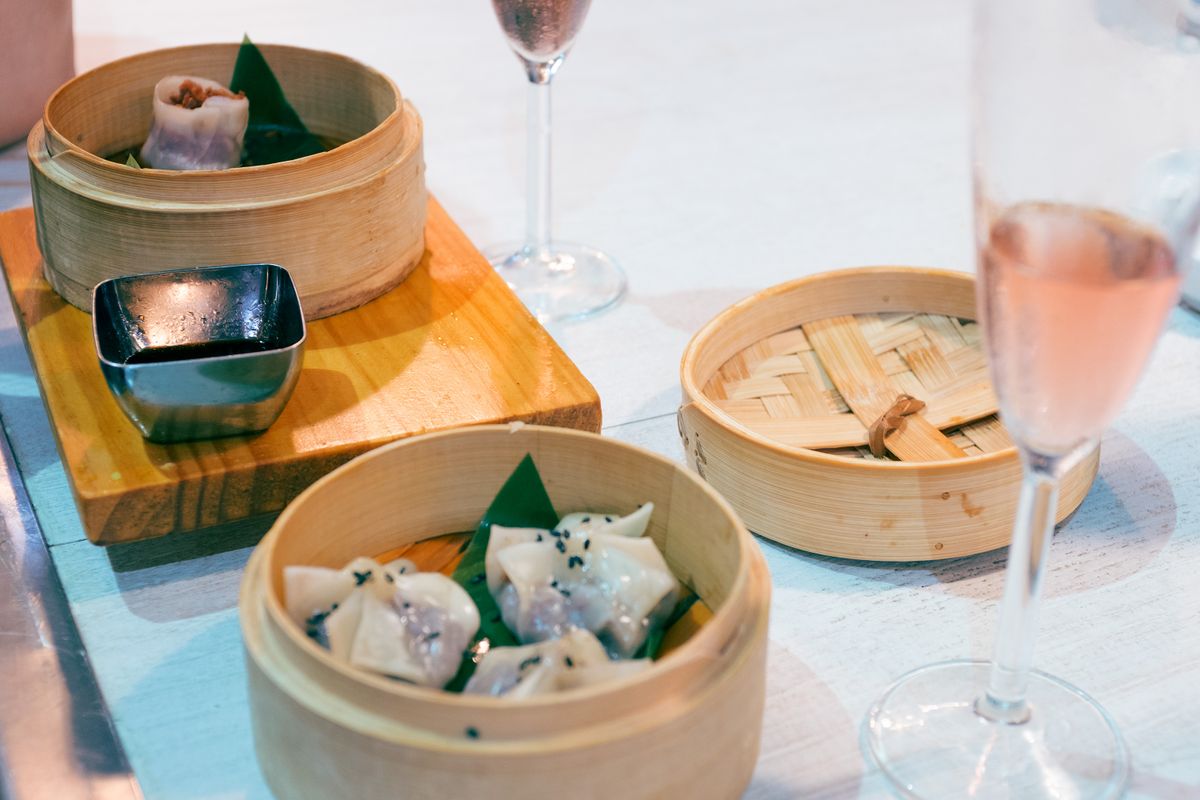
The rules are strict. A proper har gow (蝦餃) must have at least ten pleats — thirteen is the standard master pleaters aim for. The wrapper must be translucent enough that you can see the pink of the shrimp through it. The dumpling must hold together in one bite. And when steamed in a bamboo basket, it should sit like a small crystal purse — plump, glowing, waiting to be lifted with chopsticks. This is one of Cantonese cuisine's oldest tests: what a cook can do with three ingredients and a piece of dough.
Born in a Guangzhou Teahouse
Har gow is Cantonese to its bones. It was born in the early 20th century in the outskirts of Guangzhou — legend places the invention at the Yee Zhen (伊珍) teahouse in Wu Fung (Five Phoenix) village, where a chef living beside a stream started making dumplings from the local freshwater shrimp. It was around the 1930s that these delicate shrimp parcels began appearing on yum cha carts across the Pearl River Delta.
The Cantonese teahouse tradition — small snacks served alongside tea to make an afternoon of it — was already the beating heart of Guangzhou social life. Har gow slotted straight in and never left. Within a generation, it had become one of the four dishes any dim sum kitchen was expected to make perfectly, alongside siu mai, char siu bao, and egg tarts — the "Four Heavenly Kings" of Cantonese dim sum.
Why the Wrapper Is the Hardest Part
Ask any Cantonese dim sum chef what makes har gow difficult and they won't say the filling. The filling is easy: fresh shrimp, a little bamboo shoot or water chestnut for crunch, sesame oil, salt, white pepper, sometimes a whisper of egg white. Mince, mix, chill. Done.
The wrapper is where careers are made. Har gow dough is a precise blend of wheat starch (澄麵) and tapioca starch — no regular flour. The starches have to be scalded with boiling water and kneaded quickly while still hot. Cool too much and the dough seizes. Handle too roughly and it tears. The result, when done right, is a translucent skin thin enough to see through but strong enough to survive being steamed and lifted with chopsticks.
The Thirteen Pleats
Traditional har gow is folded with somewhere between 7 and 13 pleats — with 13 being the mark of a master pleater. You'll see dim sum apprentices in Hong Kong kitchens practising the fold for months before they're allowed to plate for customers. The shape is meant to resemble either a purse or a crescent moon, depending on which teacher you ask. Some old-school chefs insist that if a har gow arrives at the table with fewer than 10 pleats, it's not really har gow — it's just a shrimp dumpling.
This obsession with pleats is very Cantonese. It's the same instinct that makes a Cantonese chef care about the exact number of times a chicken should be lifted out of poaching water when making white cut chicken. Detail as devotion.

The Bamboo Basket Ritual
Har gow is always served in bamboo steamers, usually three or four dumplings per basket. The wood matters — bamboo absorbs moisture during steaming, which keeps the wrapper from turning gummy. The basket goes straight from the steamer stack to the table, still hissing quietly. Lifting the lid at the table is part of the ritual.
Every Cantonese diner has an opinion on how to eat it. Some dip lightly in Chinkiang vinegar with a shred of ginger. Some drizzle a drop of chili oil. Purists eat har gow plain, arguing that if the dumpling is any good, it doesn't need help. All camps agree on one rule: don't bite it in half. A properly made har gow goes in whole, in one bite — the whole point is the moment when the wrapper gives and the shrimp is released warm inside your mouth.
Har Gow Around the World
When Cantonese migrants left Guangdong in the late 19th and 20th centuries — for San Francisco, London, Vancouver, Sydney, Melbourne, Toronto — they took their dim sum culture with them. Har gow travelled well because it required only three specialist ingredients: shrimp (available everywhere the sea reached), wheat starch, and tapioca starch. Even in Toisan-descended communities thousands of miles from Guangzhou, the har gow on the trolley was a taste of home.
Today, har gow is the single most-recognised Cantonese dim sum dish in the world. Order dim sum anywhere from London Chinatown to Melbourne's Little Bourke Street to Peru's chifa restaurants, and har gow will be on the menu — often listed first, because that's still the dish by which the whole kitchen is judged.
The Test That Never Changes
In Hong Kong, dim sum chefs still say the same thing: if you want to know whether a new dim sum restaurant is any good, order the har gow first. If the wrapper is thick, cloudy, or torn — leave. If the shrimp inside is grey and mealy — leave. If the whole dumpling holds together, gleams under the restaurant lights, releases a plump warm shrimp in one bite — stay. Order everything else. This is a kitchen that knows what it's doing.
Nearly a century after that first Guangzhou teahouse, har gow is still Cantonese cuisine's most exacting test. Three ingredients. Thirteen pleats. One perfect bite. That's the whole language of Cantonese dim sum in a single dumpling.
📖 Related Articles
👉 Shop Cantonese Guy — Modern Streetwear for the Global Cantonese Community