

There's no pineapple in a pineapple bun. Never was. The name comes from the way the golden, crackled sugar topping looks like the skin of the fruit — a small design decision that a Hong Kong baker made sometime in the 1940s that somehow ended up on the government's official list of intangible cultural heritage.
The bo lo bao (菠蘿包) is Hong Kong's most beloved bakery item. It's the bun you eat on a folding stool at a cha chaan teng, warm from the oven, split open with a cold slab of butter melting inside. Every Cantonese kid on earth has a memory attached to one.
A Hong Kong invention with three origin stories
Nobody agrees on where the bo lo bao came from. The earliest documented pineapple buns appeared in Hong Kong around 1942, when the Tai Tung Bakery started making them in Yuen Long. But there are two competing theories about the inspiration:
The Japanese theory points to melonpan, a nearly identical sweet bun with a cookie-crust topping that already existed in Japan by the early 20th century. The Mexican theory tells of the Ng family, deported from Mexico back to Hong Kong in 1946, who allegedly adapted the Mexican concha — a shell-shaped sweet bun with a sugary crust — for the local palate. Both stories are unverifiable, but both are romantic in the exact same way: a small city importing an idea and rewriting it in Cantonese.
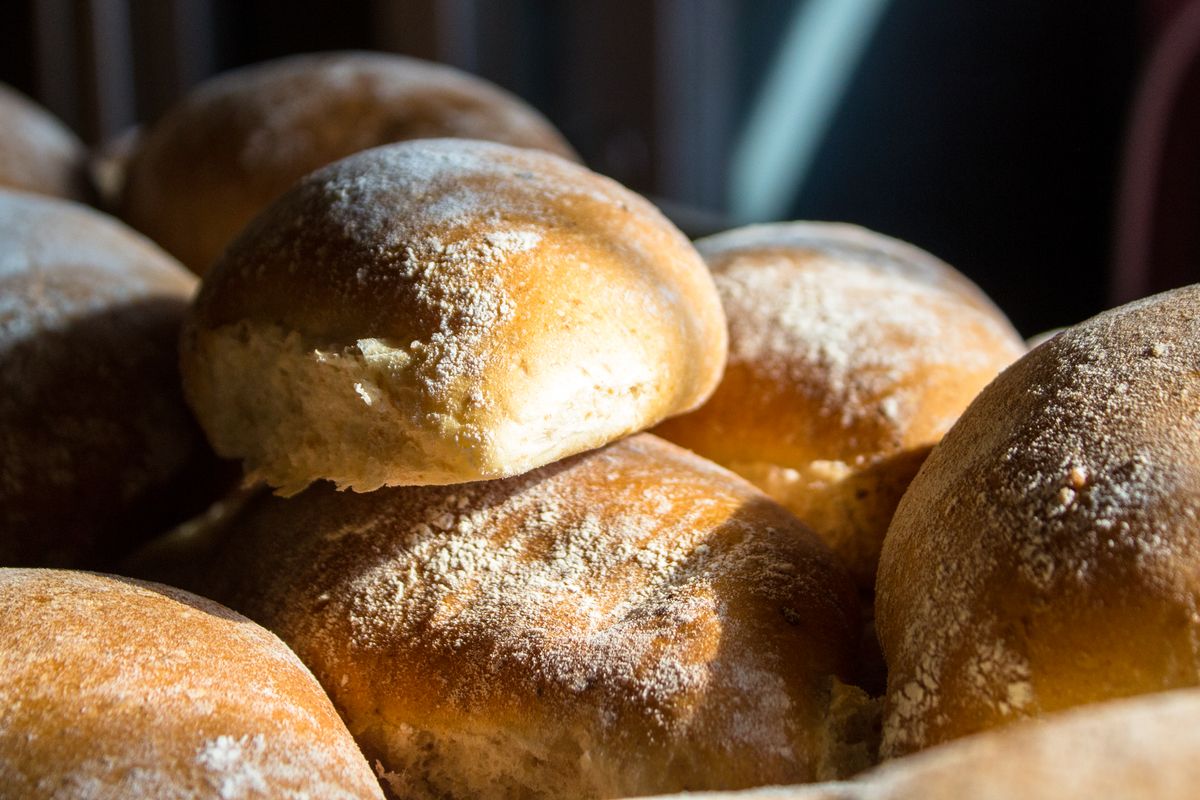
The anatomy of a proper bo lo bao
A real bo lo bao has two parts, and both matter equally. Underneath is a soft, slightly sweet milk-bread bun — pillowy, gently enriched with milk powder, sometimes still warm to the touch. On top is the crust: a thin layer of sugar, butter, egg yolk and flour that bakes into a crackled, golden shell. That crust is why the bun looks like a pineapple. It's also why the topping shatters when you bite into it, sending fine sweet crumbs everywhere.
Purists will tell you that a bo lo bao must be eaten within an hour of leaving the oven. After that, the crust goes soft. The bun goes stale. The whole thing loses its personality. This is why real Hong Kong bakeries bake them in small batches all day — they're designed to be inhaled while walking down the street, not stored.
Enter the bo lo yau (菠蘿油): the sinful upgrade
Sometime in the mid-20th century, a genius at a Hong Kong cha chaan teng did the unthinkable. They took a hot bo lo bao, sliced it in half, and slid a cold slab of butter into the middle. The butter half-melts against the still-warm bread. The sugar crust cracks. You get salty, sweet, cold, warm, crunchy and soft all in one bite. This upgrade is called bo lo yau (菠蘿油) — literally 'pineapple oil'. Every cardiologist in Hong Kong wishes it didn't exist. Every Hongkonger under the age of 90 has eaten one this week.
Intangible cultural heritage
In June 2014, the government of Hong Kong added the bo lo bao to the city's official list of intangible cultural heritage. Tai Tung Bakery in Yuen Long — the same bakery credited with the earliest documented pineapple buns — was cited as a key torchbearer of the tradition. The list also includes silk-stocking milk tea, the Cheung Chau Bun Festival, and Cantonese opera. A humble sweet bread now sits on the same government list as an 800-year-old operatic tradition.
Where to find a real one
Kam Wah Cafe in Prince Edward is probably the most famous stop for tourists — the queue outside is legendary. Maria's Bakery has been baking since 1966. Kam Fung Cafe in Wan Chai is a favourite of grown Hongkongers who don't want to queue with the tourists. Newer bakeries like Pineapple Bakery in Sheung Wan have started making sourdough-based bo lo bao and adding mochi or salted egg custard inside, which purists will complain about right up until they finish eating one.
In the diaspora, look for Cantonese-run bakeries — Kee Wah in the US, Maxim's chains overseas, Chinatown bakeries in Vancouver and London. The bo lo bao is the great mobile monument to Cantonese bakery culture. If you can find one, you can taste a slice of Hong Kong in a paper bag for less than a coffee.
Why we still care
The bo lo bao is a great equaliser. Millionaires eat them with tea in the same bakeries where construction workers eat them for breakfast. There's no fancy version of a bo lo bao. There's just the correct version — fresh, warm, cracked open, ideally with a slab of butter melting inside. It's Cantonese food philosophy in a sweet bread: humble ingredients, precise technique, deep pleasure, no fuss. That's why we keep coming back to it. That's why the government put it on a list. And that's why every Cantonese kid abroad still smells one of these and immediately texts their mum.
📖 Related Articles
👉 Shop Cantonese Guy — Modern Streetwear for the Global Cantonese Community