

The second the humidity breaks in Hong Kong — usually sometime in mid-October — something quiet happens across the city. People start texting their group chats about 打邊爐 (daa2 bin1 lou4). The hot pot season has opened. For the next four or five months, a steaming pot sitting at the centre of a shared table will do more cultural work than any Cantonese meal of the year. It will reunite families, close deals, forgive feuds, celebrate birthdays, and send the year out at New Year's Eve. Hot pot is not dinner in Cantonese culture. It's a ritual with soup in the middle.
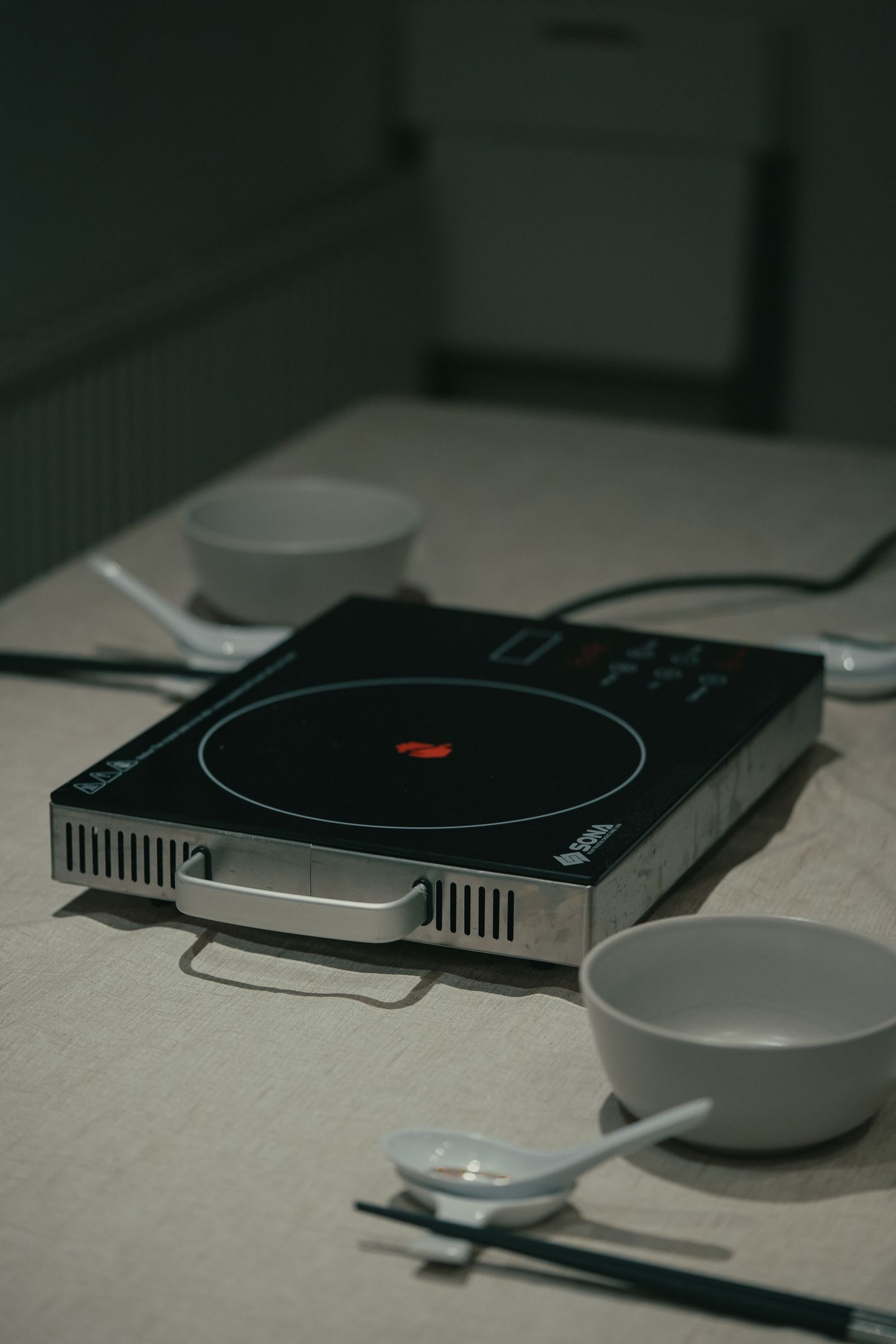
If you've only had hot pot once, in a restaurant, with strangers, you've met the body but not the soul. The real 打邊爐 happens around a crowded apartment table — your mum insisting you eat more fish balls, your dad flipping the lamb in the broth, three generations shouting over each other, and the induction cooker running until nobody can breathe. This is Cantonese winter.
What 打邊爐 Literally Means
The phrase 打邊爐 translates word-for-word as "strike the side of the stove." The idea, carried down through Guangdong kitchens, is of people sitting around a central pot and knocking their chopsticks against its rim — picking food out, dropping food in, sharing the heat. Written in traditional characters you'll see it on every Cantonese hot pot restaurant sign from Sham Shui Po to Sydney. The Mandarin version is 火鍋 (huo guo), but a Hong Konger will almost always use the Cantonese term. It's part of the identity.
The Two Pots: Clear Soup vs Satay Spicy
A Cantonese hot pot usually arrives at the table as a yuen yeung pot (鴛鴦鍋) — split down the middle, two broths, two moods. On one side: clear chicken-and-bone stock, so delicate that a slice of fatty beef takes 15 seconds to cook perfectly. On the other side: a brick-red satay broth (沙嗬湯), heavy with lemongrass, dried shrimp, chilli, peanuts and shallot. The clear soup is for seafood and vegetables; the satay side is for lamb and anything that wants its flavour kicked. Picking the right side for the right ingredient is the first skill every Hong Kong kid learns at the hot pot table.
A good hot pot night calls for the right outfit — something you don't mind getting a splash of soup on. Our 食飯 Dinner is Ready oversized tee is a Cantonese dinner table in shirt form, and it dries fast.
The Ingredients That Define a Cantonese Hot Pot
Walk through a Hong Kong wet market the week before a hot pot night and you'll see the exact ingredient list unfold at the stalls. Hand-made fish balls bouncing in trays. Flat-pressed fish paste for making your own cuttlefish balls on the spot. Thinly shaved beef and lamb coiled on blue plastic. A pile of raw prawns still twitching. Bundles of tong o (chrysanthemum greens), napa cabbage, enoki, oyster mushrooms, bean curd skin, two kinds of tofu, winter melon, Chinese lettuce, taro, radish, and glass noodles waiting to be dropped in at the end to drink up the broth. If someone shows up to a Cantonese hot pot with nothing but packaged beef slices from the supermarket, your mum will quietly judge them for the rest of the night.

The Sauce Is Where Hong Kong Kids Argue
Ask ten Hong Kongers how they build a hot pot dipping sauce and you'll get ten religions. The classic Cantonese setup is a small bowl with raw egg yolk, a scoop of sa cha sauce (satay paste), chopped spring onion, chopped coriander, a splash of soy sauce, and a dab of fermented bean curd (腐乳) for the brave. Some families replace the raw egg with sesame oil (a dash from home cooks who clock out on time). Some add chilli oil. Everyone insists their version is correct. Nobody is wrong.
Why Cantonese Culture Loves Hot Pot So Much
Cantonese dining culture is built around 熱鬧 (jit6 naau6) — the warm, loud, buzzing energy of people gathered close. Hot pot is that philosophy on a plate. Nobody eats before anybody else because the soup only works when it's shared. Nobody serves themselves first because dropping something in for someone else is how affection gets expressed. You cannot be angry at someone across a hot pot — the steam has already thawed the mood. This is why Cantonese families reach for hot pot at every emotional crossroads: engagements, breakups, moving-out dinners, exam results, reunions after years apart. The pot does what words cannot.
If you want to carry that 得閒飲茶 Let's Catch Up sweatshirt energy around all winter, we made the piece for the Cantonese ritual of "let's gather over food." It fits exactly this kind of night.
The Unwritten Rules of the Cantonese Hot Pot Table
A few rules get passed down in silence. Fish balls go in first, meat goes in last, noodles only at the very end so the broth is deepest when they drink it up. Never fish out your own meat with the same chopsticks you were just chewing on — keep a pair for cooking and a pair for eating, or Grandma will see. Do not let the pot run low on broth; add more stock before the alarm bell sounds. And always, always warn the elders about 熱氣 (jit6 hei3) — the Cantonese body-heat theory of overindulgence — after you've eaten half a lamb's worth of satay broth and feel the back of your throat starting to burn.
If the warning comes too late and you wake up with a sore throat the next morning, you've officially become Cantonese. Our 熱氣 Yeet Hay embroidery tee is the inside joke you can wear to the next hot pot night.
Where Hong Kong Does Hot Pot Best
Hot pot restaurants cover every corner of the city, from the standing-room places in Mong Kok that charge HK$150 a head to the glossy Causeway Bay rooms where seafood towers come out on dry ice. But the real pros know: the best hot pot in Hong Kong is the one you cook at home. Bring your own ingredients, your own broth, your own satay sauce, and your own people. Set the induction cooker on the lowest useful heat. Let the night run three hours. Finish with glass noodles and a slice of winter melon. By the time you finally kill the pot, you'll understand why Cantonese people call this a season rather than a meal.
📖 Related Articles
👉 Shop the Mami Says collection
Modern streetwear for the global Cantonese community.