

Walk down almost any Hong Kong street after dark and you'll smell it before you see it — the unmistakable hot-butter perfume of 雞蛋仔 (gai1 daan6 zai2), or egg waffles. A honeycomb of golden, crisp-edged orbs pulled fresh off a hinged iron mould, wrapped in paper and handed over for HK$15. For a city full of Michelin stars, it's striking that the most beloved street snack of all began as a 1950s scheme to use up broken eggs.

A Snack Born From Broken Eggs
The most-told origin story of the egg waffle goes back to post-war 1950s Hong Kong, when eggs were a luxury and waste was unaffordable. Grocery shopkeepers reportedly couldn't sell eggs with cracked shells, so they mixed them into a batter with evaporated milk, flour and sugar, poured the mixture into a hinged cast-iron mould and cooked it over coal. The hemispherical cavities produced the unmistakable bubble shape — a snack with the eggy richness of a custard and the texture of a fresh waffle.
There's a competing tale, too: that the earliest version, called 蛋球仔 (daan6 kau4 zai2 — "little egg balls"), was sold from a 1940s pushcart in Hong Kong with batter that was larger and ladled out by the dozen. Whatever the true origin, by the late 1950s these golden bubbles were sizzling on nearly every street corner in Kowloon — a cheap, hot, deeply satisfying treat for kids on the way home from school.
The Cast-Iron Mould: A Hong Kong Icon
What separates the gai daan zai from any other waffle is the mould. The traditional design uses two thick cast-iron plates hinged together, each lined with rows of round semi-spherical wells. The vendor pours batter into the hot lower plate, snaps the top plate down, and flips the whole thing over a flame — first one side, then the other — for less than three minutes total.
The result is a sheet of joined bubbles: shatteringly crisp on the outside, soft and just-barely-cooked in the middle, with a deep eggy chew. Traditional vendors still use this method, and connoisseurs argue you can taste the difference between coal, gas and electric heat. The very best stalls — the ones with queues snaking down the block — almost always cook on something old.
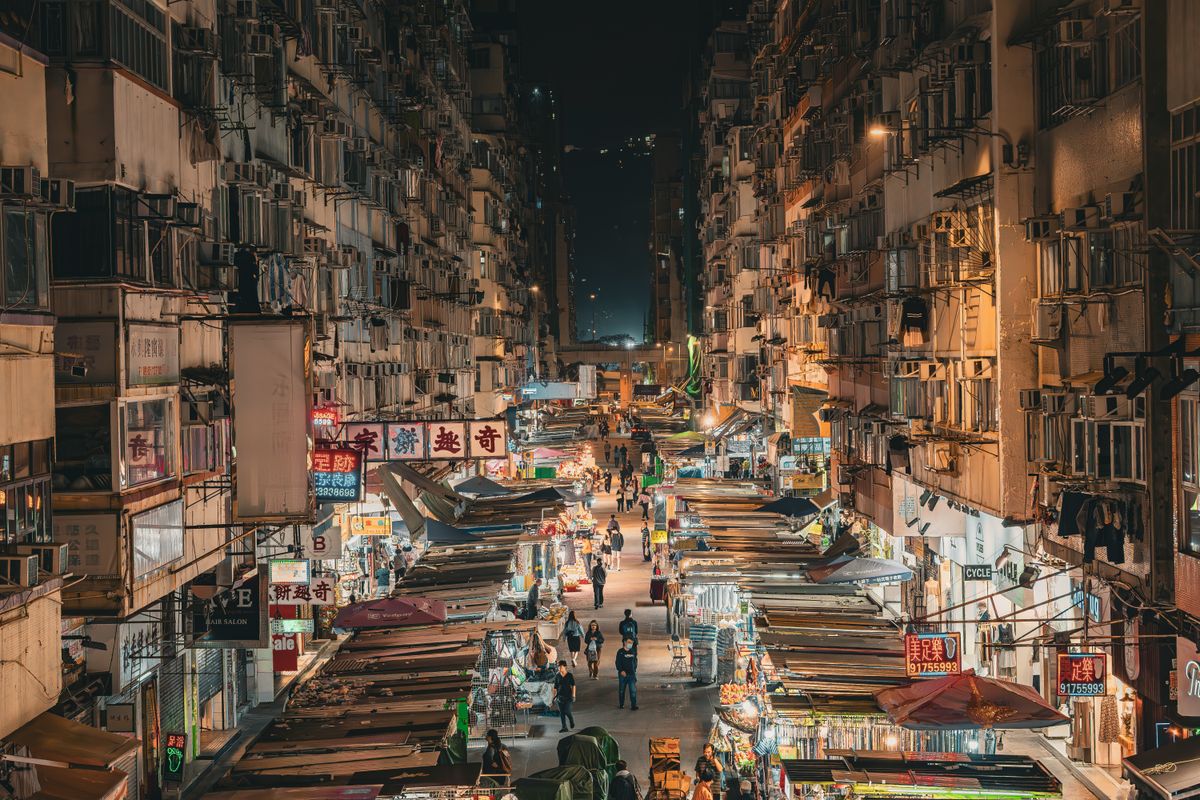
From Mong Kok Sidewalks to the World
For most of its history, the gai daan zai was a strictly local snack — almost unknown outside Hong Kong, Macau and southern China. That changed sharply in the 2010s, when a new generation of vendors started rolling the fresh waffle around scoops of soft-serve ice cream and piling on fruit, syrup, Oreos or matcha cream. The "bubble waffle cone" went viral on Instagram. Within a few years you could find versions in London, New York, Toronto, Sydney and Vancouver.
For the Cantonese diaspora, it's been a strange feeling — watching a snack you grew up calling 街頭嘍 (street food) become a $9 dessert in a brunch spot. But the modern reinvention has also kept the tradition alive, introducing the gai daan zai to people who'd never otherwise visit a Mong Kok side street. That's a trade most Hong Kongers will take.
The Best Way to Eat One
Purists will tell you: eat it plain, eat it hot, eat it within ninety seconds of leaving the iron. The bubbles should still steam when you tear one off. Some people pop the bubbles individually and eat from the inside out; others fold the whole sheet in half like a sandwich and demolish it in five bites. Either way works.
The classic flavour is the original — just egg, milk, sugar and flour. Modern shops offer chocolate, matcha, taro and even cheese. Try the original first. If it doesn't make you understand why Hong Kongers get sentimental about this snack, none of the others will.
A Snack That Tastes Like Home
Ask any Cantonese kid who grew up in Hong Kong what they miss most when they're abroad, and somewhere on the list — alongside wonton noodles and a proper dan tat — you'll find the egg waffle. It's not fancy. It costs about a dollar. But it carries the smell of after-school afternoons, the heat of a vendor's iron, and the kind of comfort you can only get from food that was never meant to leave its home.
📖 Related Articles
👉 Shop Cantonese Guy — Modern Streetwear for the Global Cantonese Community