

Cantonese doesn't just tell you something is hot — it makes you feel the sizzle in the word itself. This month's dictionary volume gathers ten of the most beloved ABB reduplicated adjectives — the kind of vivid, sensory language that transforms a plain phrase into pure texture. These aren't textbook words. They're what your Cantonese grandma reaches for when she's describing food, weather, or the way your cousin sneaks out at night.
Every one of these follows the same pattern: a base adjective plus a doubled syllable that intensifies, softens, or paints the meaning. It's one of Cantonese's most distinctive rhythmic tricks — and once you hear them, you'll hear them everywhere. From dai pai dong stalls to cha chaan teng counters, these words are the seasoning of everyday speech.
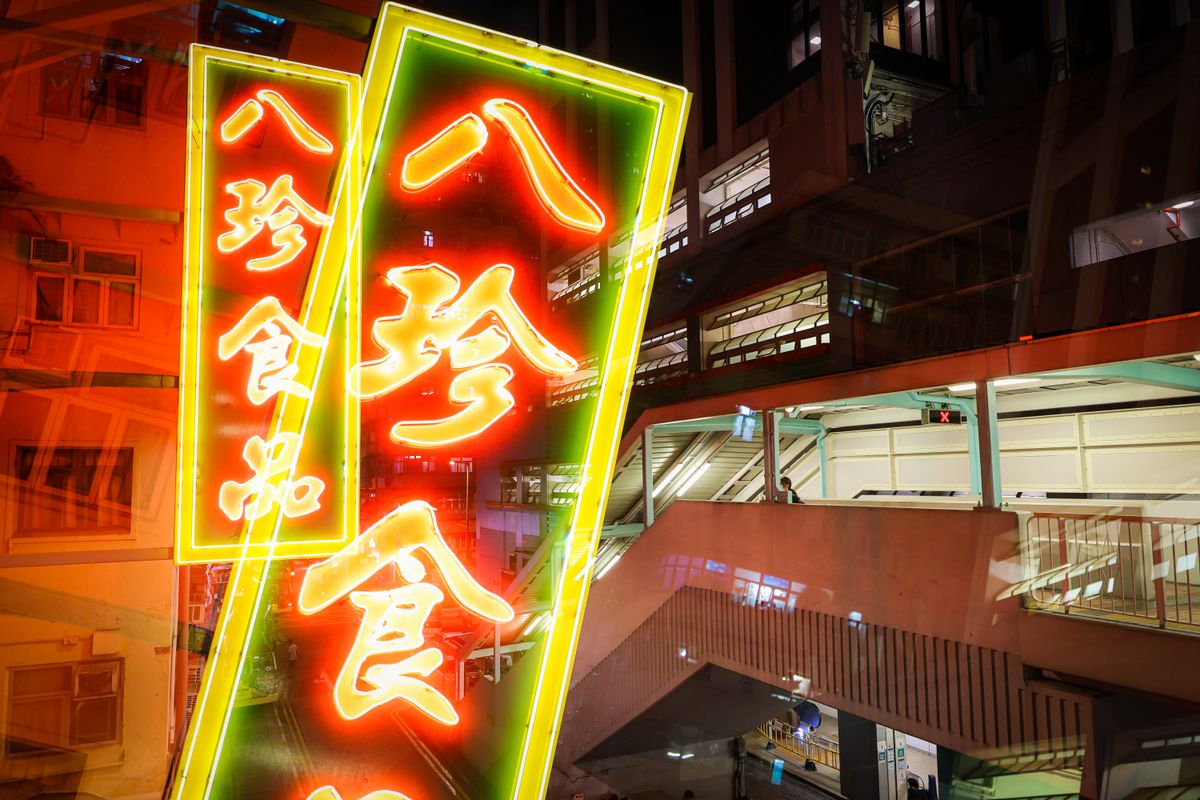
1. 熱辣辣
jit6 laat6 laat6 — Jyutping romanisation
Meaning: Piping hot, scorching, sizzling.
Explanation: The go-to word for anything just out of the wok, the oven, or the summer sun. In slang it also means "fresh off the press" — a hot piece of gossip or a brand-new phone drop is 熱辣辣.
2. 凍冰冰
dung3 bing1 bing1 — Jyutping romanisation
Meaning: Ice-cold, freezing.
Explanation: The perfect mirror to 熱辣辣. Used for iced drinks, cold weather, and cold hands. If your mum feels your fingers in winter, she will absolutely say it.
3. 濕漉漉
sap1 luk6 luk6 — Jyutping romanisation
Meaning: Soaking wet, dripping.
Explanation: When Hong Kong rain catches you without an umbrella, this is the exact word for your entire body. Kids hear it constantly during typhoon season.
4. 香噴噴
hoeng1 pan3 pan3 — Jyutping romanisation
Meaning: Fragrant, deliciously aromatic.
Explanation: Reserved for food and freshly-washed hair. A pot of white rice, a bowl of just-plated char siu, or a baby's cheek after a bath — all 香噴噴.
5. 甜絲絲
tim4 si1 si1 — Jyutping romanisation
Meaning: Sweet all the way through, sweetly satisfying.
Explanation: Used both for taste and for feelings. A perfectly ripe mango is 甜絲絲. So is the feeling in your heart when your crush finally messages back.
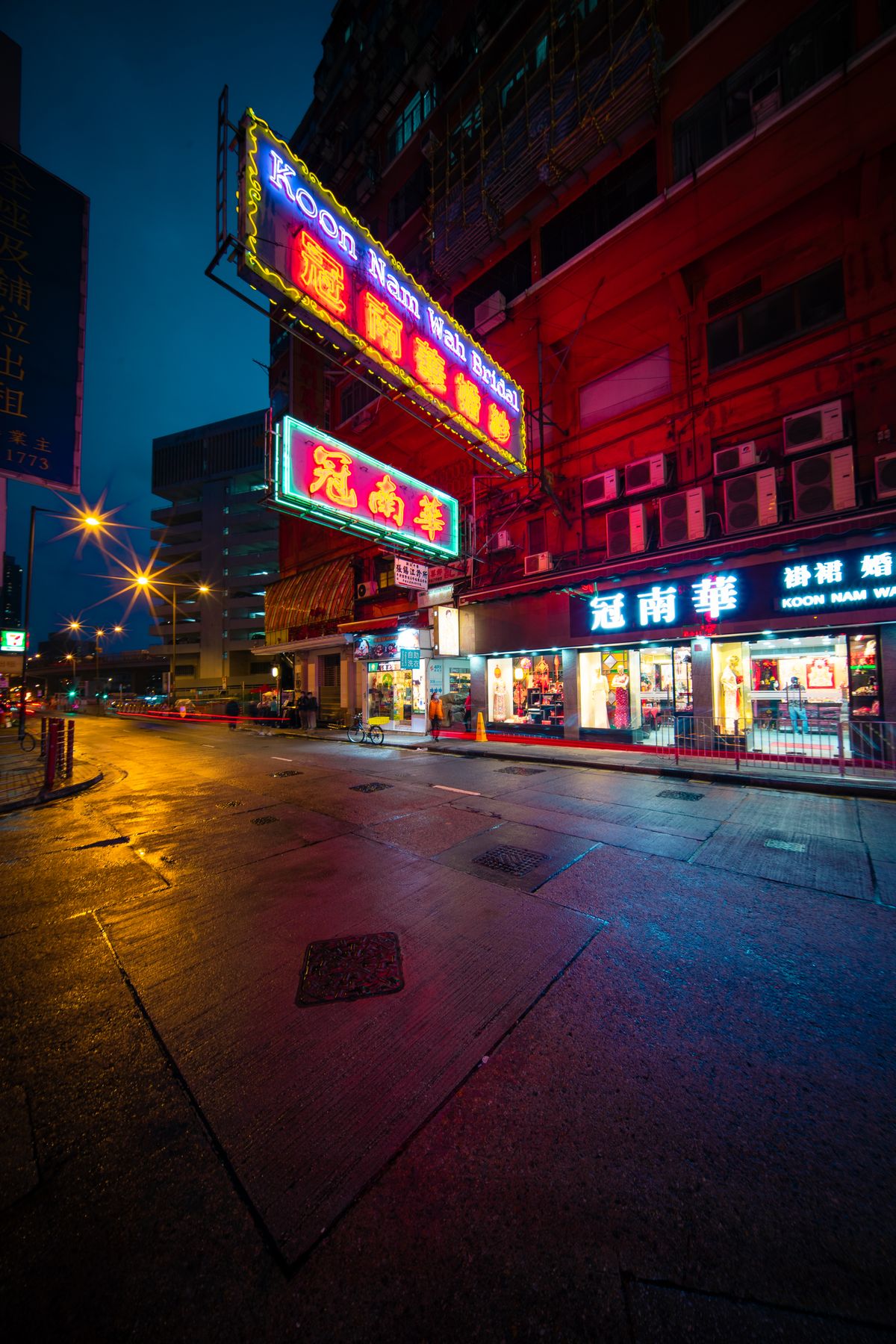
6. 慢吞吞
maan6 tan1 tan1 — Jyutping romanisation
Meaning: Painfully slow, dragging one's feet.
Explanation: In fast-paced Hong Kong, this is almost always mildly critical. Used for slow eaters, slow walkers on Nathan Road, and slow servers at the MTR.
7. 圓轆轆
jyun4 luk1 luk1 — Jyutping romanisation
Meaning: Perfectly round, plump and rolling.
Explanation: Reserved for anything cutely round — a fat baby's cheeks, a full moon at Mid-Autumn Festival, a chubby dumpling, or your friend's eyes when they're surprised.
8. 白雪雪
baak6 syut1 syut1 — Jyutping romanisation
Meaning: Snow-white, bright pale, glowing.
Explanation: Almost always a compliment. Used for skin that seems to glow, a fresh sheet of paper, a bowl of steamed rice, or a freshly-washed shirt. In Cantonese beauty culture, 白雪雪 skin has long been idealised.
9. 靜雞雞
zing6 gai1 gai1 — Jyutping romanisation
Meaning: Quietly, sneakily, on the sly.
Explanation: One of the most beautifully Cantonese expressions on this list. Literally "silent-chicken-chicken." Describes moving or acting without anyone noticing — sneaking out, tiptoeing to the kitchen, or slipping a note into someone's hand.
10. 硬繃繃
ngaang6 baang1 baang1 — Jyutping romanisation
Meaning: Rock-hard, unyielding, stiff as a board.
Explanation: Physical — old bread, a rusted lock, or a mattress that's seen better days. Also figurative — a person who is emotionally stiff or unyielding in an argument is described the same way.
Why ABB Words Give Cantonese Its Feeling
Mandarin has these patterns too, but Cantonese leans into them harder. Because Cantonese preserves nine tones and rich final consonants, the doubled syllable at the end of an ABB word creates a musical bounce that Mandarin's simpler tone structure can't quite match. Say 熱辣辣 out loud and you'll notice how the two 辣 (laat6) syllables hit like drumbeats — that's the rhythm that makes the word emotionally sticky.
These words are also generational glue. A diaspora kid raised in Vancouver or Sydney who's never lived in Hong Kong will still recognise 香噴噴 the second their mum says it about a pot of rice. The words carry more than meaning — they carry childhood.
How to Practise These Words
Start with the temperature pair — 熱辣辣 and 凍冰冰. Use them every time you touch food or a drink today. By tomorrow, they'll feel natural. Then move on to 香噴噴, which will follow almost automatically the next time you smell something delicious. The trick with ABB words is that they're extremely context-driven, so the fastest way to lock them in is to say them out loud in the moment.
And if you catch yourself trying to describe something in English and reaching for a phrase that just doesn't fit — try one of these instead. Cantonese was built for this kind of sensory precision.
📖 Related Articles
👉 Shop Cantonese Guy — Modern Streetwear for the Global Cantonese Community