

Once a year, in a quiet fishing village on the outer edge of Hong Kong, an entire theatre is built out of bamboo. No nails. No steel. Just lashed poles, corrugated iron, and a red-and-gold facade that goes up in about three days. Inside, a Cantonese Opera troupe performs for a week straight — partly for the villagers, partly for the gods. When the run is finished, the theatre comes down as quickly as it went up. This is Cantonese Opera (粵劇 jyut6 kek6) in its purest form: an art that refuses to sit still, and refuses to be forgotten.
What Cantonese Opera actually is
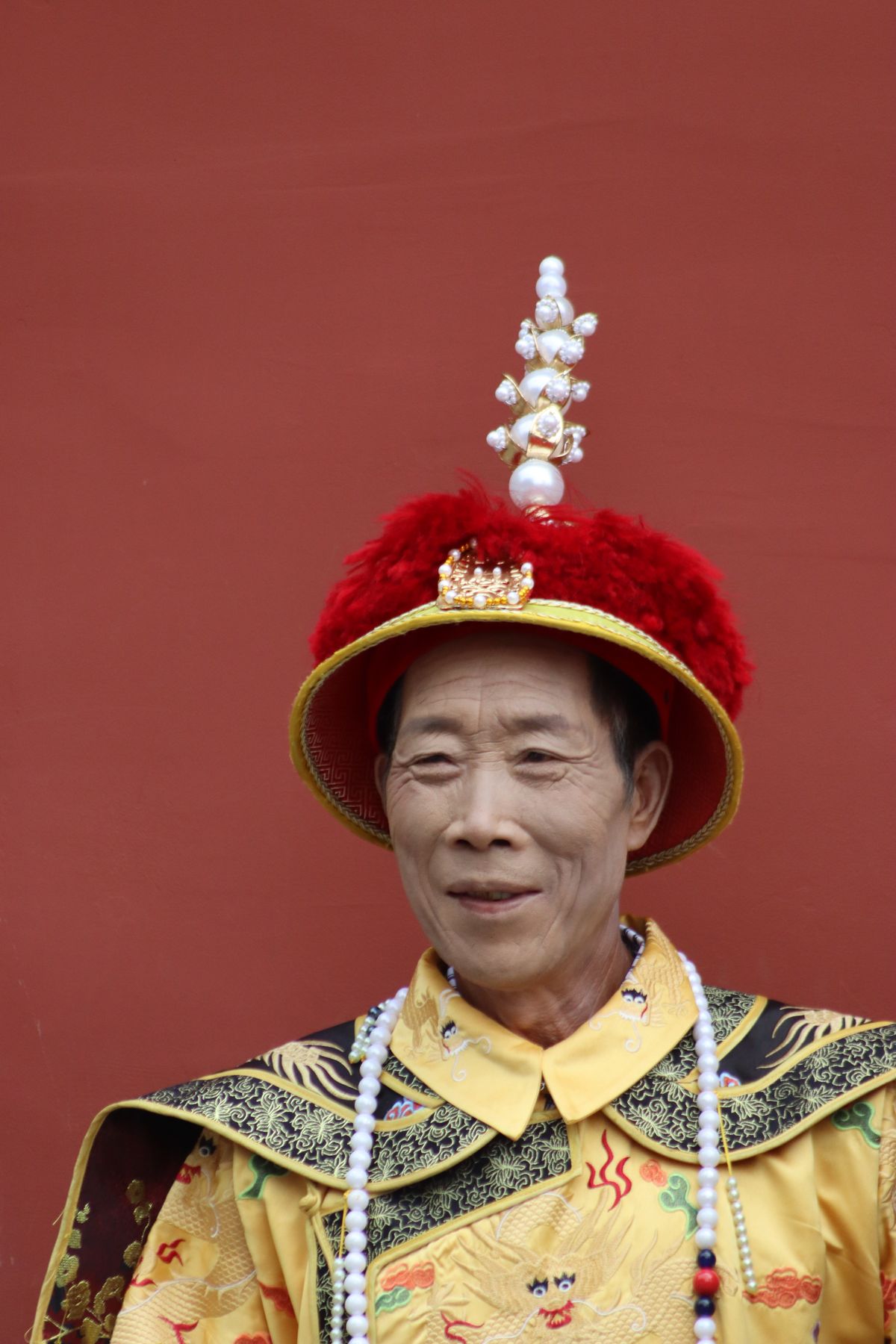
Cantonese Opera is the great performing art of the Lingnan region — Guangdong, Guangxi, Hong Kong, Macau, and the Cantonese diaspora. It is sung in Cantonese, uses percussion and string instruments (including the two-stringed gaowu), and combines singing, martial arts, acrobatics, and dance-drama on a single stage. Elaborate embroidered costumes, painted faces, and headdresses hung with pom-poms and pheasant feathers signal each character's role, rank, and moral alignment before a word is spoken.
Every performer is trained in one of four core role types: sang (male lead), daan (female lead), zing (painted-face warrior), and cau (clown). Training traditionally began in childhood and lasted years, and even now, at the Hong Kong Academy for Performing Arts, students spend a full BA studying the discipline.
From the Song dynasty to the Pearl River
The general scholarly consensus is that Cantonese Opera descends from Nan Xi ("southern drama"), a theatre form that was performed in public theatres in Hangzhou during the 12th century, and which migrated south into Guangdong during the Song dynasty (roughly 1179–1276). Over centuries it absorbed local Yue-region music, folk-song styles, and Cantonese phonology, until by the 1800s it had become the most popular entertainment in the Pearl River Delta.
In the 19th and early 20th centuries, opera troupes travelled by boat between Guangzhou, Foshan, Macau and Hong Kong — the so-called "red boats" (紅船). These floating troupes trained apprentices, staged performances in riverside villages, and quietly became one of the great engines of Cantonese cultural identity. Wing Chun kung fu, according to widely repeated lineage stories, was itself influenced by the martial training of the red boats.
The Golden Age and the Empress duo
Cantonese Opera's mid-20th-century golden age produced two names still whispered like scripture in Hong Kong: Yam Kim-fai (任劍輝, 1912–1989) and Bak Suet-sin (白雪仙, 1928–2018). Yam was the celebrated man mou sang — a female performer who specialised in playing scholarly and warrior male leads. Bak was her onstage counterpart, playing the female lead. Together they were the defining couple of post-war Cantonese Opera, running the Sin Fung Ming Troupe (仙鳳鳴劇團) and starring in canonical works like The Legend of Purple Hairpin (紫釵記) and Princess Chang Ping (帝女花).
Their films — many still watchable today — turned Cantonese Opera into pop culture for a generation raised on neon-lit Hong Kong. To this day, older aunties can sing entire arias from Princess Chang Ping from memory.
UNESCO's 2009 inscription
In September 2009, UNESCO inscribed Yueju Opera — the international name for Cantonese Opera — on the Representative List of the Intangible Cultural Heritage of Humanity. The joint nomination by Guangdong, Hong Kong and Macau was a rare cross-border cultural collaboration. In UNESCO's own words, Yueju Opera is "characterised by a combination of string and percussion instruments, with elaborate costumes and face painting" and is "rooted in the Cantonese-speaking provinces of Guangdong and Guangxi in south-eastern China."
Cantonese Opera remains the sole cultural heritage of Guangdong Province to have been inscribed by UNESCO to date — a point of significant local pride. It is a heritage that lives in Hong Kong theatres, in Chinatown associations in San Francisco and Vancouver, and in the bamboo theatres that still go up every autumn on Tsing Yi and Tai O.

The bamboo theatres of Hong Kong
Hong Kong is one of the last places on earth where you can still catch Cantonese Opera in its original folk setting — the temporary bamboo theatre (戲棚 hei3 paang4). Every year, during festivals in honour of Tin Hau, Tam Kung and other local deities, villages in Cheung Chau, Tai O, Tsing Yi, Sai Kung and elsewhere still erect these bamboo structures. Troupes perform mostly religious operas, and the whole thing feels closer to how audiences would have experienced the art two centuries ago.
The Xiqu Centre in West Kowloon, opened in 2019, is Cantonese Opera's newer permanent home — a stunning modern theatre designed specifically for the art. Between the bamboo sheds and the Xiqu Centre, Hong Kong keeps two versions of the same tradition alive: the folk and the fine, the improvised and the institutional.
A Cantonese word from the art
包弋
baau1 jik1 — Jyutping romanisation
Meaning: To be the whole package; a role player who covers every character type.
Explanation: A backstage term from Cantonese Opera used when one performer can cover multiple role types — sing, daan, cau, whatever the troupe needs. It has crossed into everyday Cantonese to describe someone who is quietly indispensable at work or in a family. High praise, delivered with a shrug.
Why 800 years still matter
Cantonese Opera is not just old — it is one of the deepest reservoirs of Cantonese language and Cantonese sound. Every aria preserves classical vocabulary, tonal patterns, and idioms that daily speech has begun to lose. Every bamboo theatre erected on a beach reminds the diaspora that our culture is portable, tough, and beautifully impractical. UNESCO gave it a certificate in 2009. Grandmothers in Guangzhou and Kowloon gave it something older and better — they gave it their voices, and passed them on.
📖 Related Articles
👉 Shop Cantonese Guy — Modern Streetwear for the Global Cantonese Community